

With rights come responsibilities: how coronavirus is a pandemic of hypocrisy
- Written by: Luke Zaphir, Researcher for the University of Queensland Critical Thinking Project, The University of Queensland
It’s after work and you’ve gone to the supermarket to grab some ingredients for dinner. You’re tired, anxious and pretty hungry. Plus you have to put on a mask because a thousand other people are there, and social distancing is hard to enforce at this moment. Now you’re uncomfortable, on top of everything.
We all feel this way sometimes. But we tolerate it because there’s a pandemic and we all have to do our part to keep everyone safe.
Except that one person.
There’s that one person at the front of the line being asked to step out and put on a mask before coming into the shop. And they’re putting on a scene, yelling about their rights to go unmasked, to be able to breathe, to be free of oppression.
“Everyone else can wear a mask if they choose but not I,” says the person. “I have rights and I will be free.”
This is hypocrisy.
Hypocrisy is when we are inconsistent in our morality. We commonly refer to it as “saying one thing and doing another”.
Anti-maskers believe they have rights. But in refusing to wear a mask, they are denying other people the right to live in security. Article 3 of the United Nations Universal Declaration of Human Rights says “everyone has the right to life, liberty and security of person”. These rights are inextricably interwoven. Freedom without safety is arguably not freedom at all.
The primary way we become hypocrites, strangely enough, is being too flexible in our thinking — a cognitive flexibility called abstraction. Flexible thinking can be about keeping an open mind, but the capacity to warp one’s thinking processes can also make double standards acceptable.
Read more: How to talk to someone who doesn't wear a mask, and actually change their mind
We create loopholes in the application of the rules because we’ve created those rules much too theoretically, which doesn’t gel with real world settings.
Why is hypocrisy so bad?
When we are hypocritical, we create injustices. We may fail to do the right thing, which might hurt people or even make them sick. But the biggest problem with hypocrisy is that it causes a complete breakdown of our own personal truth.
If we believe in a principle, but don’t apply it ourselves, that principle is essentially meaningless.
Many dictatorships and fascists are fantastic hypocrites. They often say they are defending some theoretical value – like national security, cultural tradition or even freedom — but there’s no value or meaning in an abstract notion of security or freedom if you murder and oppress your people.
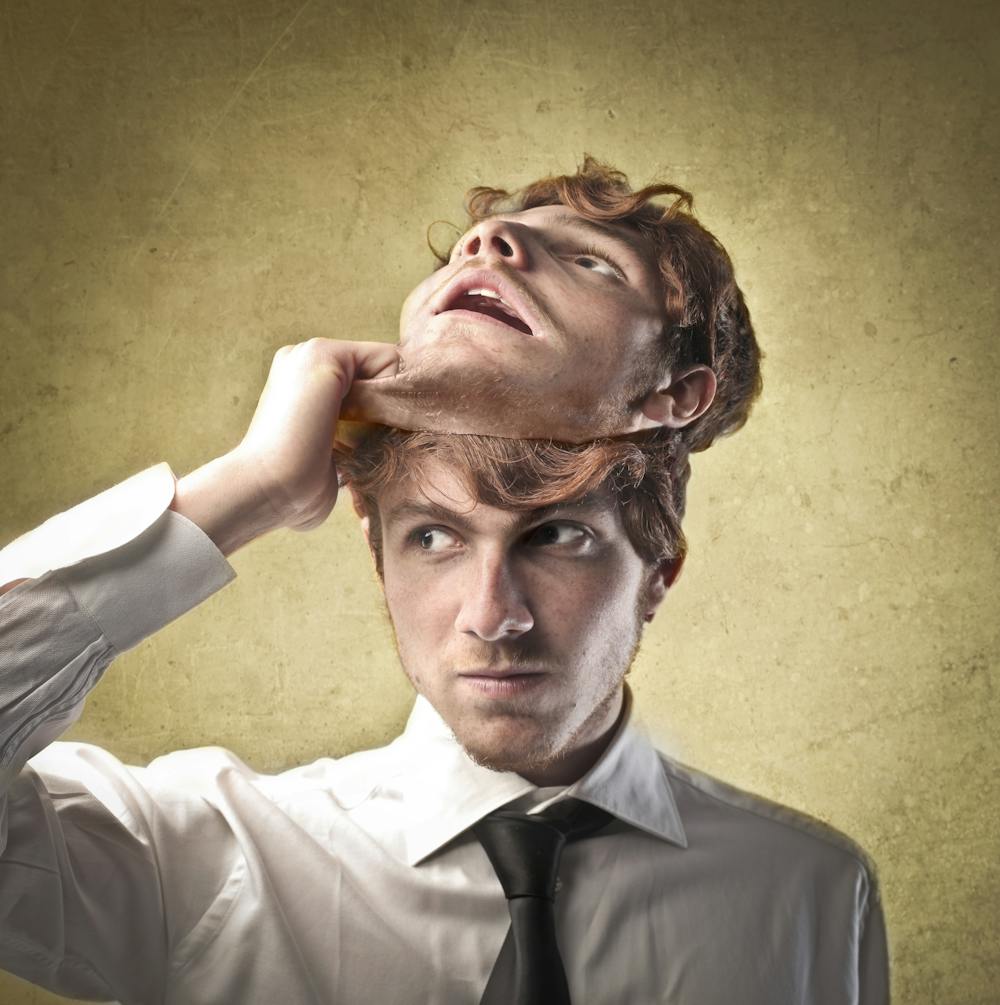 How can you trust someone who says one thing, but acts differently?
Shutterstock
How can you trust someone who says one thing, but acts differently?
Shutterstock
Not all hypocrisy ends with bloodshed but we can have some pretty poor outcomes regardless. One of the more fundamental hypocrisies comes from ignoring the responsibility that comes with every right.
You want the right to live? Then you have a responsibility to the rights of others to live.
You want to own stuff? You have a responsibility to respect the property rights of others.
You want to use a public space? You have a responsibility to share that space with others.
To believe you have a right without a corresponding responsibility is hypocritical — a double standard where you’ve likely considered the abstract principle but not the specific situation.
Why is it bad, particularly now?
Hypocrisy erodes the value behind rights and truth, so they’re essentially worthless. Democracy is fundamentally about consent of the governed — we give our informed consent through voting and political participation. Informed consent requires accurate information though. Without being able to know the truth, we have no ability to give consent.
Read more: Post-truth politics and why the antidote isn't simply 'fact-checking' and truth
Our democracy erodes away with every hypocrisy and lie told to undermine expertise. It’s a well-known arguing tactic to discredit opposition to win a debate but we simply don’t have the luxury of this kind of sophistry during a pandemic.
We may not agree on what we need to do but right now we can’t afford to ignore evidence and truth.
Take public goods. These are shared spaces and qualities we all benefit from: education, clean air and water, health and the environment.
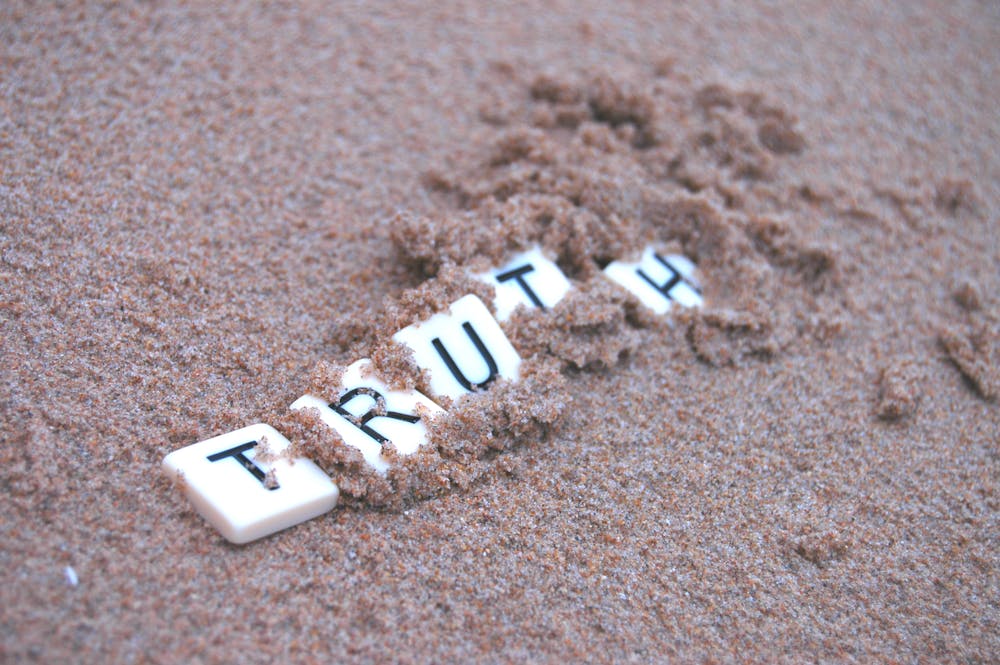 Hypocrisy can erode truth.
Shutterstock
Hypocrisy can erode truth.
Shutterstock
Without the public good of health, we get sick, the economy shuts down, we lose loved ones to disease. Our quality of life drops dramatically without good public health.
A hypocritical viewpoint says: “I’m willing to benefit from good public health but I’m not willing to maintain it”.
Hypocrites never would directly think or say this. Instead, they would see the issue as a fulfilment of a different abstract right. This might look like “I have a right to be unmasked in public”.
Read more: How not to fall for coronavirus BS: avoid the 7 deadly sins of thought
This right may exist, or it may not. However, if you think public health is a good thing but you aren’t willing to take a basic measure of responsibility for it — like wearing a mask — that’s hypocrisy. It can make a disaster worse for everyone.
What can we do to check ourselves for hypocrisy?
One of the best ways to avoid hypocrisy is to make our own moral principles far more specific. Put that abstract principle into context.
Say your principle is
I have a right to live unmasked.
That’s not too contentious but it is vague enough to be abused.
Applying context to that principle could look like this:
I have a right to live unmasked even when I’m possibly an asymptomatic carrier of the worst disease to hit our country in a century.
It’s a lot harder to defend a belief like this one.
We don’t have to share common ethics from person to person, but we do have to be consistent with ourselves. If we’re charitable and authentic in how we interpret a situation, we gain the ability to construct much stronger, much more consistent moral beliefs.
Authors: Luke Zaphir, Researcher for the University of Queensland Critical Thinking Project, The University of Queensland


 Daily Bulletin


