

5 ways we can prepare the public to accept a COVID-19 vaccine (saying it will be 'mandatory' isn't one)
- Written by: Jessica Kaufman, Research Fellow, Vaccine Uptake Group, Murdoch Children's Research Institute
This week, Prime Minister Scott Morrison announced the Australian government has signed an agreement to produce a COVID-19 vaccine under development at the University of Oxford, if safety and efficacy trials are successful.
After initially saying the vaccine would be “as mandatory as you can possibly make it” he walked these comments back and said it won’t be compulsory.
The announcement generated substantial media interest, and optimism among some people.
But positioning this vaccine as mandatory before it’s even available — let alone proven to be safe and effective — may seriously affect public trust and future vaccine acceptance.
Some people might refuse a COVID-19 vaccine
In April, an Australian study found 14% of adults would reject or were unsure about having a COVID-19 vaccine.
We may need up to 80% vaccine coverage to ensure herd immunity, and some people will likely be ineligible for the vaccine for medical reasons. So this target will be hard to achieve with high levels of refusal.
Read more: The Oxford deal is welcome, but remember the vaccine hasn't been proven to work yet
But these are unprecedented times, and we should expect people to have questions and concerns about these rapidly developed new vaccines. That doesn’t necessarily make them “anti-vaxxers” or science deniers.
Instead of focusing on rates of potential vaccine rejection, public messaging should highlight the much greater levels of public support for vaccines and normalise the expectation people will have concerns.
How can we boost vaccine acceptance?
We need to earn, build and maintain public trust if a COVID-19 vaccine is to be successful.
Beginning now, Australia needs to establish a transparent and coordinated communication effort setting accurate expectations about when the vaccine will be available, priority groups, risks, benefits and supply.
There are five key ways we can do this.
1. Use trusted spokespeople
People who are perceived as competent, objective and fair — like experts in science — should communicate messages around vaccines.
We also trust people who we feel represent us, so it’s critical the government engages with diverse communities to identify appropriate spokespeople like multicultural and religious leaders.
Research also suggests we see communicators who demonstrate genuine empathy as more credible and trustworthy. New Zealand’s largely successful COVID-19 response has been attributed in part to Jacinda Ardern’s empathic and open communication approach.
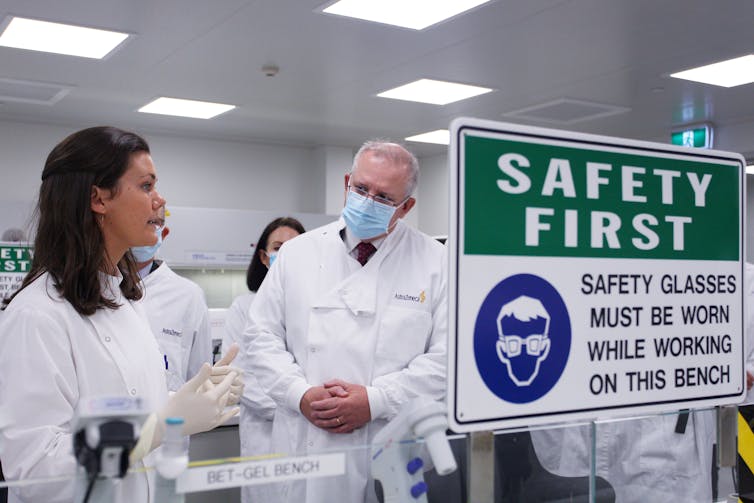 The person who delivers the message can affect the way we receive it.
Lisa Maree Williams/AAP
The person who delivers the message can affect the way we receive it.
Lisa Maree Williams/AAP
2. Tailor information
Everyone needs to be able to access and understand messages about COVID-19 vaccination.
This means the language and communication formats used should be tailored for culturally and linguistically diverse groups, Aboriginal and Torres Strait Islander people, people with disabilities or communication difficulties, and any other groups with specific communication needs.
3. Identify, acknowledge, and respond to concerns
We know dismissive or judgemental language is ineffective when communicating with people who are hesitant about vaccination. Public communication about COVID-19 vaccines should be similarly respectful, and should acknowledge the validity of people’s concerns.
The most common vaccine concerns are generally around safety and effectiveness. The speed of vaccine development has been widely emphasised — the US even named its vaccination program Operation Warp Speed.
But this focus on speed can imply testing has been rushed and lead people to perceive the vaccine may be unsafe. Messaging should instead explain the rigour of the safety testing and describe how safety will be monitored once the vaccine is rolled out.
Read more: Can the government, or my employer, force me to get a COVID-19 vaccine under the law?
Public health messaging should also accurately describe potential side effects. A COVID-19 vaccine may be likely to cause side effects such as redness or swelling at the injection site, and some flu-like symptoms.
That doesn’t mean the vaccine is unsafe. However, if we don’t prepare people for these side effects, they may feel misled.
4. If you can’t be consistent, be transparent
Experts and spokespeople must transparently communicate what we know about the effectiveness of the vaccine. It’s possible we’ll need more than one dose, and we might need it each year like the flu shot.
Even when the vaccine becomes available, we’ll still most likely need to maintain social distancing, hygiene, and testing and tracing.
Consistency of messaging is hard to maintain in a rapidly evolving pandemic, as we’ve seen from changing evidence around restrictions and masks. To maintain trust in a vaccine, officials should be transparent and explain the evidence informing decisions, and acknowledge this will change as more evidence becomes available.
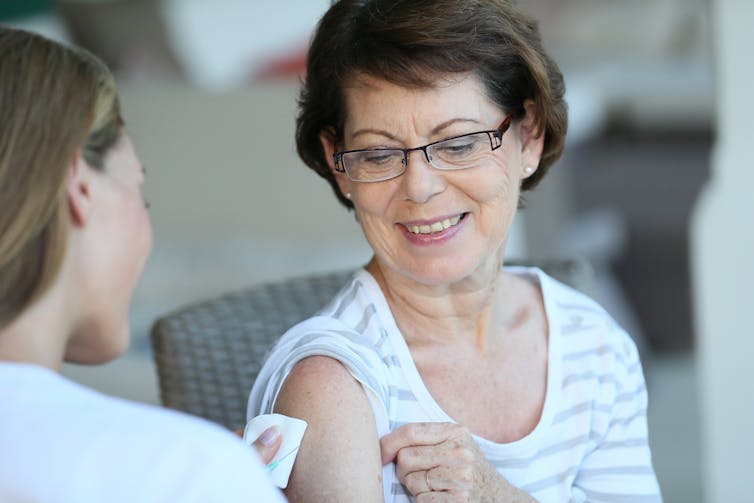 Communication around vaccination should acknowledge and respond to people’s concerns.
Shutterstock
Communication around vaccination should acknowledge and respond to people’s concerns.
Shutterstock
5. Seek feedback and monitor trust
Lastly, to inform communication strategies, we need to seek feedback from the public. Vaccine sentiment will likely change over time, so we should regularly monitor public trust and vaccine acceptance using validated surveys.
It’s too soon to consider making it mandatory
The first priority should be communicating the safety and efficacy of any COVID-19 vaccine. The target groups for the vaccine should be clearly defined, and the vaccine should be freely and easily accessible.
We should only consider mandates and targeted penalties for noncompliance if these conditions have been met, COVID-19 transmission rates remain unacceptably high and voluntary uptake is inadequate.
Extreme care should be taken with fines, welfare limitations or legal penalties, as these often reinforce social and health inequalities.
Transparent communication and community engagement to build trust and achieve vaccine acceptance, coupled with a safe and effective vaccine, will be our best chance to re-establish the way of life we knew before COVID-19.
Read more: Everyone can be an effective advocate for vaccination: here's how
Authors: Jessica Kaufman, Research Fellow, Vaccine Uptake Group, Murdoch Children's Research Institute
&media=https://www.dailybulletin.com.au/https://images.theconversation.com/files/353994/original/file-20200821-16-8sassg.jpg?ixlib=rb-1.1.0&q=45&auto=format&w=754&fit=clip&description=5%20ways%20we%20can%20prepare%20the%20public%20to%20accept%20a%20COVID-19%20vaccine%20(saying%20it%20will%20be%20'mandatory'%20isn't%20one) "Pin It")

 Daily Bulletin


