

Australia's plants and animals have long been used without Indigenous consent. Now Queensland has taken a stand
- Written by: David Jefferson, Research Fellow, The University of Queensland
Many products we use each day contain compounds taken from nature. Aspirin, for example, is derived from willow trees. And nanofibres from spinifex grass in Queensland is added to bitumen to make stronger roads.
But throughout history, native plants, animals and other biological materials have been removed without the consent of Indigenous people. In many cases, Indigenous knowledge was also taken without permission – and Indigenous people rarely benefited from the commercial products developed as a result.
Aboriginal and Torres Strait Islander communities have strong connections to country, and totemic relationships with certain plants and animals. If these are removed without permission, Indigenous people suffer significant spiritual harm. And using Indigenous knowledge without permission perpetuates the social and economic injustices of colonisation.
With those important considerations in mind, the Queensland government last month reformed a law governing “biodiscovery” - the taking, analysing and using of native biological material. It should serve as a model for other states to follow.
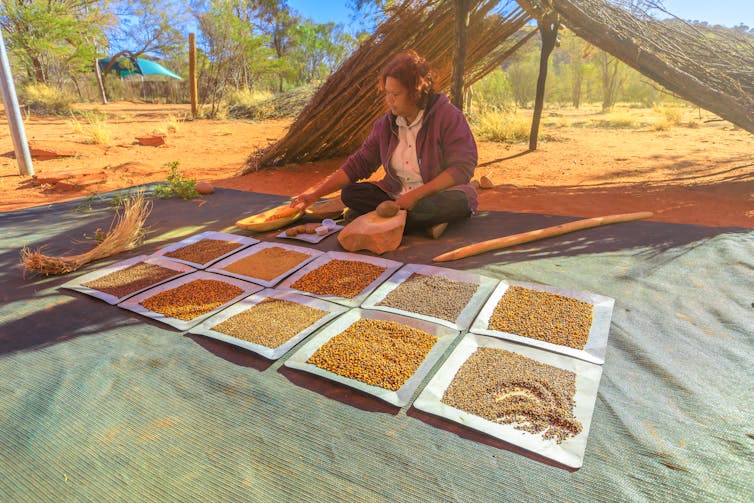 Indigenous cultural knowledge must be protected.
Shutterstock
Indigenous cultural knowledge must be protected.
Shutterstock
A leader in biodiscovery law
In 2004, Queensland was the first Australian jurisdiction to regulate biodiscovery. Since then, the Commonwealth and Northern Territory governments have also passed biodiscovery laws.
Queensland’s original Biodiscovery Act was beset with limitations, such as:
it did not cover traditional knowledge. This meant Indigenous people were left out of benefit-sharing negotiations
it didn’t meet all requirements of the 2014 Nagoya Protocol, which sets conditions for access to genetic resources and traditional knowledge
the approvals process for biodiversity researchers was burdensome
only biological materials from state land or waters were regulated – not those from private or Indigenous land.
The Queensland government wanted to rectify these issues. During the reform process, it consulted widely – including with Indigenous people, scientists, and experts on intellectual property and Indigenous rights.
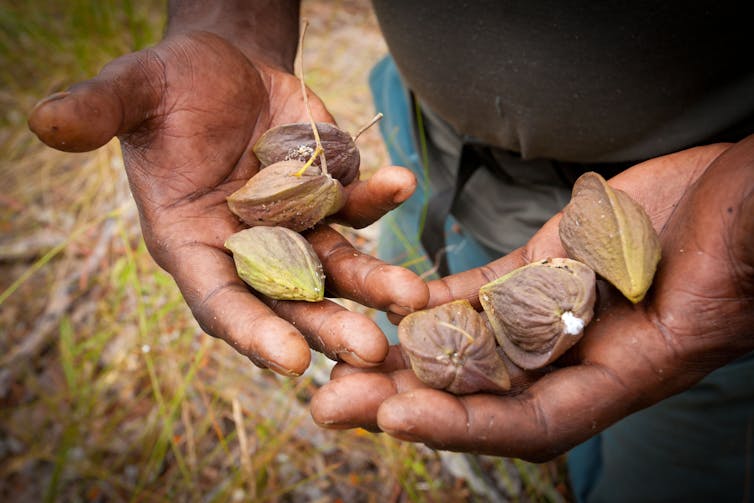 Queensland’s biodiscovery laws offer a model for other states.
Shutterstock
Queensland’s biodiscovery laws offer a model for other states.
Shutterstock
So what’s changed?
Under the revised law, anyone engaging in biodiscovery must take all reasonable measures to form agreement with the custodians of Indigenous knowledge being used. This includes a benefit-sharing agreement.
The act now aligns with the Nagoya Protocol. This is important for those in the Queensland biodiscovery industry who want to export to countries that have ratified the protocol, such as in Europe. The approvals process has also been streamlined.
Finally, the Queensland government is designing a “Traditional Knowledge Code of Practice” in consultation with Indigenous communities and other experts. The code will aim to help the biodiscovery industry work more inclusively with traditional knowledge custodians. It will be important to monitor whether the code meets these aims.
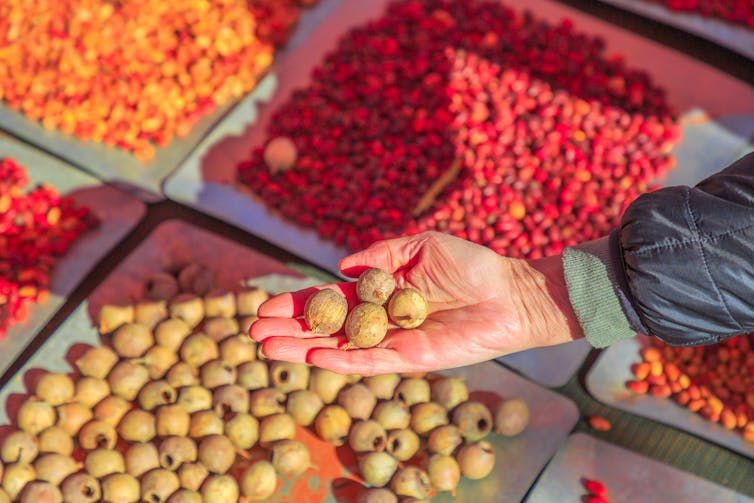 The Queensland government hopes the reform will encourage more biodiscovery.
Shutterstock
The Queensland government hopes the reform will encourage more biodiscovery.
Shutterstock
Collaboration is key
The Queensland government hopes the reforms will lead to more biodiscovery activities. These will often rely on the knowledge and practices of Indigenous people.
As well as custodians of Indigenous knowledge, others involved in the biodiscovery process include:
scientists researching the properties of native biological materials
businesses that commercialise new products
consumers who buy the products
government officials who grant regulatory approvals.
Collaboration between all these groups is key. One good example of this involves the Chuulangun Aboriginal Corporation and researchers at the University of South Australia. In 2013, the partners began work on a biodiscovery project in the Kuuku I’yu Northern Kaanju homelands in Cape York. It investigated traditional medicinal plants used to treat ailments such as psoriasis, a skin condition.
Read more: Strength from perpetual grief: how Aboriginal people experience the bushfire crisis
David Claudie – a coauthor of this article and Kuuku I’yu Northern Kaanju Traditional Owner – knows how to use local plants as medicine. Working together, traditional knowledge custodians and scientists collected medicinal plants and analysed them in a lab. This approach drew on both Indigenous and Western perspectives, and led to plant-based medicinal products being developed.
The project also protected Indigenous intellectual property and negotiated an agreement to share commercial benefits. Claudie is named as an inventor on the patents and an author of scientific articles published from the collaboration.
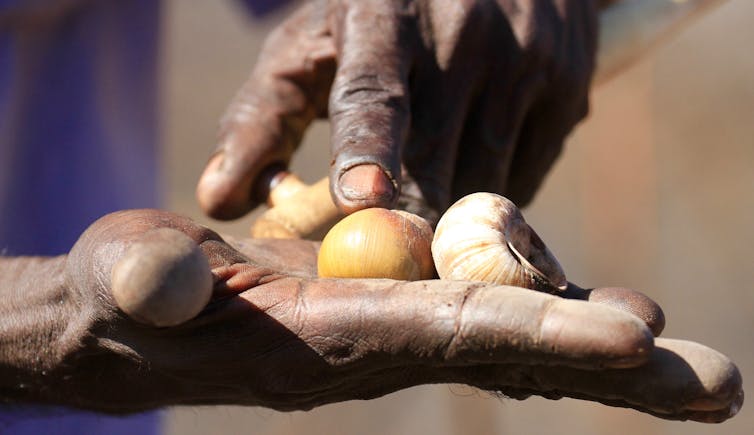 Biodiscovery should incorporate Indigenous and Western perspectives.
Shutterstock
Biodiscovery should incorporate Indigenous and Western perspectives.
Shutterstock
An important example
Australia is one of 17 countries considered “megadiverse”. It is home to up to 700,000 species, many found nowhere else in the world. This means the biodiscovery industry has big potential in Australia – but Indigenous knowledge must be protected.
Queensland’s reforms to biodiscovery laws set an important example. Other Australian states should follow Queensland’s lead and develop better legal protections for Indigenous knowledge. These should take into account both Indigenous and Western perspectives, for the benefit of all.
Authors: David Jefferson, Research Fellow, The University of Queensland


 Daily Bulletin


