

WHO is right: lockdowns should be short and sharp. Here are 4 other essential COVID-19 strategies
- Written by: Hassan Vally, Associate Professor, La Trobe University
Last week the World Health Organisation’s special envoy on COVID-19, David Nabarro, said:
We in the World Health Organisation do not advocate lockdowns as the primary measure for the control of the virus.
This has created confusion and frustration, as many people have interpreted this as running counter to WHO’s previous advice on dealing with the pandemic. Haven’t most of us spent some or most of the past few months living in a world of lockdowns and severe restrictions, based on advice from the WHO?
Dig a little deeper, however, and these comments are not as contrary as they might seem. They merely make explicit the idea that lockdowns are just one of many different weapons we can deploy against the coronavirus.
Lockdowns are a good tactic in situations where transmission is spiralling out of control and there is a threat of the health system being overwhelmed. As Nabarro says, they can “buy you time to reorganise, regroup, rebalance your resources”.
But they should not be used as the main strategy against COVID-19 more broadly. And the decision to impose a lockdown should be considered carefully, with the benefits weighed against the often very significant consequences.
Lockdowns also have a disproportionate impact on the most disadvantaged people in society. This cost is greater still in poorer countries, where not going to work can mean literally having no food to eat.
Read more: Is lockdown worth the pain? No, it's a sledgehammer and we have better options
So if lockdowns are best used as a short, sharp measure to stop the coronavirus running rampant, what other strategies should we be focusing on to control the spread of COVID-19 more generally? Here are four key tactics.
1. Testing, contact tracing and isolation
The key pillars in the public health response to this pandemic have always been testing, contract tracing, and isolating cases. This has been the clear message from the WHO from the beginning, and every jurisdiction that has enjoyed success in controlling the virus has excelled in these three interlinked tasks.
No one disputes the importance of being able to identify cases and make sure they don’t spread the virus. When we identify cases, we also need to work out where and by whom they were infected, so we can quarantine anyone who may also have been exposed. The goal here is to interrupt transmission of the virus by keeping the infected away from others.
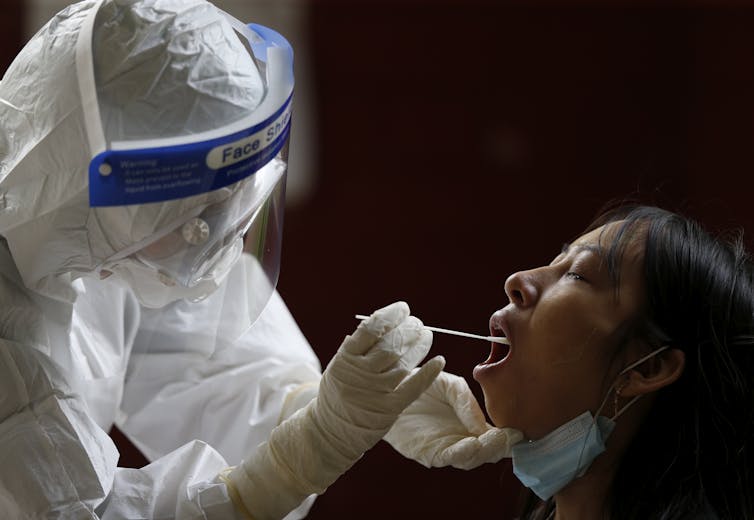 Testing is a cornerstone of any successful coronavirus response. You can’t control the spread if you don’t know who is infected.
LYNN BO BO/EPA/AAP
Testing is a cornerstone of any successful coronavirus response. You can’t control the spread if you don’t know who is infected.
LYNN BO BO/EPA/AAP
Time is of the essence. People should be tested as soon as they develop symptoms, and should isolate immediately until they know they are in the clear. For positive cases, contact tracing should be done as quickly as possible. All of this helps limit the virus’s spread.
Read more: Where did Victoria go so wrong with contact tracing and have they fixed it?
2. Responding to clusters
Responding to disease clusters in an effective, timely manner is also vitally important. We’ve all seen how certain environments, such as aged-care homes, can become breeding grounds for infections, and how hard it is to control these clusters once they gain momentum.
Bringing clusters under control requires decisive action, and countries that have been successful in combating the virus have used a range of strategies to do it. Vietnam, which has been lauded for its coronavirus response despite its large population and lack of resources, has worked hard to “box in the virus” when clusters were identified. This involved identifying and testing people up to three degrees of separation from a known case.
 Once a cluster of infections is identified, a fast and effective response is vital.
JAMES GOURLEY/AAP
Once a cluster of infections is identified, a fast and effective response is vital.
JAMES GOURLEY/AAP
3. Educating the public
Another crucial element of a successful coronavirus response is giving the public clear advice on how to protect themselves. Public buy-in is vital, because ultimately it is the behaviour of individuals that has the biggest influence on the virus’s spread.
Everyone in the community should understand the importance of social distancing and good hygiene. This includes non-English speakers and other minority groups. Delivering this message to all members of the community requires money and effort from health authorities and community leaders.
4. Masks
After some confusion at the beginning of the pandemic, it is now almost universally accepted that public mask-wearing is a cheap and effective way to slow disease transmission, particularly in situations where social distancing is difficult.
As a result, masks — although unduly politicised in some quarters — have been rapidly accepted in many societies that weren’t previously used to wearing them.
Read more: Victorians, and anyone else at risk, should now be wearing face masks. Here's how to make one
Authors: Hassan Vally, Associate Professor, La Trobe University


 Daily Bulletin


