

Market growth, trends and opportunities in Australian sports nutrition manufacturing
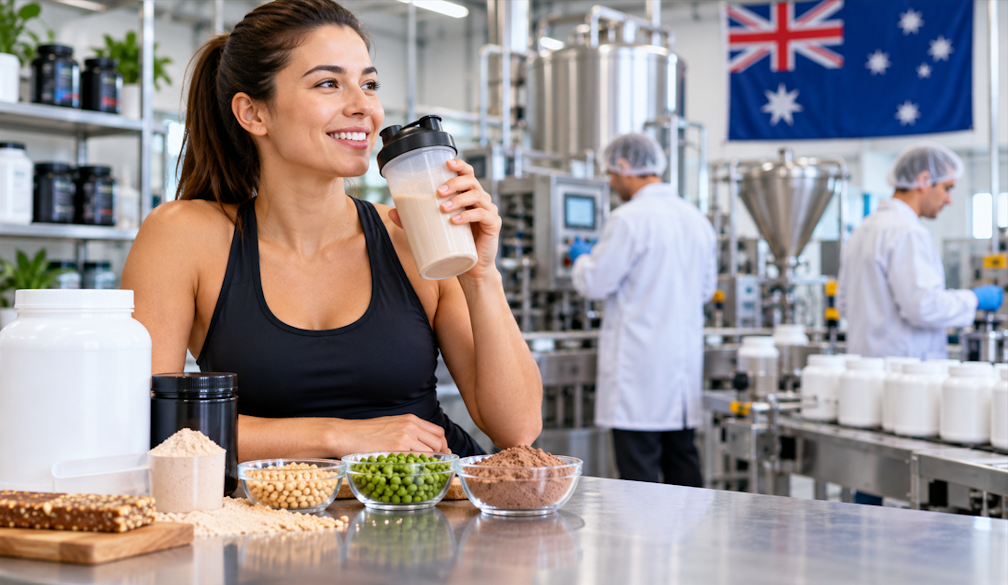
Protein powder used to belong to bodybuilding culture. These days a tub is as likely to sit on a supermarket shelf as in a specialist supplement store, and the person buying it may want a quick breakfast or a bit more protein in their day rather than a bigger bench press.
That wider audience has opened Australia's sports nutrition market up. There is room now for plant-based ranges, products with added functional ingredients and formulations built for particular lifestyles, which gives brands more ways to stand out.
A growing market doesn't make a launch any easier, though. Production costs are rising, ingredients have to be sourced reliably and the regulatory requirements need working through before anything reaches the shelf. Knowing where the industry is heading is a sensible place to start.
Sizing the market depends on who you ask
The Australian sports nutrition industry is worth hundreds of millions of dollars, but research providers disagree considerably on how many.
Vyansà Intelligence valued the market at approximately US$855 million in 2025 and expects it to reach US$1.06 billion by 2032, a compound annual growth rate (CAGR) of around 3.12% between 2026 and 2032. Grand View Research puts the 2025 figure much higher, at approximately US$1.94 billion, and projects US$4.08 billion by 2033.
A gap that size comes down to definitions. Each provider draws the boundary of "sports nutrition" in a different place and counts different products inside it, so the two estimates aren't measuring the same thing and shouldn't be compared directly. They do agree on direction: both forecast continued growth.
Who is buying, and why
Muscle building and athletic performance still sell product, but they no longer explain most of the demand. Plenty of buyers simply want a convenient way to add protein to their diet, a plant-based alternative to dairy, or something that supports a broader health goal.
The wider dietary supplements market shows the same shift. Euromonitor International has reported growing consumer interest in digestive health, preventive health and general wellbeing. For brands, that points to opportunities well beyond the familiar pre-workout and protein shake.
Protein is still the biggest category by a long way. Vyansà Intelligence estimates that sports protein products, including powders, bars and ready-to-drink (RTD) beverages, account for approximately 70% of the market.
What has changed is who buys them. Euromonitor has identified increasing interest in protein products among older Australians, tied to a broader focus on nutrition and healthy ageing. It also reported that Australian sports protein powder sales grew 10.7% in 2023, while protein and energy bars grew 9.4%. Those are one-year figures, so they don't make a trend on their own; they do show protein products picking up buyers well outside the gym.
What shoppers expect from the product
A high protein number on the front of the pack might win the first purchase. Whether someone comes back depends more on taste, convenience, ingredient quality and how transparent the label is.
Five trends are shaping what brands bring to market:
- Plant-based proteins: pea, rice and blended sources as alternatives to dairy.
- Clean-label products: straightforward ingredient lists and clear product information for buyers who want to know what they're getting.
- Convenient formats: single-serve sachets, RTD products and portable snacks that suit busy routines.
- Functional formulations: protein combined with other ingredients for a specific nutritional purpose.
- Targeted nutrition: products developed for particular dietary preferences and consumer groups.
These trends bring formulation problems with them. Plant proteins can leave a gritty texture or an earthy flavour. Functional ingredients can change solubility and sweetness, and they can make it harder to keep one batch consistent with the next. A point of difference on the label is worth very little if the finished shake is unpleasant to drink.
Where the manufacturing problems show up
A good formula gets a brand started; it doesn't make the product commercially viable. Brands also need to know how it will be manufactured, whether the ingredients can be sourced reliably and which regulations apply.
Classification comes first
Australia's requirements for food and supplement manufacturing are strict, and which ones apply depends on how a product is classified.
Food Standards Australia New Zealand (FSANZ) develops the Australia New Zealand Food Standards Code, which includes requirements for formulated supplementary sports foods. Some sports supplements fall under the Therapeutic Goods Administration (TGA) instead, depending on their ingredients, how they are presented and the claims made for them. Those products may be subject to relevant Good Manufacturing Practice (GMP) requirements. Food manufacturers, for their part, may use Hazard Analysis and Critical Control Points (HACCP) principles to identify and control food safety risks.
Not every protein powder is regulated as a therapeutic good, which is why the question needs answering early. Get the classification right at the start and you avoid paying later for changes to the formulation, the labelling or the manufacturing arrangements.
Scaling up, and paying for it
A powder that behaves well in development can act differently once it is made in larger quantities. Ingredients may not distribute evenly through the blend, powder flow can change, some formulations are sensitive to moisture, and packaging requirements shift with volume. Any of these can affect production consistency.
The commercial side runs alongside. Raw material prices, minimum order quantities (MOQs) and packaging costs decide how much a brand has to invest before its product reaches a customer. Larger orders may bring some per-unit costs down, but they also mean holding more stock and tying up more working capital in it. For an emerging brand, the job is to find a run size that keeps unit costs workable without leaving the business sitting on inventory it can't carry.
Why contract manufacturing appeals
Setting up your own facility is expensive. Equipment, premises, technical staff and a quality management system all have to be paid for before the first batch is made, and for a brand still establishing demand that is a heavy commitment.
Outsourcing is often the more practical route. A contract manufacturer gives a brand access to existing production facilities and specialist expertise, and depending on its capabilities may also help with formulation development, ingredient sourcing, blending, quality assurance and packaging. That leaves founders free to work on the brand instead of running a production operation.
In Australia, NutraLabs is one company offering formulation, dry powder blending, private-label manufacturing and packing services for food, health, wellness and sports nutrition brands. If you are developing a protein powder or nutritional blend, bringing a manufacturing partner in early can expose formulation and production issues before you commit to commercial quantities.
The cheapest quote isn't necessarily the right partner. Look at whether the manufacturer holds certifications relevant to your product, what equipment it runs, what its MOQs are, how it traces ingredients and whether it can keep the product consistent as volumes grow. How clearly it communicates on lead times, costs and production expectations matters just as much.
What comes next
Protein products are now reaching people who might never have considered buying a supplement a decade ago, and the forecasts suggest there is still room to grow. Brands that understand changing dietary preferences and build products around genuine consumer needs are best placed to take it.
Competition is increasing as well. A promising formulation or attractive packaging won't carry a product that doesn't taste good, doesn't meet regulatory requirements or stops being commercially viable at scale. For founders, that means building something consumers want while making sure the manufacturing side can support it, through sound product development, reliable production and the right manufacturing partnerships. The demand is there; the brands that benefit will be the ones making products people trust and buy again.


 Daily Bulletin


