

Living with the train wreck: how research can harness the power of visual storytelling
- Written by: Angela Fitzgerald, Associate Professor of Science Curriculum and Pedagogy, University of Southern Queensland
Mesmerised by the cats of YouTube? Tumbled down the rabbit holes that are Insta Stories? Horrified by the US presidential debate, but kept watching regardless?
You are not alone.
Visual narratives have a powerful hold over us and, like the metaphoric train wreck, we are finding it increasingly difficult to look away. We often tend to bring a level of healthy scepticism and questioning to the stories we read or hear. But if we “see” the story, we are far less critical and more likely to be drawn to jump on board and go along for the ride.
As the train continues to run away, we need to pay significantly more attention. We need to question the value and quality of the visuals that constantly filter through our feeds and devices.
Reclaiming documentary from the dark side
The genre of documentary has a particularly important role to play. Thanks especially to the prolific work of David Attenborough and the like, we are now hardwired to connect with real-life stories as a form of indisputable truth.
In contradiction, we need to acknowledge the darker side of documentary and its ability to misinform. To have any hope of preventing conspiracies derailing the train, we need to sharpen the focus on quality documentary processes.
Read more: UK election 2019: after fake Keir Starmer clip, how much of a problem are doctored videos?
We first used documentary filmmaking as a process to inform an educational research project in 2018. We supported five graduate teachers to record their lived experiences by creating video journals as they embarked on their first year in the profession. The journals were curated as a documentary film, Mapping the Messiness, and provide compelling insights into their individual journeys.
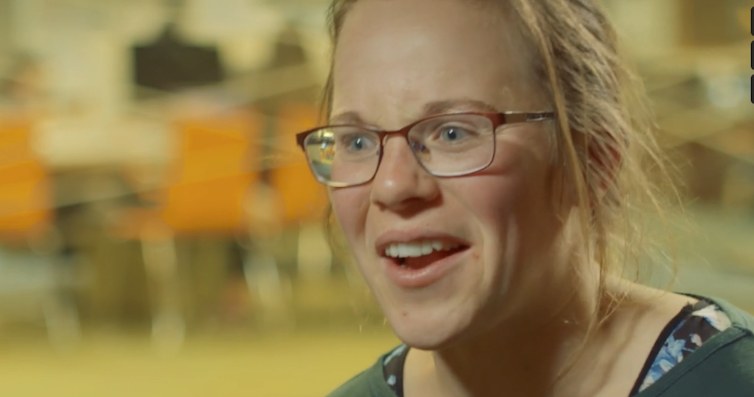 Applying quality criteria in the making of Mapping the Messiness ensured the documentary presents five graduate teachers’ stories with integrity.
Screenshot from Mapping the Messiness (Magnolia Lowe/Vimeo)
Applying quality criteria in the making of Mapping the Messiness ensured the documentary presents five graduate teachers’ stories with integrity.
Screenshot from Mapping the Messiness (Magnolia Lowe/Vimeo)
Predictably, the visual product that evolved draws the viewer in and strongly connects them with the experiences of the graduates. It is difficult to avoid being deeply moved by their stories. Yet beneath this compelling surface lies a rigorous application of quality criteria that guided our interactions with the graduates.
Our learnings from this experience highlighted that the key factors informing a quality visual story are two-fold. It is about, firstly, supporting the storytellers to voluntarily share their own stories and, secondly, ensuring their input is clearly valued and conveyed in the final product.
Read more: In era of fake news, honest documentary makers have never mattered more
The ethics of visual storytelling
We have entered an era where it is vital to apply ethical standards in the capture and curation of visual stories. By applying quality criteria, we introduce a framework that invites peer review, which strengthens the ethical basis of the approach. The opinions and feedback of others provide a way to ensure the credibility and authenticity of the documentary.
Awareness of the need for such an approach is increasing. Changes to ethical codes and practices to counter fake news in our visual streams are being seen in countries like, for example, New Zealand. Collectively, these are steps to avert the consequences of the runaway train.
A recent legal case in New Zealand dismissed an attempt to block the use of a documentary film, developed by an independent current affairs organisation, as evidence. This legal precedent confirms visual storytelling is a legitimate means of delivering evidence and should be considered as a credible source.
This documentary was accepted as evidence at a New Zealand inquiry into the removal of Māori children from their families.Read more: Where are the in-depth documentaries calling to account the institutions that are failing us?
We will continue to be faced with train wrecks in our visual world and will continue to find it hard to draw our eyes away. That is OK. It is part of human nature. But, if we are to have any hope of minimising the wreckage, we need to be reassured that visual stories can be credible and honest. To achieve this, we need to continually question and challenge the quality of the visual content we consume.
All aboard.
Authors: Angela Fitzgerald, Associate Professor of Science Curriculum and Pedagogy, University of Southern Queensland


 Daily Bulletin


