

Shy rodents may be better at surviving eradications, but do they pass those traits to their offspring?
- Written by: Kyla Johnstone, PhD candidate, University of Sydney
Rodents such as house mice (Mus musculus) aren’t just pests at home, they can cause serious damage to native ecosystems.
Lord Howe Island, for example, harboured up to 150,000 introduced rats and 210,000 introduced mice that wrought havoc on the island’s native wildlife, before an intensive eradication effort was carried out. It was declared a success earlier this year, although monitoring for survivors will continue.
Read more: Invasive predators are eating the world's animals to extinction – and the worst is close to home
But emerging research suggests the success of eradicating pests may depend on the personality of individual animals within a species.
Bolder, more active, aggressive or social individuals are more likely to interact with baits, traps or new objects and foods. As a result, they can be removed quickly.
On the other hand, shyer or less active individuals can take longer to be caught.
Why is this so important? Well for starters, animals that actively avoid eradication will breed and repopulate.
If the personality traits of these survivors are reflected in all, or even most, offspring then we could be facing a pest population that is incredibly difficult to remove. This is what our new research aimed to find out.
 Islands, such as Lord Howe Island off NSW, are refuges for a range of wildlife often not found anywhere else in the world.
Shutterstock
Islands, such as Lord Howe Island off NSW, are refuges for a range of wildlife often not found anywhere else in the world.
Shutterstock
When eradication efforts fail
Australia is home to more than 8,300 islands that provide refuge for unique species often found nowhere else in the world, including species now extinct on the mainland.
Introduced mammalian pests, particularly rodents, are huge threats to island species, which often evolve without predators. They don’t recognise these introduced mammals as a threat, making them easy targets.
For example, a 2010 study observed house mice literally eating albatross chicks alive on Marion Island near Antarctica. Neither the chicks nor parents showed any defensive or escape behaviour.
Read more: Feral animals are running amok on Australia's islands – here's how to stop them
Eradicating introduced pest species is the ultimate solution if we want to protect native island ecosystems.
But eradication efforts are only effective if every animal in a population is eliminated. While most failed efforts likely go unreported, on average, 11% of eradication attempts for rodents fail. For house mice in particular, failure rates can be as high as 75%.
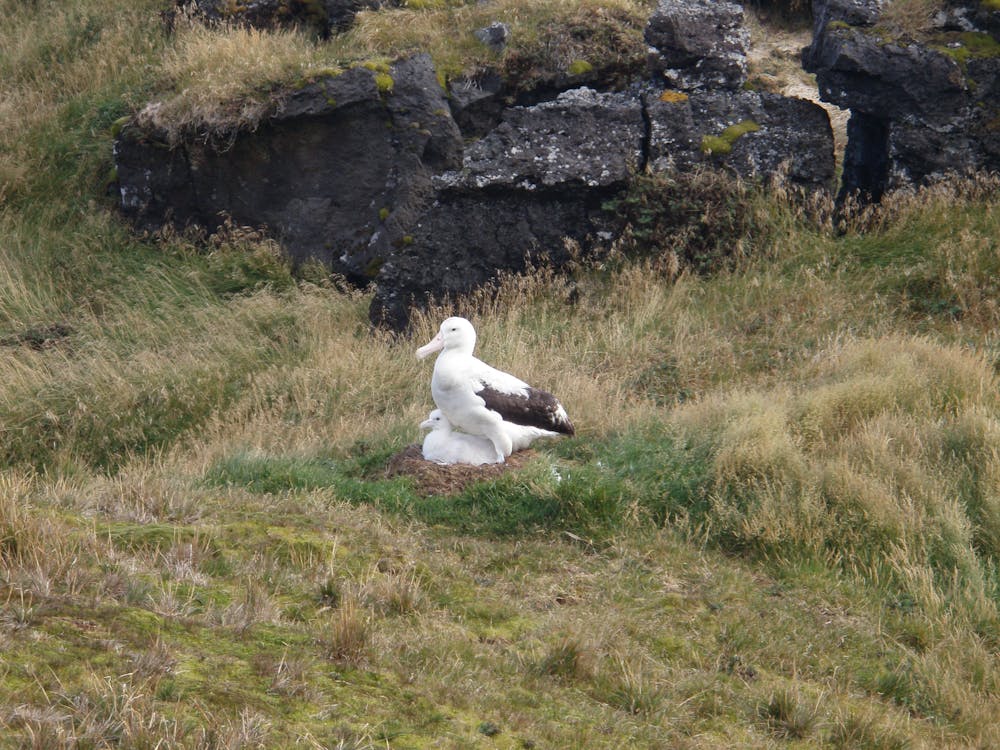 Nesting albatross on Marion Island, where chicks were found to be eaten by introduced house mice.
Shutterstock
Nesting albatross on Marion Island, where chicks were found to be eaten by introduced house mice.
Shutterstock
When efforts fail, pest populations quickly bounce back. One study in 2016 found around 50 rats survived an eradication attempt by avoiding baits on Henderson Island in the South Pacific. Within only two years, the population had exploded into roughly 75,000 animals.
Developing personality traits
So if animal behaviour influences if an individual enters a trap or takes a bait, how much of the parent personality is reflected in the offspring?
If you’ve thought about the similarity between parents and children — in both human and our animal companions — then you know some offspring behave just like their parents, while others are very different.
Personality traits develop through a combination of experience, learning from parents and genetic inheritance.
Humans have selectively bred domestic animals, including dogs, cattle and horses for preferred personality traits, such as docility.
Read more: Understanding dog personalities can help prevent attacks
And studies on laboratory animals, including mice and chicks, have found selecting for preferred traits in parents can lead to these traits being strongly expressed in the offspring within a single generation.
However, can this immediate generational response occur in wild populations?
What our study did
To begin untangling this web, we used house mice as a model species and mimicked a failed eradication, where residual mice (the would-be survivors) were selected for biased personality traits.
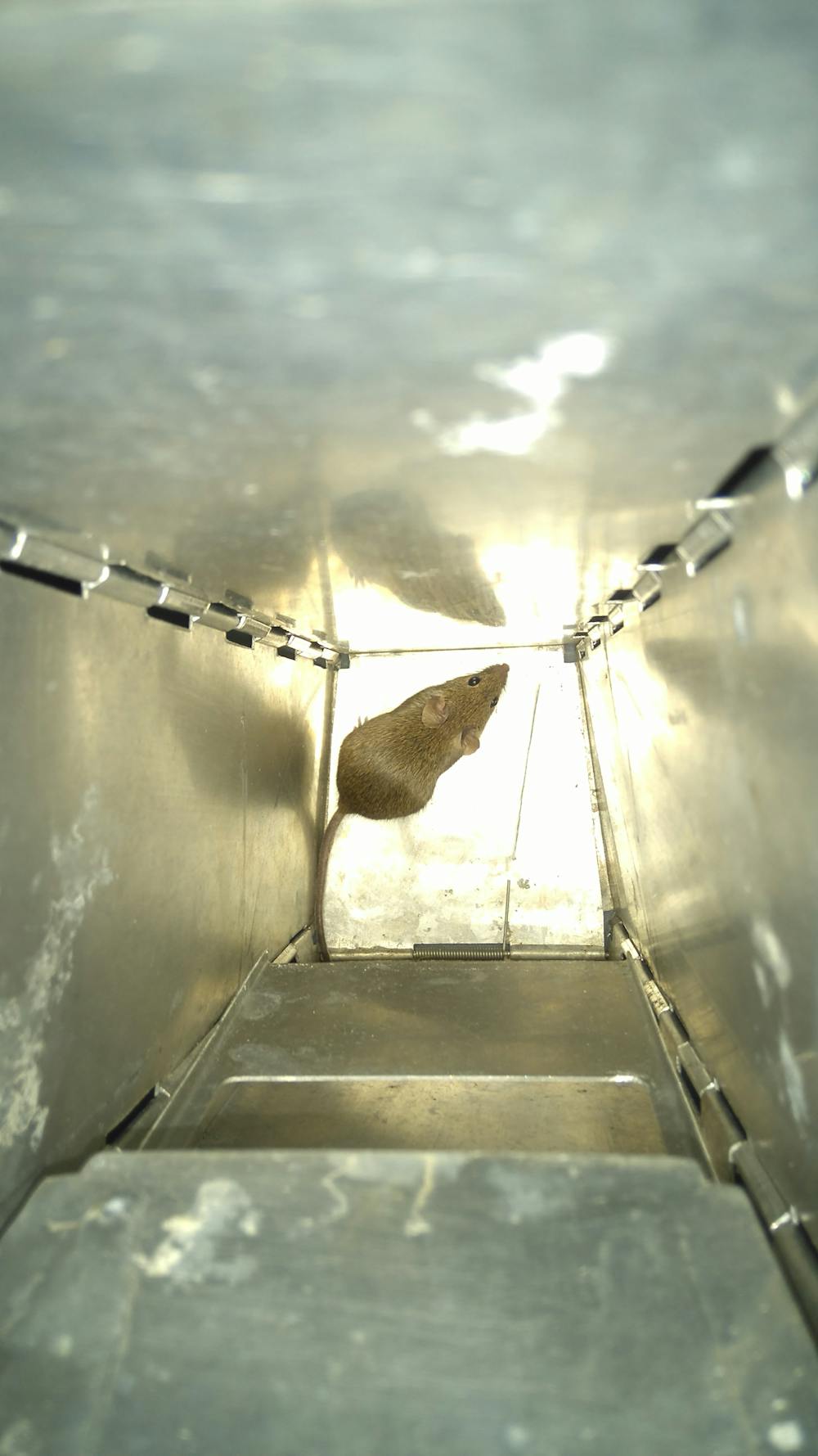 A mouse in our study caught in a trap.
Kyla Johstone, Author provided
A mouse in our study caught in a trap.
Kyla Johstone, Author provided
After catching wild house mice, we tested for personality traits by filming their behaviour in a modified open-field arena. Mice that moved frequently between compartments and into light compartments (which present a risky scenario to a small nocturnal rodent) were considered to be “high active-bold” individuals.
Based on their behaviour, we then grouped individual mice into populations: high active-bold individuals, low active-bold (shy) individuals and intermediate individuals.
Read more: How to know if we’re winning the war on Australia’s fire ant invasion, and what to do if we aren't
To closely mimic wild conditions, we released the populations into large outdoor yards and left the mice to breed for one generation. After recapturing every single mouse from the yards, we tested the offspring for the same personality traits.
The good news
Interestingly, although the parent populations had strong personality biases, there was a broad spectrum of personality among offspring of every population. In other words, bold mice didn’t necessarily produce bold offspring, nor shy mice, shy offspring.
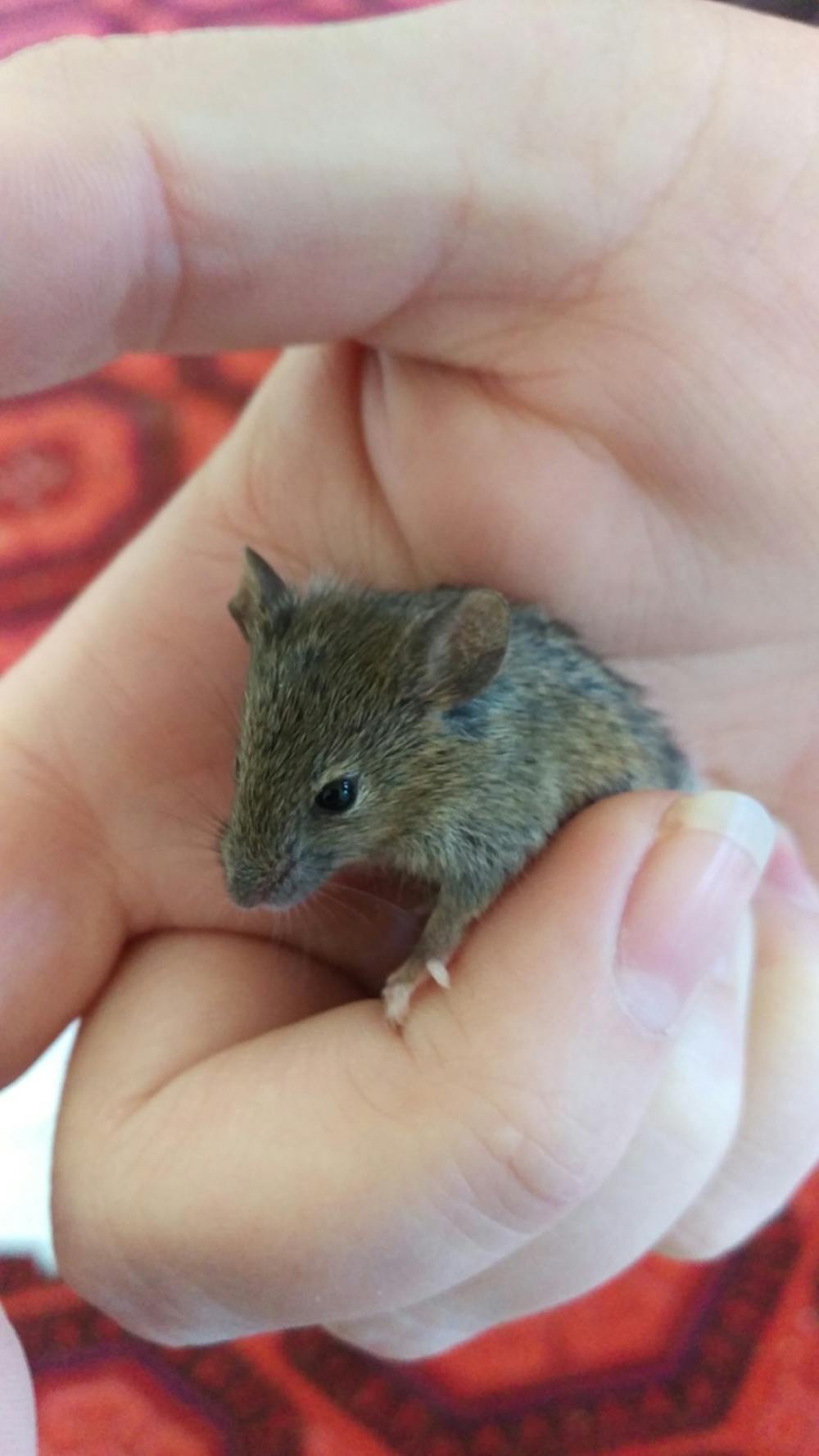 A juvenile mouse from our study. Mice born from shy parents didn’t necessarily have shy personalities.
Kyla Johnstone, Author provided
A juvenile mouse from our study. Mice born from shy parents didn’t necessarily have shy personalities.
Kyla Johnstone, Author provided
This was reassuring news. However, demonstrating there’s no generational bias in house mice doesn’t mean it can’t arise elsewhere or in other species. And our study is an important stepping stone to explore this concept in other invasive species and over multiple generations.
Still, for house mouse eradications at least, our findings suggest that, even if all surviving individuals had a similar personality, by the next generation a broad spectrum of personality should emerge again.
This suggests we’re unlikely to be faced with a population that’s impossible to remove, and can focus on improving success rates for these difficult-to-remove individuals and species.
Authors: Kyla Johnstone, PhD candidate, University of Sydney


 Daily Bulletin


