

Paramedics have one of Australia's most dangerous jobs — and not just because of the trauma they witness
- Written by: Simon Sawyer, Lecturer in Paramedicine, Australian Catholic University
Allegations of widespread sex discrimination and gender-based bullying among Ambulance Victoria staff have highlighted just some of the problems faced by paramedics.
Since the allegations came to light last month, Ambulance Victoria has engaged the Victorian Equal Opportunity and Human Rights Commission to investigate.
While these reports are reason enough for drastic action, they are just part of a broader pattern of poor physical and mental health among Australian paramedics. The profession needs to change, and rapidly.
Paramedicine is one of the most dangerous jobs in Australia, according to epidemiologist Brian Maguire, who has researched violence against paramedics.
Researchers at Flinders University, led by Sharon Lawn (one of this article’s co-authors), published in July a systematic review of research on paramedics’ health. They found that, compared with other professions, paramedics have far higher rates of mental health disorders, workplace violence, workplace injuries, fatigue, sleep disorders and suicide.
There is a pervasive myth the impact of a career in paramedicine stems from unavoidable exposure to traumatic events. However, the researchers found paramedics say workplace culture — and how state and territory ambulance service management treat their staff — may play an even bigger role in the link between paramedicine and poor health.
Before looking at the changes needed, here are five key reasons why Australian paramedics often have poor health:
1. They are at the highest risk for workplace violence
According to Ambulance Victoria, a paramedic is assaulted in Victoria every 50 hours.
And it’s getting worse. A 2018 study by Maguire found reports of assaults against paramedics tripled between 2001 and 2014.
One study of 400 Australian health-care workers in 2003 found paramedics were at the highest risk of experiencing workplace violence.
Another study, led by Malcolm Boyle (another of this article’s co-authors), found many paramedic students undertaking clinical placements experience workplace violence, including sexual harassment by colleagues.
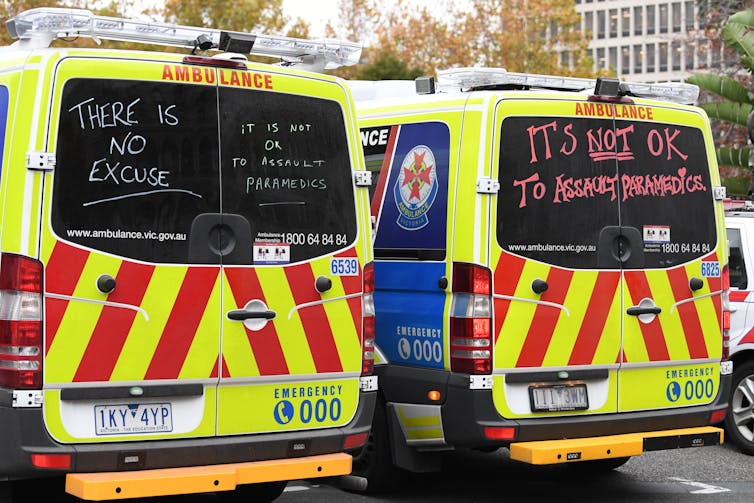 Paramedics are at a high risk of assault and violence. But workplace culture also plays a big role in their poor health.
James Ross/AAP
Paramedics are at a high risk of assault and violence. But workplace culture also plays a big role in their poor health.
James Ross/AAP
2. They are twice as likely to develop PTSD and to suicide
A national Australian study of emergency service workers found two out of five paramedics had been diagnosed with a mental health condition.
Just over 8% of paramedics suffer post-traumatic stress disorder (PTSD), which is double the national average, while 21% have anxiety and 27% depression.
A 2016 study showed paramedics are twice as likely to suicide compared with the general public.
Read more: Paramedics need more support to deal with daily trauma
3. They have significantly poorer sleep
Most paramedics work a mixture of day and night shifts in a single block, which is known to be one of the most damaging work patterns.
Researchers from RMIT surveyed 136 Australian paramedics and found they have significantly poorer sleep quality than the general population, and a significantly increased chance of developing sleeping disorders, which contribute to their already poor mental health.
4. They have the highest risk of workplace injury
Paramedics have the highest injury rate of any profession in Australia, double that of police, and are seven times more likely to be seriously injured at work than the national average.
Alarmingly, the fatality rate for paramedics is six times higher than the general population.
5. More than half of paramedics have ‘total burnout’
Burnout refers to a state of physical, emotional and mental exhaustion. It’s linked to an increased intention to leave one’s career, poorer patient care, and developing depression and anxiety.
One study of 893 Australian paramedics found two-thirds had “work-related burnout”, and more than half had “total burnout”, meaning the burnout was impacting both their personal and work lives.
What has to change?
The evidence paints a bleak picture of paramedicine in Australia. If anything is clear from the recent bullying revelations, it’s that ambulance services are not being proactive enough about their staff’s health and well-being.
Research is showing that potentially the largest threat to paramedics’ well-being is not the traumatic scenes they encounter at work, but rather a workplace culture that undermines their physical and mental health. A fundamental change is needed to how ambulance services management support and treat their staff.
There is a clear need for an independent review into the management of state and territory ambulance services. What has occurred in Victoria is just the tip of the iceberg nationally. These cultural issues have existed for a long time. The decision by Ambulance Victoria to engage the Victorian Equal Opportunity and Human Rights Commission to investigate the allegations of bullying indicates removing decision-making power from the ambulance services is needed and more independent oversight is required nationally.
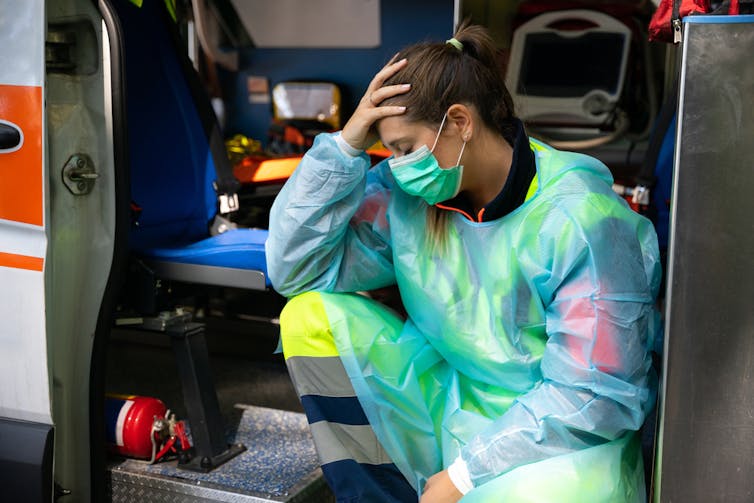 State and territory ambulance services need to urgently address toxic workplace cultures.
Shutterstock
State and territory ambulance services need to urgently address toxic workplace cultures.
Shutterstock
High on the agenda for reform should be building ways of working that encourage healthy work-life balances. We need to address the impact of the career on all aspects of paramedic well-being, including mental health, healthy eating, quality exercise, better sleep, and access to support services. Some ambulance services have created positive change over recent years, but it’s clear this hasn’t been enough.
All forms of workplace violence, which includes bullying and harassment, must stop. There is a need to dismantle the punitive culture that punishes paramedics for speaking out. It’s clear many paramedics don’t feel supported or respected by their management.
Changing the culture is imperative
We also need to acknowledge and address the gender bias in paramedicine and create inclusive workplaces. Female paramedics are at more risk of workplace violence, burnout, and bullying and harassment. Ambulance services need to ensure the safety of all paramedics, as well as fair and open recruitment and development opportunities that don’t disadvantage women.
Most importantly, a drastic change in culture is needed. Ambulance culture is often centred on meeting productivity goals, without acknowledging the human cost. A key performance indicator in ambulance services has long been incident response times, and paramedics are held to account for every delay.
We need to have indicators on workforce health, and chief executives and boards need to be held just as accountable.
We shouldn’t have to sacrifice the health of our paramedic workforce to meet productivity targets.
Authors: Simon Sawyer, Lecturer in Paramedicine, Australian Catholic University


 Daily Bulletin


