

Read The Times Australia

Daily Bulletin

The numbers suggest the campaign for cannabis reform in NZ will outlive the generations that voted against it

  • Written by: Jack Vowles, Professor of Political Science, Te Herenga Waka — Victoria University of Wellington
The numbers suggest the campaign for cannabis reform in NZ will outlive the generations that voted against it

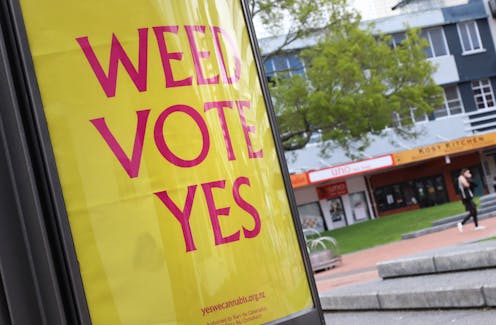
Reactions to the result of the cannabis referendum were highly polarised. Some argued the majority verdict must be accepted. Others pointed to the narrow margin — 50.7% to 48.4% — as evidence that the issue is still alive politically.

The government, however, has seemingly signalled a desire to move on. Before the announcement of the special vote count that narrowed the election night margin considerably, the then justice minister, Andrew Little, said:

The electorate has spoken, they are uncomfortable with greater legalisation and […] decriminalisation of recreational cannabis. The New Zealand electorate is not ready for that, and I think we have to respect that.

Prime Minister Jacinda Ardern echoed those sentiments:

When it comes to a referendum, a majority is a majority and so it hasn’t tipped the balance in terms of what we as a government will do. We gave our commitment to New Zealanders if it won the majority, we would progress legislation. If it didn’t, we wouldn’t.

In the short term, such judgments are understandable. Legalising recreational cannabis use is not an issue a government might need on its policy agenda right now. But in the medium to long term, the wisdom of pushing the matter aside is questionable.

The age factor

Referendums are crude devices and the idea of a “New Zealand electorate” that has collectively spoken is simplistic.

In reality, the electorate is made up of individuals with opinions on cannabis that are far more complex than voting yes or no could adequately express. In particular, the referendum question did not allow a decriminalisation option. There is no basis for interpreting the result as ruling that out.

Read more: If reducing harm to society is the goal, a cost-benefit analysis shows cannabis prohibition has failed

As with the vote on Brexit in Britain, which the old strongly supported and the young strongly opposed, New Zealand’s cannabis referendum results were defined by age.

Post-election survey data provided by Vox Pop Labs for Vote Compass suggest a majority of those over 50 voted against legalisation. A majority of those under 50 voted for it.

Given the narrowness of the margin, assuming preferences remain roughly the same by age and these data are reasonably accurate, it will not be long before generational replacement within the electorate produces a majority for legalisation and control.

Calls for a second vote

Nor do referendums necessarily produce outcomes that are permanently binding. In 1993, New Zealanders voted for MMP, but there was a second (also successful) MMP referendum in 2011 — to “kick the tyres”, as the then prime minister, John Key, put it.

The Brexit vote was also close, and there was a strong campaign for a second referendum once the full implications of Britain withdrawing from the European Union became more apparent than they had been at the time of voting.

Read more: New Zealand's new parliament turns red: final 2020 election results at a glance

A second referendum would likely have reversed the outcome, as more young people would have entered the electorate while many older people would have died in the interim.

The poor quality of debate and widely publicised lies leading up to the decisive vote also fuelled demands for a second Brexit referendum.

The cannabis debate never descended to Brexit levels, although there were accusations the anti-legalisation camp used misinformation to support its cause. But there was also another contentious referendum topic (assisted dying), not to mention a general election, consuming media attention and crowding out informed debate.

Another chance for change

As well, the campaign in favour of change was ill-organised and ineffective, if not naive. The proposed legislation involved two concepts: legalisation and control. The most important of these was control, but the issue in many people’s minds came down to legalisation of what they believed to be a harmful and dangerous drug.

Read more: New law gives NZ police discretion not to prosecute drug users, but to offer addiction support instead

Such a belief can only have been based on two implicit assumptions: that the existing law is effective in reducing harm and damage, and legalisation would increase the odds of harm and damage.

Neither of those assumptions has any basis in evidence. The real debate should have been about controlling various aspects of existing use: criminality, strength of product, age thresholds, taxation and health education.

Given that another referendum in the not-too-distant future could well have a different outcome, there are good reasons to continue the campaign for change.

Authors: Jack Vowles, Professor of Political Science, Te Herenga Waka — Victoria University of Wellington

Read more https://theconversation.com/the-numbers-suggest-the-campaign-for-cannabis-reform-in-nz-will-outlive-the-generations-that-voted-against-it-150073

Business News

Why A WooCommerce Website Designer Matters For Online Growth

Running an online store today requires more than simply listing products and waiting for customers to arrive. Businesses need a website that is fast, reliable, easy to navigate, and designed to suppor...

Daily Bulletin - avatar Daily Bulletin

Turning Your Empty Tables into Revenue

The rise of AI demand tools in hospitality, the EatClub–CommBank partnership, and seven trends reshaping Australian dining  A growing number of Australian venues are turning to AI-powered demand ma...

Daily Bulletin - avatar Daily Bulletin

High-Impact Dental Marketing Strategies That Are Driving Real Practice Growth Today

The landscape of dental practice growth in Australia has shifted dramatically over recent years. Standard, broad-spectrum advertising campaigns no longer yield the return on investment they once did. ...

Daily Bulletin - avatar Daily Bulletin

How Telematics Helps Australian Companies Improve Productivity

Operating a commercial fleet in Australia is a uniquely demanding endeavour. Between the sprawling urban sprawl of cities like Sydney and Melbourne and the immense, unforgiving stretches of the Outb...

Daily Bulletin - avatar Daily Bulletin

Inside the Icon: The BridgeMuseum Officially Opens at the Sydney Harbour Bridge

A bold new way to experience one of Australia’s most recognisable landmarks has arrived, with BridgeClimb Sydney officially opening the all-new BridgeMuseum.  Located inside the Sydney Harbour Bridge...

Daily Bulletin - avatar Daily Bulletin

Is Your Brand Showing Up in AI Search? Most Melbourne Brands Aren't.

The New Front Door Nobody Told You About Something changed. Quietly. Without a press release. The way buyers find businesses in Australia has been rewired. Not replaced, rewired. Google isn't dead...

Daily Bulletin - avatar Daily Bulletin

How Australian Businesses Can Measure SEO ROI

SEO can feel vague when you are staring at a dashboard full of numbers that do not clearly connect to revenue. The key is to measure the right signals in the right order, then tie them back to outcome...

Daily Bulletin - avatar Daily Bulletin

How Commercial Roller Shutters Improve Site Security Without Slowing Operations

Security upgrades can be frustrating when they make everyday work harder. A door that takes too long to open, creates bottlenecks at shift change, or fails at the worst time can turn “better protectio...

Daily Bulletin - avatar Daily Bulletin

Why a Document Destruction Service Still Matters for Modern Businesses

Businesses generate large volumes of information every day, from staff records and contracts to invoices, reports and customer files. While attention often focuses on how documents are stored, the way...

Daily Bulletin - avatar Daily Bulletin

The Daily Magazine

Gold Migration Lawyers in Liquidation: How the Closure Affects Your ART Appeal

If your appeal was with Gold Migration Lawyers, a recent change to how the Tribunal decides cases ...

The pressure cooker: life in urban Australia in 2026

Australian cities have always been demanding. Long commutes, rising housing costs, busy schedules a...

What Actually Makes a Good Criminal Lawyer in Melbourne

Most people only think about this question once. That is usually too late. Most people charged wi...

Why Working With A Chatswood Tutor Can Improve Academic Performance

Academic expectations continue increasing for students across primary school, high school, and senio...

Is It Worth Getting Solar Panels in Melbourne?

The real question is not whether solar works in Melbourne. It works. The question is what it is co...

How A Diploma Of Project Management Builds Practical Skills For Modern Work Environments

Developing the ability to plan, execute, and deliver outcomes efficiently is a key requirement in to...

How to Choose the Right Football for Every Level

Choosing a football may seem straightforward, but the right option depends on who will be using it a...

What to Ask a Wedding Photographer Before You Book

Booking a wedding photographer can feel deceptively simple: you like the photos, you like the vibe...

Why Stress Relief For Dogs Is Essential For Emotional Balance And Long-Term Wellbeing

Managing emotional health is just as important as physical care when it comes to pets, which is why ...