

Group tables, ottomans and gym balls: kids told us why flexible furniture helps them learn
- Written by: Julia E. Morris, Senior Lecturer, Visual Arts Education, Edith Cowan University
The COVID pandemic has meant many students learnt from home for a lot of the year. But with schools returning to normal across Australia, how will students readjust from learning at the kitchen table (or couch, or bedroom) to being at desks and chairs in classrooms?
We conducted a study to find out how primary school students feel about different types of classroom furniture.
The students we spoke to clearly explained the reasons why they prefer certain types of furniture. They know furniture can suit their physical and learning needs, and they talked about how they actively set up their own environments to get them ready for learning in the way they know works best for them.
Teachers and students have the opportunity to think about how the learning environment can be re-imagined to best support students’ (and teachers’) needs.
What do classrooms look like?
Research shows three quarters of primary and secondary students in Australian and New Zealand schools learn in traditional classrooms. The majority of these classrooms have uniform desks and chairs facing the teacher at the front of the room. This type of classroom is a hangover from the industrial revolution.
While some teachers can teach well in such traditional settings, evidence suggests more flexible learning environments are associated with deeper learning. Deep learning is when students go beyond learning facts. They instead apply knowledge to their context, using critical and creative thinking skills to engage in learning they are curious about.
Read more: Knowledge is a process of discovery: how constructivism changed education
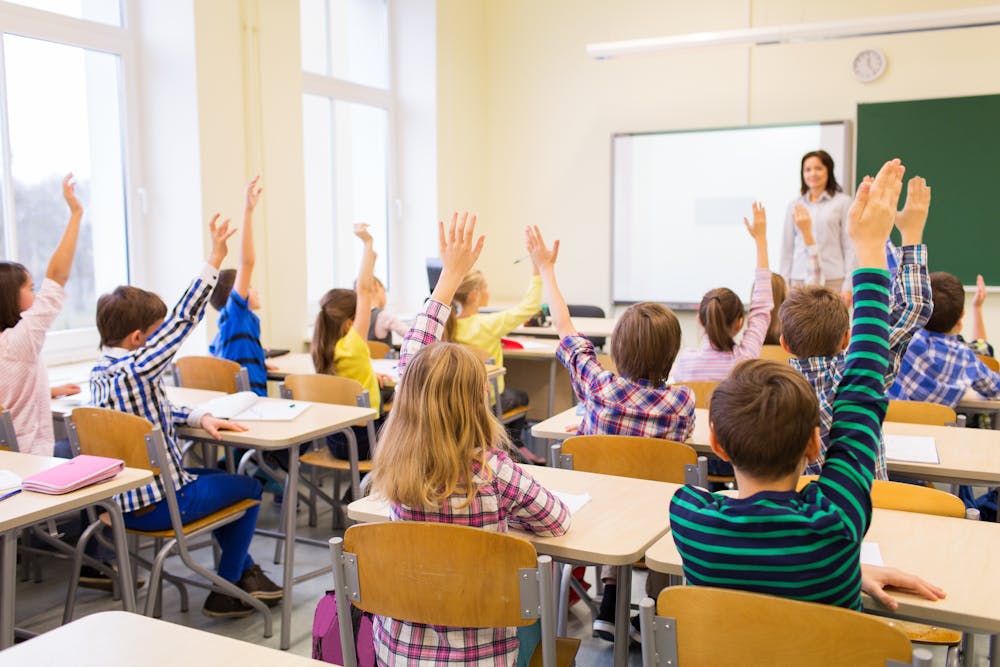 Classrooms where desks are in rows, facing the front, are a hangover from the industrial revolution.
Shutterstock
Classrooms where desks are in rows, facing the front, are a hangover from the industrial revolution.
Shutterstock
Flexible learning environments have a range of furniture options including ottomans, stools, multi-height chairs and different height tables. A mix of private retreat spaces and public group spaces means the teacher is everywhere — there is no front to the classroom.
What students say about classroom furniture
We are conducting a three-year industry-funded study investigating how flexible furniture affects student learning in primary school classrooms.
We surveyed 300 students in Years 3 to 6. About 93% said flexible furniture helped them learn better.
The most popular types of furniture were high tables with height adjustable stools, round or triangular-shaped tables that promoted collaboration, and soft seating like ottomans.
Students said having options meant they could choose furniture to meet their physical and other learning needs.
More than half (54%) of students said comfort was the main reason for their furniture selection. They preferred furniture where they could adjust their position if working in one place for long periods of time.
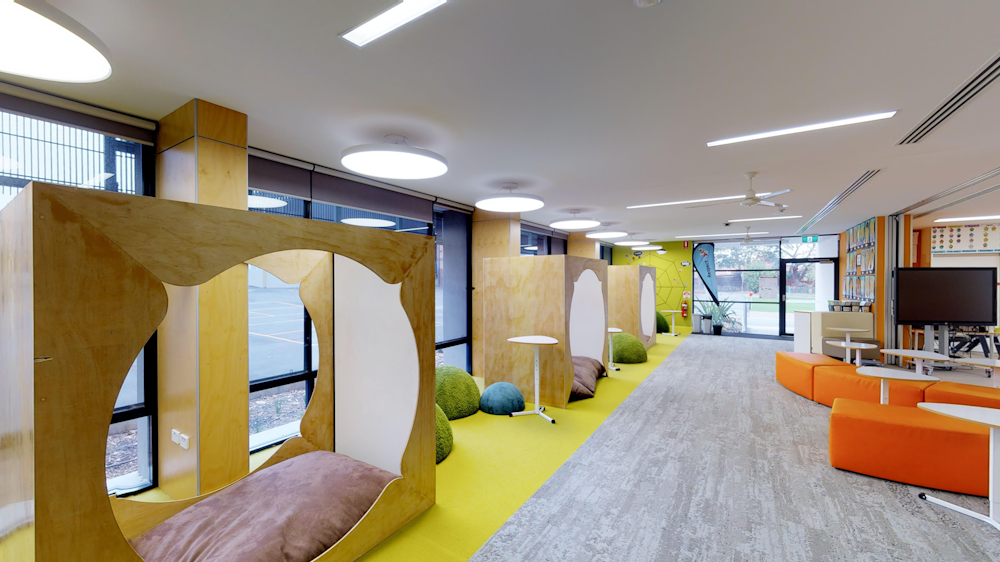 Flexible learning environments include different furniture options, including soft chairs, and no ‘front’ to the classroom.
Author provided
Flexible learning environments include different furniture options, including soft chairs, and no ‘front’ to the classroom.
Author provided
They also liked it when the furniture could suit their body types or manage injuries. One student said he preferred a higher table with a stool because it “helps my back because its strait [sic] and you can’t wobble on it”.
Another said about a multi-height table:
… [it] allows me to either stand or sit while being comfortable.
Students also chose furniture they said helped them learn better. They preferred furniture they could move to support concentration, and facilitate independent and collaborative work.
Students said they made decisions about the arrangement of furniture to manage their behaviour in class. One student told us:
It helps me to stay focused because I have to turn my head to socialise with my friends and if I do that too much my neck will start to hurt.
Portable furniture was also important for students who felt they had extra energy to burn. Small bounces on a gym ball while working helped some relax and stay focused.
Flexible furniture helps teachers too
Teachers spend more time talking at the students, and delivering content, when they are facing the students sitting at rows of desks.
But flexible furniture allows teachers to use more student-centred ways of teaching. This means they give students more autonomy to be active learners, participating in collaboration with peers or leading their own work.
In our study, we noticed teachers spent more time giving instructions to the whole class when using the traditional furniture arrangement. But when flexible furniture was available they gave instructions to smaller groups, making it easier to tailor specific tasks to students and help those who may need it.
Read more: Explainer: what is inquiry-based learning and how does it help prepare children for the real world?
The type of teaching in classrooms with flexible furniture aligns with educational outcomes such as those in the Alice Spring (Mparntwe) Education Declaration, which call for students to become autonomous, confident learners.
We also found teachers felt they built better relationships and trust with students when they were working in flexible furniture arrangements.
While we don’t yet have enough evidence to say using flexible furniture results in higher student achievement, it is clearly a factor that affects students’ learning experience.
Authors: Julia E. Morris, Senior Lecturer, Visual Arts Education, Edith Cowan University


 Daily Bulletin


