

Without visiting headliners, can local artists save our festivals?
- Written by: Asher Warren, Lecturer, University of Tasmania
After its early cancellation in 2020, Dark Mofo just announced June dates for the festival this year, with “some trepidation” according to creative director Leigh Carmichael. Festival organisers said they hoped to create a program with international, national and local acts.
“There’s lots of risk, so it must really be worth doing,” said David Walsh, the owner of MONA, which hosts the festival.
Last year saw the sudden cancellation of arts festivals due to the COVID-19 pandemic. In 2021, events from Coachella to the Port Fairy Folk Festival are being put on ice again.
Conversely, Tasmania’s MONA FOMA festival last month saw a “hyperlocal” approach to programming. Unable to draw headliners from around the world, local artists were front and centre — of the 352 artists involved, 90% were Tasmanian.
By most accounts, it was a success with reviewers and audiences. Big hArt’s Acoustic Life of Boatsheds, which saw performers harness the history and function of waterside structures, was a highlight. MONA FOMA attracted an audience of over 35,000, with around 65% Tasmanian and 35% interstate visitors. Tickets were sold out within three hours of their release, according to organisers.
Could hyperlocal arts programming save Australia’s previously thriving festival scene?
Read more: Drawing inspiration in a pandemic — breath has always been central to theatre
Promises and pitfalls
As festivals here and around the world rethink their operations to adapt and continue during this pandemic, a variety of models have emerged.
The first was a shift to online offerings and live streamed events. Both the current Perth Festival and upcoming Adelaide Festival feature curated streaming offerings in their program — but have been careful to avoid giving it away for free.
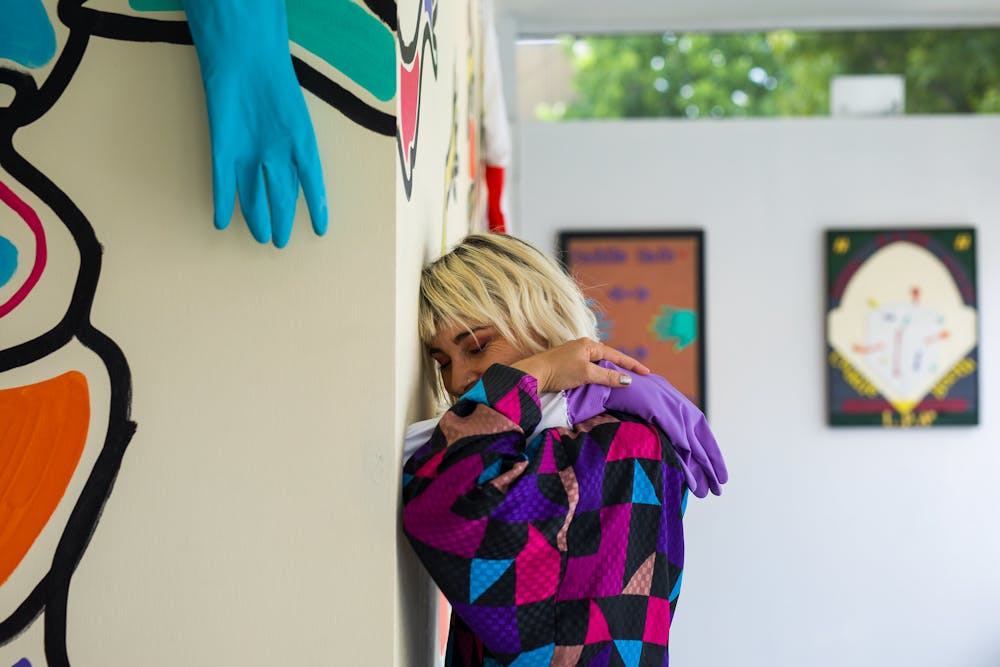 Good Grief artist collective’s World of the Worlds at MONA FOMA.
MONA/Jesse Hunniford
Good Grief artist collective’s World of the Worlds at MONA FOMA.
MONA/Jesse Hunniford
The second model saw festivals emphasise local artists. While the “MONA effect” might imbue this hyperlocal approach with a sense of novelty, it is worth noting Tasmania’s vibrant theatre-making culture was locally focused long before the pandemic struck. The island’s arts ecology can offer some important insights into the promises and pitfalls of major festivals focusing on the local.
The first promise is the capacity for festivals to engage deeply with people and place. This can, through a diversity of local voices, build a sense of community that is complex and multifaceted. An accidental choir formed by seasonal workers from Kiribati who performed at MONA FOMA, for example, forced their inclusion into Tasmania’s cultural scene.
Locally focused festivals can also provide vital support for small to medium companies and emerging artists. Unrelenting cuts in federal funding across the years, prior to COVID-19, have disproportionately hit small and medium arts organisations and individuals. The federal rescue package for the arts — while welcome — is, as Julian Meyrick put it, “a pimple to a pumpkin” in terms of the scale of support the sector requires.
Read more: Latest arts windfalls show money isn't enough. We need transparency
Festivals could, like many local governments, help address the shortfall by funding creative development programs and commissioning new work.
While major festivals have large budgets, these are dependent on drawing audiences. Traditionally the model has been to bring in works of scale from overseas, although this model is shifting.
Without travel, bringing international acts is out the question, and drawing audiences from interstate remains fraught. Snap lockdowns forced Perth Festival to reschedule hundreds of shows and put the Adelaide Fringe on tenterhooks. Which is to point out that a local focus needs to consider both artists, and audiences.
Growing local loyalty
Tasmania’s theatre ecology is again instructive here. While brimming with amateur and community-based theatrical activity, growth in the professional sector has been stagnant. Despite a range of recent, and relatively generous COVID support measures from the state government, funding remains in short supply.
The economic imperative to draw audiences means artistic innovation requires particular bravery. Or, of course, a large personal fortune like that of MOMA founder David Walsh who explained his post-pandemic-shutdown plans to the Australian Financial Review late last year …
I’ll mutate as the world mutates. I’m thinking local because local is all there is.
 Stompin, All Expenses Paid, MONA FOMA 2021.
MONA/Remi Chauvin
Stompin, All Expenses Paid, MONA FOMA 2021.
MONA/Remi Chauvin
Read more: At moments like these, we need a cultural policy
Audience development — to increase interest in, and appreciation of, the performing arts — is key to developing a local focus.
The elephant in this particular room, however, is the rationalisation of festival funding through tourism. Much state, city and council support hinges on the “multiplier effects” of culturally driven visitation. A 2018 Create NSW report by KPMG estimates such “induced expenditure” in NSW in 2016 was $1.5 billion.
This rationale has driven the creation of bodies like Events Tasmania, and the 2015 Tasmanian Government Events Strategy, which awards funding for events on their capacity to bring and circulate visitors around the state.
A festival less travelled would be hard pressed to access this funding, despite delivering key elements of this policy — to foster artistic excellence and enrich community. Moreover, without significant investment to meet these policy aims, “locally” oriented festivals may lack the resources to guard themselves against insularity and parochialism.
Even prior to COVID, numerous festivals (Sydney, Perth, Ten Days) were already starting to give higher priority to local artists and stories.
One festival of particular note is The Unconformity, a small scale biennial festival that takes place in Tasmania’s wild north-west. Rather than shopping for shows on the arts market, the Unconformity brings in artists to engage with community and place through a range of residencies and projects.
This model has produced remarkable works of ambition and complexity, with strong participation from the local community. This is of course nothing new and harks back to the strong community focus of Australian arts festivals throughout the 1980s and 90s.
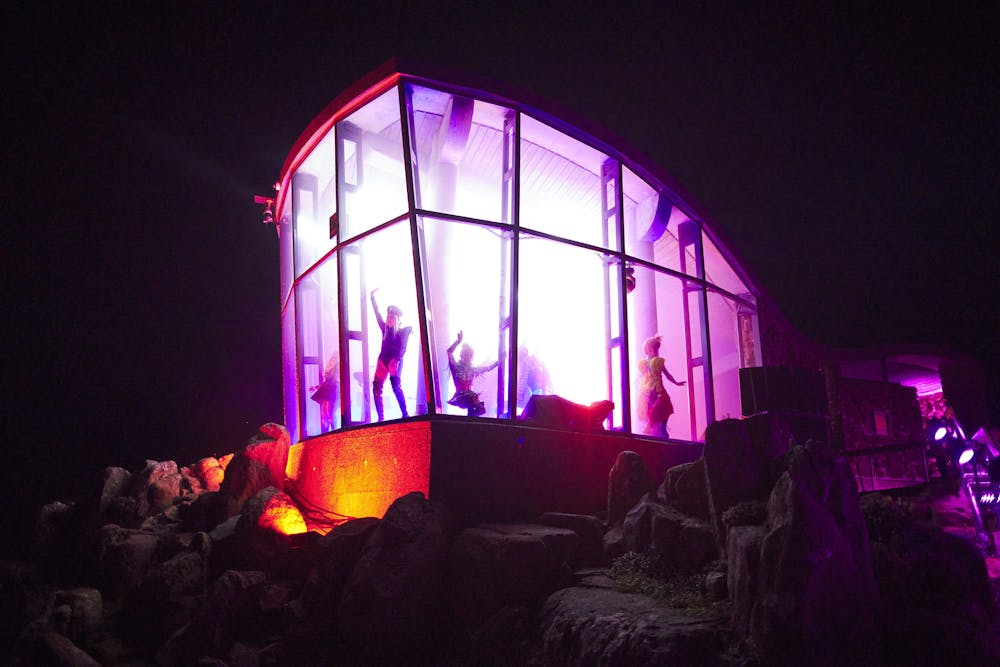 Faux Mo at MONA FOMA (try saying that six times very fast).
MONA/Remi Chauvin
Faux Mo at MONA FOMA (try saying that six times very fast).
MONA/Remi Chauvin
In the short term, audiences have proven keen to emerge from lockdown and return to festivals. MONA FOMA showed they can embrace the pivot to more local programming.
A renewed, ongoing focus on the local, with medium to long term commitment to developing audiences and artists across the nation might do more than save our festivals, it could help rebuild our arts industry in the wake of the pandemic.
Read more: Births, deaths and rituals: a revamped Ten Days on the Island explores Tasmania's past and present
Authors: Asher Warren, Lecturer, University of Tasmania
Read more https://theconversation.com/without-visiting-headliners-can-local-artists-save-our-festivals-154830


 Daily Bulletin


