

Read The Times Australia

Daily Bulletin

NZ's Climate Change Commission needs to account for the huge potential health benefits of reducing emissions

  • Written by: Nick Wilson, Professor of Public Health, University of Otago

The Climate Change Commission’s recent draft report and recommendations has helped to kick-start an extremely important process.

But, as others have argued, there remain serious questions about its narrow view and lack of ambition in key areas.

In particular, the commission has not adequately considered the potential health benefits of climate change mitigation — that is, how reducing emissions involves changes in behaviour and environments that would significantly improve people’s general health.

The evidence for these co-benefits — dietary changes, increased physical activity and reductions in air pollution — is substantial.

Indeed, extrapolating recent international evidence to the New Zealand setting suggests these could ultimately prevent thousands of premature deaths per year. Unfortunately, despite this evidence and the likely impact of those health co-benefits, the commission makes no such estimates.

But there is still time to influence its final report. Submissions to the commission close on March 28.

In the table below we summarise our assessment of the draft report’s attention to the co-benefits in key health areas.

Major gains from a dietary shift

While the report considers some aspects of inequality, this relates mainly to income. It does not touch at all on health inequalities, despite these already being a major concern practically, ethically and from the perspective of our obligations under Te Tiriti o Waitangi (which the report mentions only twice).

The most important gap in the report is arguably the large health gains that could arise from shifts to a more plant-based diet, with reduced consumption of ruminant meat and dairy products.

Read more: NZ's smoking rates dropped dramatically thanks to a hard-hitting campaign. Could we do the same to bring emissions down?

The report may actually be misleading when it says: “Red meat and dairy products from Aotearoa are already some of the least emissions intensive in the world.”

As one government study last year countered, such claims don’t adequately account for “carbon losses arising from forest harvesting, deforestation and scrub clearance”.

We should also account for the carbon costs of drying milk and the biodiversity damage of importing palm kernel for stock feed.

The report also overlooks specific New Zealand research showing major scope for a shift to dietary patterns that are healthier, cheaper, lower in greenhouse emissions and which could reduce overall health-care costs.
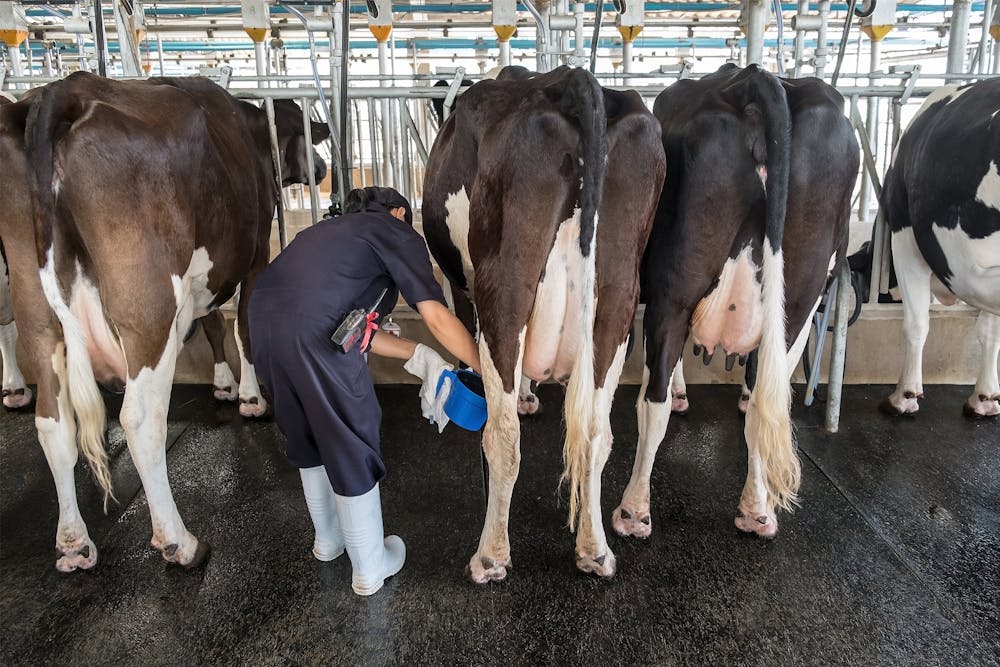
Cows being milked by a farm worker The commission must account for the hidden climate costs of dairy farming and other forms of agriculture. www.shutterstock.com

Recommendations to the commission

It seems clear the health co-benefits of reducing emissions should be used as an explicit unifying theme in the commission’s final report. Identifying meaningful value for the public has the advantage of increasing support for meaningful action.

The idea we can reduce emissions and be happier and healthier (with immediate and local effect) is far more appealing than a technical and industry approach to reducing emissions.

The commission should include reducing health inequalities as a co-benefit. It should also do more to ensure the government’s treaty obligations are met in all significant areas.

To help with that, the commission should include both public health expertise and Māori health expertise among its commissioners.

Read more: Why we should release New Zealand's strangled rivers to lessen the impact of future floods

The commission should also build on the experience of New Zealand’s successful response to the COVID-19 pandemic. This response has shown the benefits of rapid, science-informed and vigorous all-of-government action — and delivered public health and economic benefits.

The final report should explain the likely cost savings of health co-benefits. By reducing health-care costs, the economic impact of responding to climate change might be even less than the commission has estimated, already under 1% of projected GDP.

Combined with the benefits of preventing potentially catastrophic disruptions to planetary systems, the health co-benefits of combating climate change represent a bargain.

Authors: Nick Wilson, Professor of Public Health, University of Otago

Read more https://theconversation.com/nzs-climate-change-commission-needs-to-account-for-the-huge-potential-health-benefits-of-reducing-emissions-156036

Business News

The Rise of Digital Marketplaces in the Australian Trade Sector

For decades, the Australian trade and construction sector operated almost entirely on word-of-mouth recommendations and local community networks. Small business owners typically relied on local newspa...

Daily Bulletin - avatar Daily Bulletin

How Immigration Lawyers Can Help

Introduction Visa decisions can shape employment, family life, study plans, travel, and future residence. A small omission can lead to delay, added expense, or refusal. Immigration lawyers assess l...

Daily Bulletin - avatar Daily Bulletin

How Industrial Drying Equipment Supports Efficient Processing

Many industrial processes require moisture to be removed from compressed air, products or process materials before they move to the next stage. Excess moisture can affect equipment performance, produc...

Daily Bulletin - avatar Daily Bulletin

Practical Ways a Whiteboard Can Improve Workplace Communication

Effective communication helps teams stay organised, share ideas and keep track of important information. While digital tools are now common in many workplaces, a whiteboard continues to provide a simp...

Daily Bulletin - avatar Daily Bulletin

Designing Eco-Friendly Custom Water Bottles for Your Next Event

The Evolution of Sustainable Event Merchandise Event planning has undergone a massive transformation over the last decade. Gone are the days when organizers could hand out cheap, single use plastic...

Daily Bulletin - avatar Daily Bulletin

Why Choosing a Professional Florist Melbourne Makes Flower Delivery Impactful

Flowers have a great power to speak when humans cannot express their feelings with right words. Flowers are the best gifts when you are celebrating a birthday or welcoming a newborn child into your fa...

Daily Bulletin - avatar Daily Bulletin

The Business Case for Choosing Australian Fabricators Over Imported Alternatives

For a long time, you might have defaulted to overseas suppliers when sourcing fabricated metal components for a project. The unit price was lower on paper, and the maths seemed straightforward. That...

Daily Bulletin - avatar Daily Bulletin

Australian organisations are relying on business continuity plans built for a far more predictable world

Tariff escalations, supply chain fragility, geopolitical events, and the ongoing threat of cyber disruption have reshaped the risk environment facing Australian organisations. The problem is that ma...

Daily Bulletin - avatar Daily Bulletin

How to Rent a Car for Uber in Melbourne: What Every New Driver Needs to Know

Starting out as an Uber driver in Melbourne is not as complicated as it sounds but getting the vehicle right is where most new drivers get stuck. Uber has strict requirements around vehicle age, condi...

Daily Bulletin - avatar Daily Bulletin

The Daily Magazine

South African Consular Services Expand to Six Australian Cities

South Africans living in Adelaide, Brisbane and Canberra will now be able to access passport, identi...

How Long Does a Solar Home Battery Last? LFP Cycles and Warranty Explained

A battery does not usually reach its advertised cycle count and suddenly stop working. Capacity ch...

How to Hire a Nanny: A Complete Guide for Families

Finding the right childcare professional can make everyday family life easier and give parents gre...

The Blue-Collar Shortage Employers Can't Solve With More Applicants

Australia's hiring market has cooled considerably since the post-pandemic frenzy of 2021 and 2022. F...

The Playground as Classroom: How Line Markings Are Reinforcing What Students Learn Inside

For a long time, the playground was treated as a break from learning rather than part of it. A place...

How Technology Is Changing the Way Gardens Are Maintained

Garden maintenance has always been a hands on ritual. Mowing on a schedule, watering by instinct, an...

One Blocked Drain Can Become a Whole House Plumbing Problem: How It Happens

A blocked hand basin feels local. So does a slow shower. Homeowners naturally focus on the fixture...

AI in Marketing: From Experiment to Everyday Tool

For the past couple of years, artificial intelligence in marketing has mostly lived in the "let's se...

What Businesses Can Do to Make Sustainability More Practical Day to Day

Sustainability can sound like a huge corporate project, something tied to annual reports, long-term ...