

Thousands of flood-stricken people are sheltering in schools, clubs and halls – but we can do better
- Written by: Mark Maund, Research Affiliate, School of Architecture and Built Environment, University of Newcastle
Some 18,000 people have been evacuated in New South Wales as torrential rain hammers the state. Almost three-quarters of NSW is subject to a severe weather alert.
Right now, thousands of people are sheltering in schools, bowling clubs, community centres and other makeshift evacuation centres.
As always, the State Emergency Service (SES) is doing great work to ensure the safety of the community. And evacuation centre staff and volunteers are doing their utmost to ensure the well-being of the evacuees.
But the floods have revealed, yet again, Australia must better accommodate people displaced by natural disasters. As climate change worsens and extreme weather events become more frequent and severe, we need adaptable, safe, secure and multi-purpose spaces to house those in need – possibly for weeks or months.
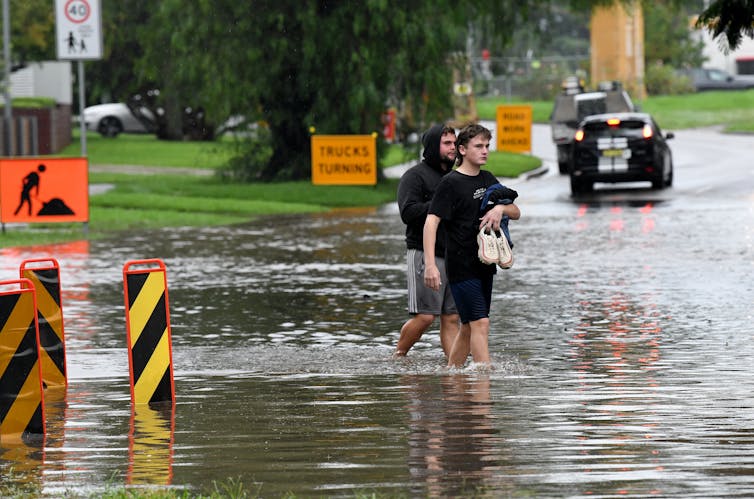 People displaced by the NSW floods may need accommodation for weeks or months afterwards.
AAP
People displaced by the NSW floods may need accommodation for weeks or months afterwards.
AAP
Evacuation centres are crucial
Evacuation and relief centres are often the first place disaster-affected people go, and should provide a minimum standard of living and care. But this standard is not always met.
The recent Royal Commission into National Natural Disaster Arrangements highlighted issues that arose at some centres during the Black Summer fires of 2019-20. These included:
overcrowding, which forced people to sleep on floors with little or no bedding, or in their cars
power and/or communications outages
insufficient storage for food and donated items
inadequate bathroom and kitchen amenities
inability to accommodate pets
outbreaks of illness among evacuees
centres not equipped for people with disabilities, mobility issues or chronic health concerns.
As one heavily pregnant women who gave evidence noted:
[…] my husband, three-year-old daughter, cat and dog had to evacuate for almost two weeks, and I gave birth to my son during our evacuation. This put strain on finances and the mental health of our three-year-old, who became traumatised during the fires.
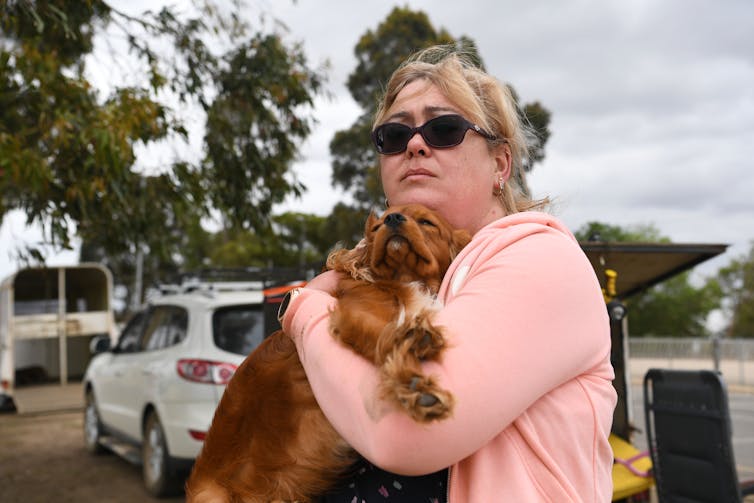 During the Black Summer fires, some evacuation centres could not accommodate pets.
James Ross/AAP
During the Black Summer fires, some evacuation centres could not accommodate pets.
James Ross/AAP
Creating multi-purpose spaces
The royal commission called for better evacuation planning. It said this should include:
assessing the location and standard of evacuation centres
assessing the suitability of evacuation centres to cater for diverse groups
contingencies if evacuation centres are unable to cope
community education on the function and limitations of evacuation centres.
We believe the measures must go further, and a network of multi-purpose buildings is needed across Australia. These should be accessible and designed to meet the needs of a community affected by disaster.
Read more: Not 'if', but 'when': city planners need to design for flooding. These examples show the way
The buildings may be existing, or specially constructed. They might be located at sports grounds, large parks or similar public facilities. When not needed for crisis accommodation, these spaces can also be used for sport, functions and other purposes – as is often the case now.
However, their potential use as an evacuation centre should be integral to their design, rather than an afterthought.
Essential features should include:
enough space to accommodate thousands of people
spaces catering for people with particular needs, such as children
cooking facilities
beds and bedding
toilets and showers
storage facilities
backup power.
These centres should also ensure people can access additional help such as advice on government assistance, recovery schemes, long-term housing options and health support.
Just as importantly, we must identify which agency or agencies will manage the evacuation centre, and define the role the community can play in volunteering time, food, clothing and support to others.
Read more: 'They lost our receipts three times': how getting an insurance payout can be a full-time job
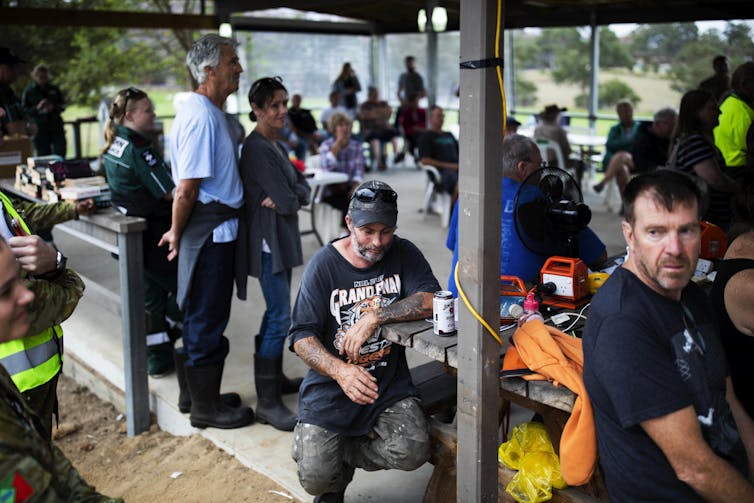 People forced to leave their homes after natural disasters have diverse needs.
Sean Davey/AAP
People forced to leave their homes after natural disasters have diverse needs.
Sean Davey/AAP
Not just an overnight fix
Between July 2019 and February 2020, bushfires in Australia destroyed more than 3,100 homes and displaced 65,000 people.
The Geneva-based Internal Displacement Monitoring Centre (IDMC) says the displacement affected not just housing conditions, but people’s livelihoods, education, security and health. It called for better planning for the next bushfire season, to help minimise the negative impacts.
Many people left homeless by natural disasters remain so for months, or even years, after the event.
For example, a Senate inquiry into lessons from the Black Summer fires this month heard some residents on the NSW South Coast were displaced more than a year after the disaster – partly due to bureaucratic hurdles to accessing disaster relief funding. Some were still living in tents and caravans, and did not have access to running water.
With this in mind, multi-purpose community spaces should be flexible enough to accommodate people for longer periods – allowing them to recover physically, socially and financially.
Under climate change, bushfires and floods will only get more frequent and intense. We must start planning and building better evacuation centres now – let’s not wait for the next disaster.
This story is part of a series The Conversation is running on the nexus between disaster, disadvantage and resilience. You can read the rest of the stories here.
Authors: Mark Maund, Research Affiliate, School of Architecture and Built Environment, University of Newcastle


 Daily Bulletin


