

Yes, COVID vaccines are front and centre. But don't forget about your flu shot
- Written by: Ian Barr, Deputy Director, WHO Collaborating Centre for Reference and Research on Influenza
As the nights begin to close in and the temperatures cool, it’s clear winter is approaching again.
With the winter season comes the risk of the usual winter lurgies, most of which result from respiratory infections. Some of the usual suspects include rhinoviruses (the common cold), RSV (respiratory syncytial virus), and influenza.
This year, of course, we’re also contending with the possibility that SARS-CoV-2 (the virus that causes COVID-19) could escape from its quarantine status and circulate alongside these other viruses.
We don’t know yet how the winter season will play out in terms of respiratory viruses. But one important way we can prepare for it is by getting a flu vaccine.
What will winter bring?
In 2020 there was a paucity of seasonal winter viruses. Only rhinoviruses circulated widely, while the others were either vastly reduced (for example, we saw a very minimal flu season) or very delayed (RSV circulated later than usual in some states until spring or even summer).
So what’s going to happen in 2021? Will it be similar to 2020, or will it be like 2019, which saw very high levels of influenza? Or perhaps something completely different?
We simply don’t know for sure. With COVID-related restrictions having eased in all Australian states and territories — albeit to varying degrees — people are free to move around, come together in crowds, and attend schools, universities and offices.
These activities promote the transmission of respiratory viruses, which explains why we saw such different trends in the usual winter lurgies last year, when we were mixing much less.
Read more: RSV is a common winter illness in children. Why did it see a summer surge in Australia this year?
But the virus circulation needs to start from somewhere. While some viruses are happy to circulate domestically, like rhinoviruses and adenoviruses, others, like influenza, are largely transported into the country each year. So it’s possible that if Australia’s international borders remain closed through winter, we may again have a less serious flu season in 2021.
On the other hand, if borders are opened and the flu does take hold, people might have reduced immunity to the viruses given the missed season last year, and be more susceptible.
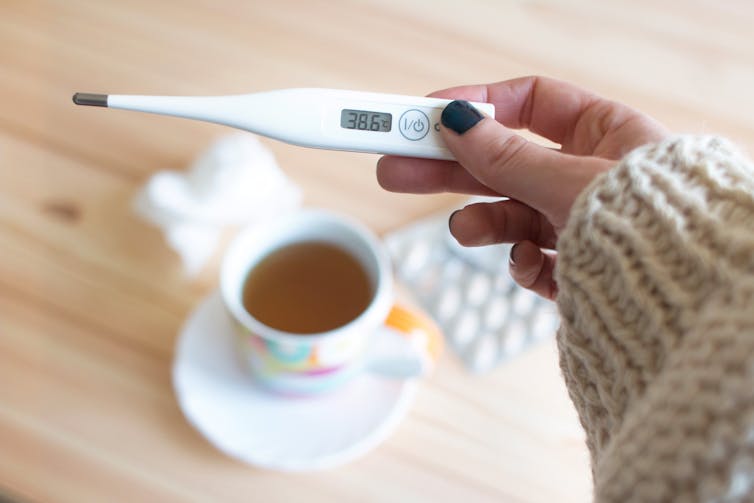 Last winter we saw significantly fewer cases of the flu than usual.
Shutterstock
Last winter we saw significantly fewer cases of the flu than usual.
Shutterstock
A vaccine is your best bet
In the face of this uncertainty, the usual adage prevails: “prevention is better than cure”. The best measure we can take is to get our influenza vaccine.
The flu vaccines available in Australia in 2021 under the National Immunisation Program are:
for children aged six months to five years — Vaxigrip Tetra® (Sanofi) and Fluarix® Tetra (GSK)
for children and adults aged five to 64 years — Vaxigrip Tetra®, Fluarix® Tetra and Afluria® Quad (Seqirus)
for adults aged 65 and over — Vaxigrip Tetra®, Fluarix® Tetra, Afluria® Quad and Fluad® Quad (Seqirus).
The Fluad® Quad vaccine, which is slightly different and more potent than the others, is the preferred vaccine for the over-65 age group. It contains a component called an adjuvant, which helps boost the immune response in elderly people.
This season’s flu vaccines are made up of four different viruses — two influenza A types and two influenza B types. The 2021 vaccines have two changes (both in the influenza A types) from the 2020 influenza vaccines.
It’s very hard to predict in advance which strains will circulate, but the World Health Organization provides guidance on this every year, and recommends which components of the vaccine should be updated accordingly.
All the influenza vaccines used in Australia are inactivated virus vaccines, meaning the virus contained in the vaccine doesn’t replicate, so you can’t get the flu from the vaccination.
Read more: Flu vaccines are updated every year. We can learn from this process as we respond to COVID variants
In addition to the flu vaccines under the National Immunisation Program, a new vaccine called Flucelvax® Quad (Seqirus) is available through retail outlets, like pharmacies, for people aged nine years and older.
This vaccine is the first influenza vaccine available in Australia which has been produced entirely in cell culture, rather than chickens eggs. This new vaccine may have some benefits over the traditional egg-based vaccines for certain people, for example those with severe egg allergies.
How effective are flu vaccines?
Flu vaccines are only moderately effective at preventing infection with influenza. On average, they offer around 60% protection across the population, although rates can often be higher in children.
While this is lower than we’d like, it’s the best measure we currently have to protect us from influenza infections. There’s also evidence it reduces the more severe consequences of being infected, such as being hospitalized or dying.
Scientists are continuing to work on new flu vaccines that may offer greater protection.
 The COVID vaccine rollout might somewhat complicate the flu vaccine rollout this year.
HEALTH QLD/AAP
The COVID vaccine rollout might somewhat complicate the flu vaccine rollout this year.
HEALTH QLD/AAP
The practicalities
This year’s vaccines are already becoming available through pharmacies and some GP clinics, and will be available under the National Immunisation Program from GPs and other providers, such as workplace immunisation programs, in April.
The flu season generally starts in earnest around June, so it’s reasonable to get your vaccine any time between now and then.
Under the National Immunisation Program, some groups are eligible to receive the influenza vaccine for free. These include:
adults 65 and older
all Aboriginal and Torres Strait Islander Australians six months and older
children aged six months to five years
pregnant women
people with certain medical conditions.
For people who don’t fall into these groups, the vaccine costs as little as A$14.99.
Read more: You can't get influenza from a flu shot – here's how it works
Influenza vaccines are being rolled out this year alongside the COVID-19 vaccines. With both programs operating at the same time, there may be some confusion and logistical challenges.
The Australian Technical Advisory Group on Immunisation have recommended a 14-day gap between the COVID and flu vaccinations, regardless of which one you have first. This is something both individuals and providers will need to keep in mind and will mean some extra planning this year.
Authors: Ian Barr, Deputy Director, WHO Collaborating Centre for Reference and Research on Influenza


 Daily Bulletin


