

Victoria’s new feral horse plan could actually protect the high country. NSW's method remains cruel and ineffective
- Written by: Don Driscoll, Professor in Terrestrial Ecology, Deakin University
Feral horses are a catastrophic problem for the environment, particularly in the high country that crosses the New South Wales and Victoria border. To deal with this growing issue, the Victorian government has released a draft feral horse action plan, which is open for comment until April 23.
It comes after Victoria’s old action plan from 2018 proved ineffective, with feral horse numbers increasing in the most recent counts in 2019. This is similar to New South Wales’ current performance, where feral horses are legally protected and numbers are essentially unmanaged.
This new Victorian plan has flaws, but it’s still likely to perform better than the old plan (and the very low benchmark set by NSW), as it generally aims to deploy evidence-based management of national parks.
As Victoria gets on top of its feral horse problem, NSW will be left further behind with a degrading environment and rising costs of horse management.
The feral horse threat
Feral horses degrade ecosystems and threaten native Australian species with their heavy trampling and excessive grazing. They damage waterways and streamside vegetation which, in turn, threatens species that live in and alongside the streams, such as the alpine spiny crayfish, the alpine water skink and the Tooarrana broad-toothed rat. All of these are threatened species.
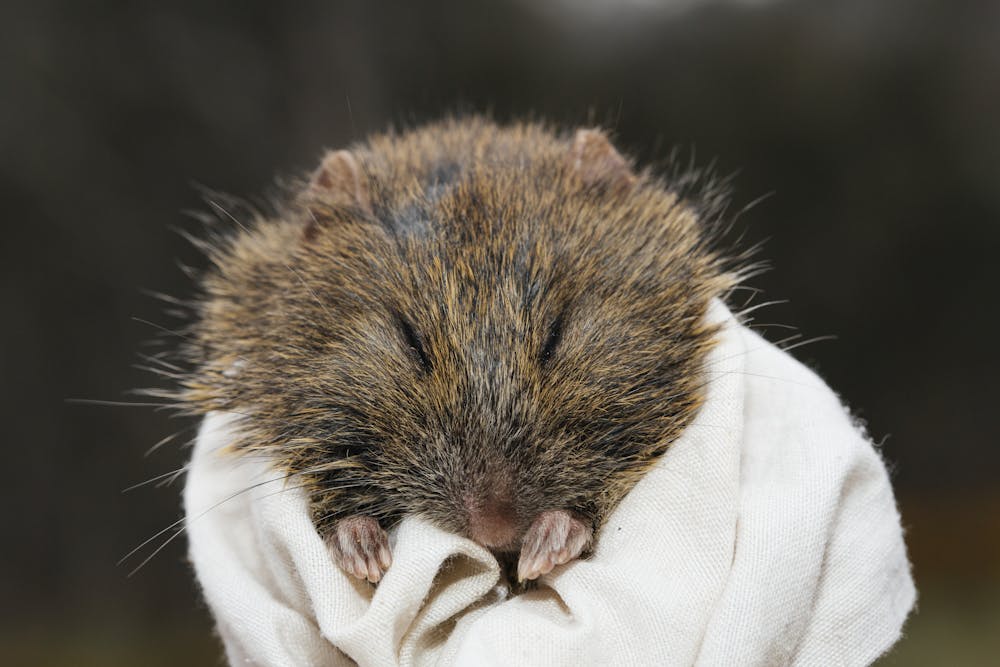 The distribution of the Tooarrana broad-toothed rat has declined alarmingly because feral horses destroy their homes.
AAP Image/Supplied by Museums Victoria, Heath Warick
The distribution of the Tooarrana broad-toothed rat has declined alarmingly because feral horses destroy their homes.
AAP Image/Supplied by Museums Victoria, Heath Warick
Damage from feral horses could worsen as ecosystems recover from the extensive 2019-20 eastern Australian bushfires. Horse grazing could delay animals’ habitat recovery and horse trampling could exacerbate stream degradation after fires.
In fact, there are 24 species that need protection from feral horses after the fires, as identified by the Australian government’s wildlife and threatened species bushfire recovery expert panel in September.
All of this ecosystem destruction translates into substantial economic costs. Frontier Economics released a report in January this year showing the potential benefits of horse control in Kosciuszko National Park was A$19-50 million per year. The benefits accrue through improved recreational opportunities, improved water quality and reduced car crashes involving feral horses.
In contrast, horse control could cost as little as A$1 million per year and up to $71 million, depending on the methods used. Frontier Economics concluded the costs that are incurred by keeping feral horses far outweigh the cost of eradication.
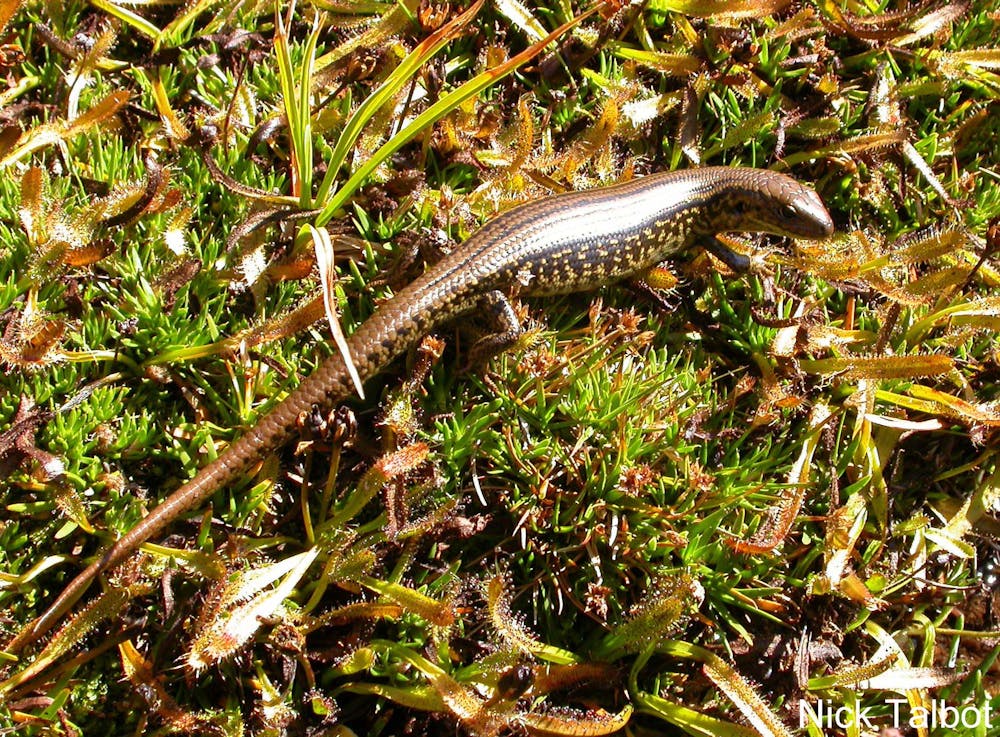 Alpine water skinks are among the vulnerable native species threatened by feral horses.
DEPI/Flickr, CC BY-SA
Alpine water skinks are among the vulnerable native species threatened by feral horses.
DEPI/Flickr, CC BY-SA
Victoria’s new feral horse plan
The draft Victorian feral horse action plan aims to:
remove isolated populations on the Bogong High Plains within three years and prevent new populations from establishing
contain and reduce feral horses in the eastern Alps by removing 500 horses in the first year
use the most humane, safe and effective horse control methods.
The first aim makes complete sense. Removing small populations will always be more humane, cheaper and better for the environment than leaving them uncontrolled.
The second aim is perplexing. Based on 2019 surveys, the draft action plan says there are approximately 5,000 horses in the eastern Alps and the population is growing at 15% per year. If the government continues to remove 500 horses per year after the first year, it could see the population rise to more than 9,000 over ten years, despite culling 5,000 horses in that time.
Read more: Double trouble as feral horse numbers gallop past 25,000 in the Australian Alps
In contrast, removing 2,000 horses per year could see the population controlled within three years. Reducing horse numbers rapidly results in the fewest horses having to be culled in the long term.
The third aim of the Victorian draft action plan gives appropriate and strong emphasis to animal welfare. Controlling horse numbers can be morally challenging, and requires a clear understanding of the trade-offs.
 Feral horses often starve or get hit by cars in the high country.
AAP Image/Kim de Govrik
Feral horses often starve or get hit by cars in the high country.
AAP Image/Kim de Govrik
Without horse control, native animals are killed when their habitat is destroyed, unique Australian ecosystems are degraded, horses themselves starve or die of thirst in droughts, and the economic costs of inaction escalate. To avoid these costs, horse numbers must be reduced by culling.
This is the grim reality, but with careful attention to animal welfare, the draft strategy will ensure horse control is managed humanely, with control methods based on evidence rather than hyperbole.
Money wasting in NSW
Victoria’s plan is in stark contrast to the NSW government’s approach. In 2018, the NSW government passed the so-called “brumby bill”, which protects feral horses in Kosciuszko National Park.
Read more: Passing the brumby bill is a backward step for environmental protection in Australia
The current method of control in NSW is to capture the horses and transport them to an abattoir if they cannot be re-homed. But evidence shows culling has fewer animal welfare concerns than this method.
And in the latest round of money-wasting horse management, the NSW government trapped 574 horses over the past year, but released 192 females and foals back into the park. If the program is aimed at reducing horse numbers, releasing the most fertile animals back into the population is counter-productive.
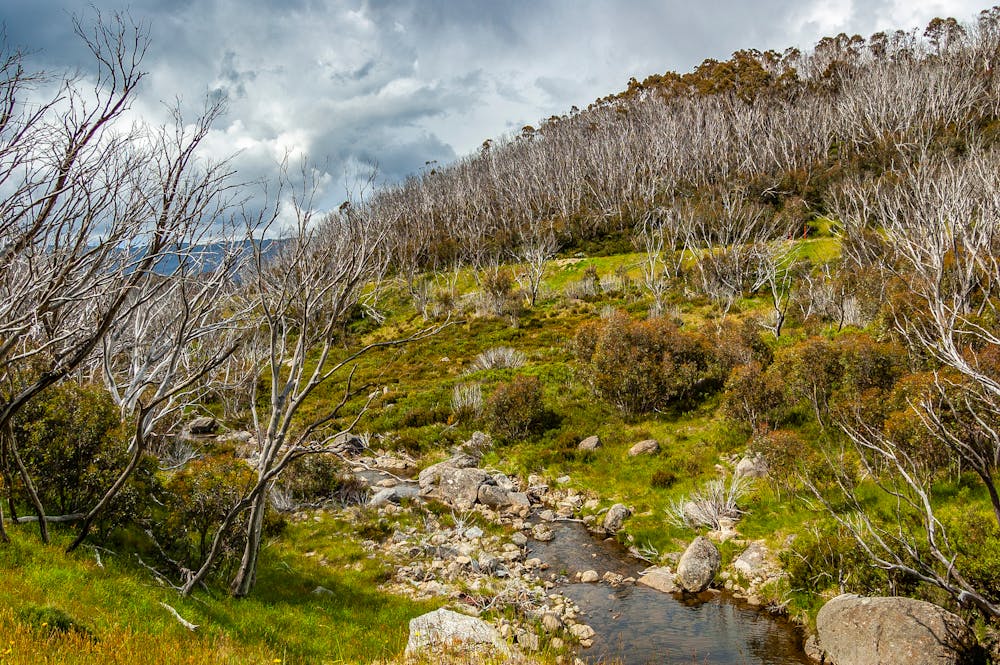 Feral horses are exacerbating the damage from recent bushfires in the High Country.
Shutterstock
Feral horses are exacerbating the damage from recent bushfires in the High Country.
Shutterstock
What’s more, removing 300-400 horses per year has little impact on overall numbers. There are around 14,000 horses in Kosciuszko National Park, with a growth rate of 23% per year. This means more than 3,000 horses must be removed just to prevent the population from getting bigger.
The high country without feral horses
If the Victorian draft plan can be improved to invest in rapid horse reduction and ecosystem restoration, we can expect to see quagmires created by trampling horses return to functioning ecosystems and the recovery of threatened species.
Stream banks can be stabilised and then dense grass tussocks and sedges will return, creating homes for threatened skinks, crayfish and the Tooarrana broad-toothed rat.
While Kosciuszko’s alpine ecosystems continue to decline under the NSW government’s political impasse, the Victorian Alps will become the favoured destination for tourists who want to see Australia’s nature thriving when they visit national parks.
Read more: To fix Australia's environment laws, wildlife experts call for these 4 changes — all are crucial
Authors: Don Driscoll, Professor in Terrestrial Ecology, Deakin University


 Daily Bulletin


