

Here's why the planned NDIS reforms discriminate against Aboriginal and Torres Strait Islander people
- Written by: John Gilroy, ARC Research Fellow in Indigenous Health, Disability and Community Development, University of Sydney
The National Disability Insurance Scheme (NDIS) is one of the greatest human services reforms in Australia’s history, and holds great promise in improving the lives of hundreds of thousands of people with disability.
But the federal government’s proposed “independent assessments” aren’t the way forward for Aboriginal and Torres Straight Islander people with a disability.
I’m a Koori bloke from the Yuin Nation who lives with disability and has a research career spanning nearly 20 years. The biggest problem I have with the proposed framework is that it’s disrespectful and discriminatory towards Aboriginal and Torres Strait Islander people.
Rather than designing another layer of bureaucracy, I recommend the National Disability Insurance Agency (NDIA) invests more resources into building and up-skilling the current NDIS planning workforce and the Aboriginal community-controlled services sector.
Aboriginal and Torres Strait Islander people with disability have a right to use health specialists with whom they have an established relationship. As such, the government should invest more resources into the health workforce to build consistency in the NDIS planning process.
Read more: 'Dehumanising' and 'a nightmare': why disability groups want NDIS independent assessments scrapped
What are these reforms again?
Currently, people seeking access to the NDIS are required to work with their health professionals to see if they’re eligible. After this, they work with the NDIS, or an NDIA-funded agency partner, to design a funded package.
The federal government’s proposed independent assessments would see a government-approved health professional unknown to the person with disability visit to determine their eligibility for the NDIS and the amount of funding they would receive. The meetings would take as long as three hours, or longer if there’s a disagreement between the assessor and the applicant’s family.
New NDIS minister Linda Reynolds put on hold the reforms in April amid widespread backlash, although this week she promised “some form” of independent assessments will go ahead.
The NDIA justification for the independent assessments is:
To decide whether a person is eligible for the NDIS and the kinds of supports they receive, we need to have consistent and reliable evidence that captures detail of their functional capacity, and the environment in which they live.
Critics say the reforms are a cost-cutting exercise in response to the cost blow-out of the NDIS, and warn the changes will make it harder for people to access the scheme.
The model is discriminatory
The proposed independent assessment model is discriminatory to Aboriginal and Torres Strait Islander people.
The model would further disadvantage Aboriginal and Torres Strait Islander people living in remote and rural areas, who rely on visiting professionals and e-health service models. It already takes months or even years to get into the NDIS and complete the planning process. The proposed model adds another hurdle and will likely extend the time frame for NDIS assessments for Aboriginal and Torres Strait Islander families.
The first independent assessment pilot program was conducted in 2018, and only 1% of 513 people involved were Aboriginal and Torres Strait Islander people. And during the second pilot, before it was paused in March 2020 due to the COVID-19 pandemic, only 4% of the 99 people involved were Aboriginal and Torres Strait Islander people. This participation rate is inadequate.
None of the eight NDIA-funded organisations delivering the independent assessments are Aboriginal community-controlled. Adding salt to the wound, the NDIA says these agencies:
[…] understand and have experience of the disability population in their local area, including Aboriginal and Torres Strait Islander and Culturally and Linguistically Diverse (CALD) groups and communities.
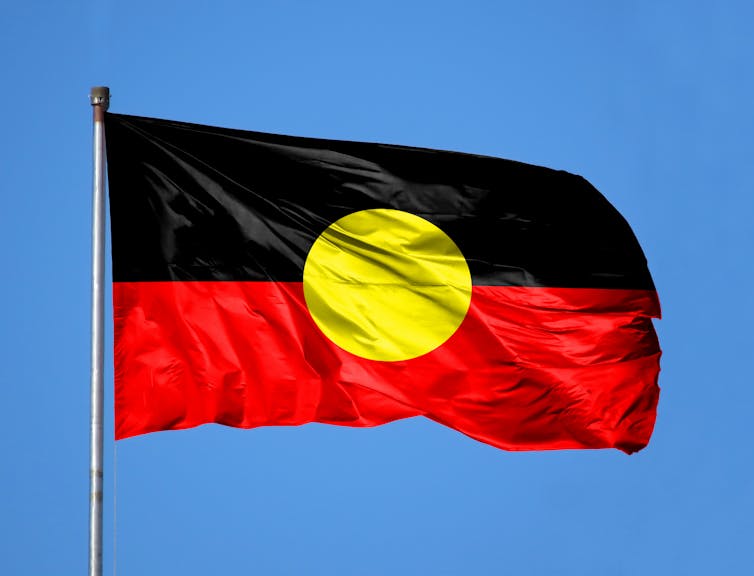 Many Aboriginal and Torres Strait Islander people would prefer to work with health professionals they already have a relationship with, rather than government-approved workers they’ve never met.
Shutterstock
Many Aboriginal and Torres Strait Islander people would prefer to work with health professionals they already have a relationship with, rather than government-approved workers they’ve never met.
Shutterstock
Simply giving professionals training in cultural competence or cultural safety isn’t enough to establish a culturally safe NDIS environment.
It’s unknown if there’s a requirement for the independent assessment agencies to have Aboriginal workers or Aboriginal allied-health assistants.
Most of the suite of independent assessment tools haven’t been rigorously tested or evaluated for their application with Aboriginal and Torres Strait Islander families. Assessment tools should be evaluated with Aboriginal and Torres Strait Islander families to ensure they’re applicable for cultural and social norms before they are endorsed by governments.
The NDIA says some of these tools are linked to the World Health Organization’s International Classification of Functioning, Disability and Health, which is a framework for classifying disability and functioning. My research shows the framework hasn’t been evaluated with Aboriginal and Torres Strait Islander communities during its development, except one small study in the Northern Territory.
In my professional view, the framework needs to be “Indigenised” to ensure NDIS assessment models are respectful for Aboriginal and Torres Strait Islander people.
A trusting relationship with a health professional is key
Aboriginal and Torres Strait Islander people currently represent nearly 7% of all NDIS package holders. According to Australian Bureau of Statistics data from 2015, the rate of disability in the Aboriginal and Torres Strait Islander population is nearly twice that of the non-Indigenous population.
My research found Aboriginal and Torres Strait Islander people often have a high level of distrust of government systems due to a history of racism and child removal, meaning many don’t engage with disability services. However, generally, Aboriginal and Torres Strait Islander people engage with disability service providers if they have an established relationship with a worker in that organisation.
In some cases, Aboriginal and Torres Strait Islander people prefer Aboriginal and Torres Strait Islander workers over non-Indigenous workers. GP Debra Blackmore, who works for the Victorian Aboriginal Health Service, explained this perfectly in a submission to a parliamentary inquiry into the independent assessments, stressing:
[…] the importance of long-term therapeutic relationships in building trust, understanding nuances of communication, creating culturally safe spaces and ensuring patients feel safe and confident enough to appropriately express their needs and concerns.
The proposed independent assessments are the antithesis of Aboriginal and Torres Strait Islander cultural models of health and disability. The proposed model is purely based on the medical model of disability and it excludes Aboriginal and Torres Strait Islander cultural nuances of the social experiences of disability. What’s more, the independent assessment meetings could trigger post-traumatic stress disorder symptoms linked to a history of disablism, racism, stolen generations, and personal anxiety.
Authors: John Gilroy, ARC Research Fellow in Indigenous Health, Disability and Community Development, University of Sydney


 Daily Bulletin


