

'One sip can kill': why a highly toxic herbicide should be banned in Australia
- Written by: Nedeljka Rosic, Senior Lecturer, Southern Cross University
There’s a weedkiller used in Australia that’s so toxic, one sip could kill you. It’s called paraquat and debate is brewing over whether it should be banned.
Paraquat is already outlawed in many places around the world. The Australian Pesticides and Veterinary Medicines Authority has been reviewing paraquat’s use here for more than two decades, and its final decision is due later this year.
We are medical and environmental scientists, and have researched the harmful effects of paraquat, even when it’s used within the recommended safety range. We strongly believe the highly toxic chemical should be banned in Australia.
The potentially lethal effects on humans are well known. In Australia in 2012, for example, a farmer died after a herbicide containing paraquat accidentally sprayed into his mouth. And our research has found paraquat also causes serious environmental damage.
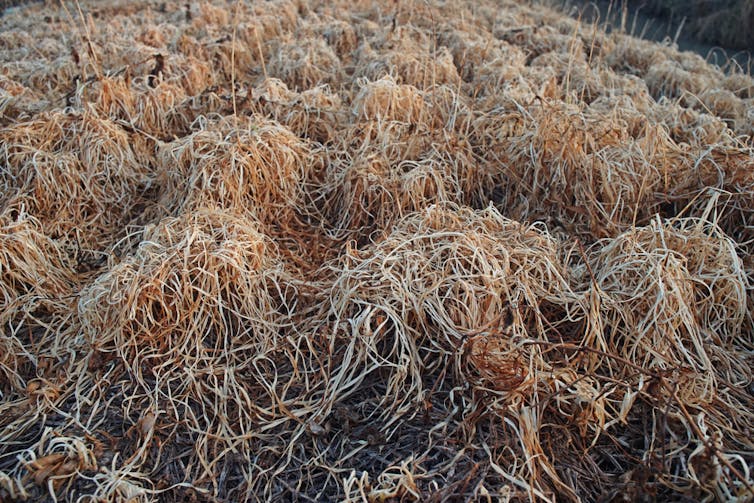 Paraquat is used to spray crops, but can harm humans and wildlife.
Shutterstock
Paraquat is used to spray crops, but can harm humans and wildlife.
Shutterstock
Paraquat: the story so far
Paraquat, branded as Gramoxone, has been used since the 1950s. It’s mostly deployed to control grass and weeds around crops such as rice, cotton and soybeans.
Paraquat is registered as a schedule 7 poison on the national registration scheme, meaning its use is strictly regulated.
Australia’s biggest supplier of paraquat says it should not be banned, insisting herbicides containing it are “safe for people and the environment when used for their intended purpose and according to the registered label instructions”.
Farmers have also argued against a ban, saying it would force them to use more expensive, less effective alternatives and reduce crop yield.
Paraquat has been banned in more than 50 countries, including the United Kingdom, China, Thailand and European Union nations. However, it’s still widely used by farmers in the developing world, and in Australia and the United States.
Read more: Ban on toxic mercury looms in sugar cane farming, but Australia still has a way to go
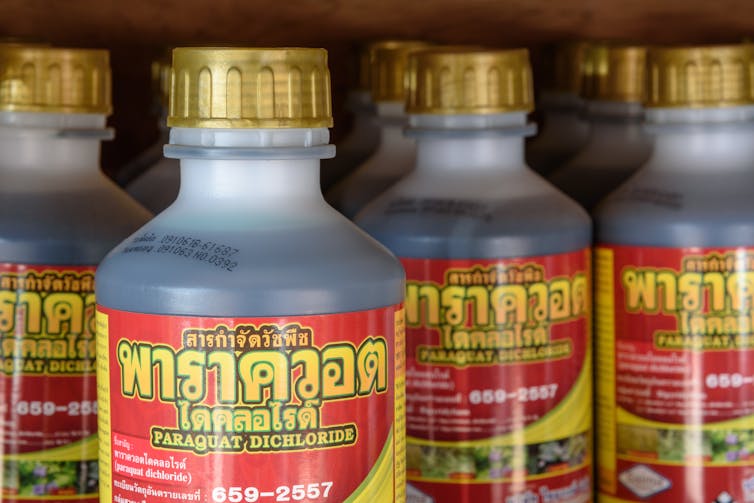 Paraquat is now banned in Thailand, among other nations.
Shutterstock
Paraquat is now banned in Thailand, among other nations.
Shutterstock
A chemical peril
Paraquat is a non-selective herbicide, which means it kills plants indiscriminately. It does so by inhibiting photosynthesis, the process by which plants convert sunlight into chemical energy.
Paraquat stays in the environment for a long time. It’s well known for causing collateral damage to plants and animals. For example, even at very low concentrations, paraquat has been found to harm the growth of honey bee eggs.
Exposure to living organisms can occur by spray drift or when paraquat is sprayed on crops then reaches surface and underground sources of drinking water.
Paraquat can have unintended consequences for biological organisms and the environment, particular in waterways. Our recent paper summarised the evidence of the harmful effects of paraquat at realistic field concentrations.
We found evidence that paraquat can severely inhibit healthy bacterial growth in aquatic environments, which in turn affects nutrient cycling and the decomposition of organic matter.
The research also shows paraquat can distort tropical freshwater plankton communities by negatively impacting metabolic diversity and reducing phytoplankton growth.
In fish, paraquat has been found to lead to a death rate of common carp three times higher than the weed it is used to control.
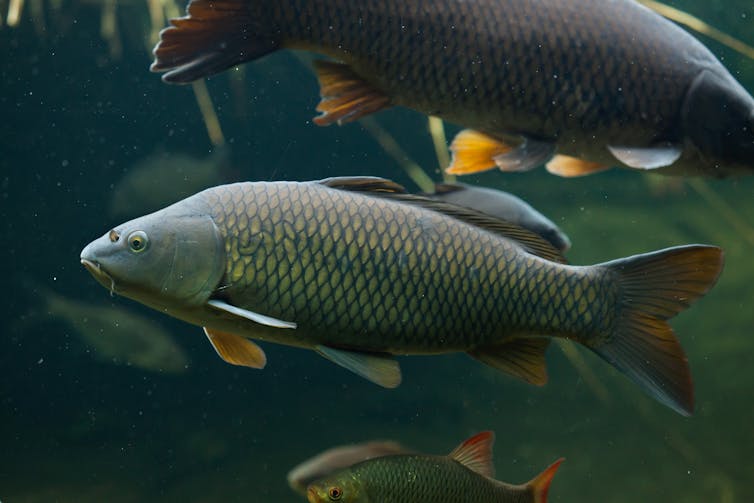 Research shows paraquat kills common carp at a higher rate than the weed it’s meant to control.
Shutterstock
Research shows paraquat kills common carp at a higher rate than the weed it’s meant to control.
Shutterstock
‘One sip can kill’
In addition to the environmental effects, of course, paraquat is highly toxic to humans. A small accidental sip can be fatal and there is no antidote.
The US Centers for Disease Control and Prevention says paraquat is a leading cause of fatal poisoning in parts of Asia, the Pacific Islands, and South and Central Americas.
Paraquat enters the body through the skin, digestive system or lungs. If ingested in sufficient amounts, it causes lung damage, leading to pulmonary fibrosis and death through respiratory failure. The liver and kidney can also fail.
Several recent incidents in Australia demonstrate the risks of paraquat poisoning due to human error, even within the current strict regulations.
According to news reports, the Queensland farmer poisoned by paraquat in 2012 was filling a pressure pump to control weeds on his property. The unit cracked and paraquat sprayed over his body and face, entering his mouth.
In 2017, an adult with autism took a sip from a Coke bottle used to store paraquat. The bottle had been left in a disabled toilet at a sports ground in New South Wales. The man was initially given 12 hours to live, but fortunately recovered after two weeks in hospital.
Read more: Pesticides and suicide prevention – why research needs to be put into practice
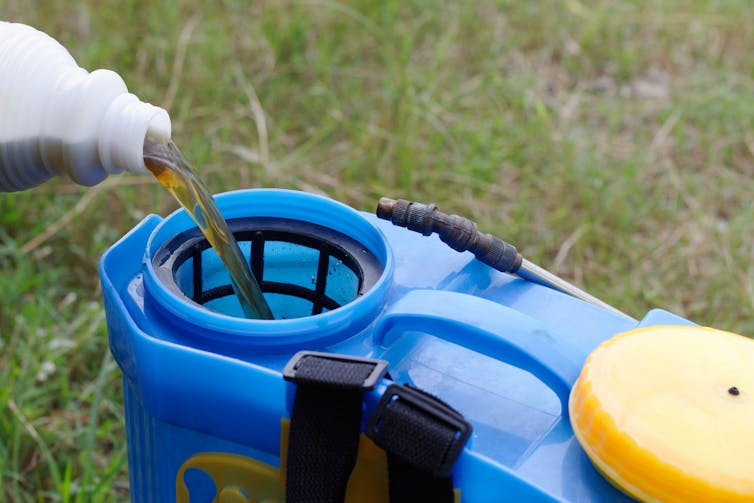 A Queensland farmer died in 2012 after paraquat accidentally sprayed in his face when he filled a pressure pump.
Shutterstock
A Queensland farmer died in 2012 after paraquat accidentally sprayed in his face when he filled a pressure pump.
Shutterstock
Paraquat: not worth the risk
There’s a growing awareness of the threats posed by global chemical use. In fact, a paper released this week suggests the potential risk to humanity is on a scale equivalent to climate change.
Paraquat is no doubt an effective herbicide. However, in our view, the risks it poses to humans and the environment do not outweigh the agricultural benefits.
Current regulation in Australia has not prevented harm from paraquat. It’s time for Australia to join the movement towards a global ban on this toxic chemical.
Read more: The real cost of pesticides in Australia's food boom
Authors: Nedeljka Rosic, Senior Lecturer, Southern Cross University


 Daily Bulletin


