

Insecure housing and overcrowding risk children's health. But we've found a way to help
- Written by: Matthew Ankers, PhD Candidate , Flinders University
More than 19,000 Australian children were recorded homeless on census night in 2016. That’s about one in six of the nation’s homeless population.
Many more children live in insecure housing, overcrowded spaces with a lack of privacy or security, or have to move often between accommodation, making it difficult to establish a routine.
Housing stress, spending more than 30% of the family budget on accommodation, can see families have utilities cut off. They may also not have the resources to buy or cook nutritious food, afford school uniforms or transport to school.
Read more: Family break-up raises homelessness risk, and critical period is longer for boys
A large proportion of homeless children are affected by family breakdown and violence. In 2017-18, almost half (45% or 29,600) of children receiving help from specialist homelessness services did so for reasons related to family violence or breakdown.
Homelessness, inadequate housing and family violence can seriously impact a child’s well-being. And with the COVID-19 pandemic making it harder to keep a job, stay in secure housing and remain free of family violence, the situation is likely to get worse.
Read more: 'I didn’t want to be homeless with a baby': young women share their stories of homelessness
How does homelessness affect children?
The impacts of homelessness and inappropriate shelter on Australian children are considerable.
Inappropriate shelter can result in poorer academic outcomes for children. Frequently moving home or schools, disturbed sleep, a lack of space to study and costs associated with transport, school supplies and uniforms are key issues for people who are homeless or suffering housing stress. These factors all reduce a child’s ability to engage with school.
Health care may be put off, or be piecemeal, due to the cost and ability to access services.
Read more: Childhood homelessness makes for adult unemployment: study
Our study from 2019-20 found 24% of children presenting for care had a severe health issue that required immediate treatment. Only 6% had a full vaccination history. And 62% of all children presented with some form of ill health.
This is due, in part, to waiting times for health services being longer than the period homeless services can secure accommodation for families in need.
In our study, for example, clients had been asked to wait 12 months for urgent medical/surgical care, but only had accommodation approved for three months. This means families may move on before an appointment is available.
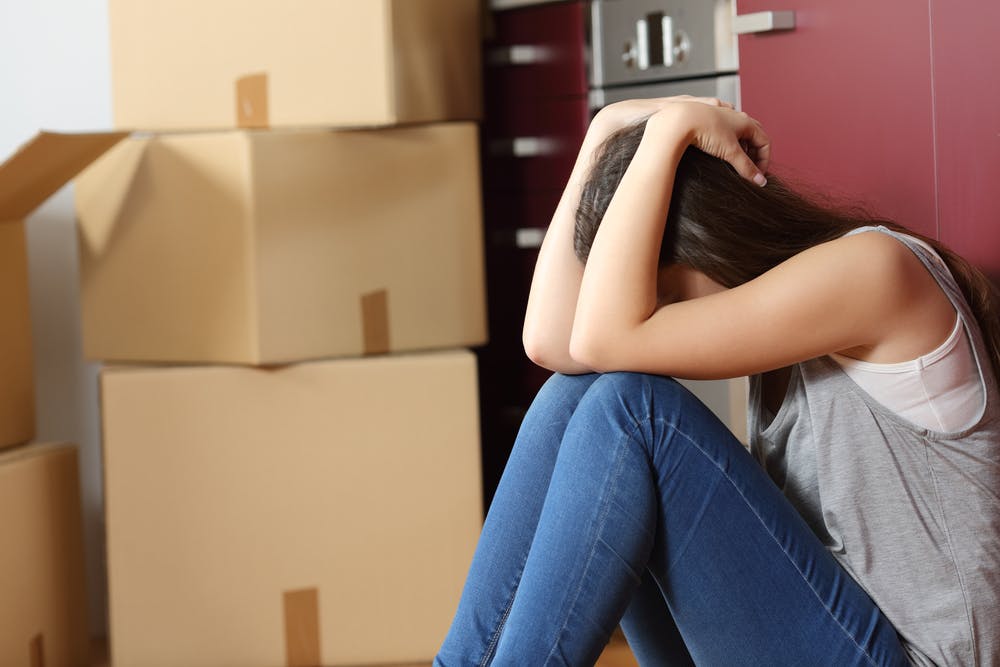 By the time children have moved up the waiting list for surgery or medical care, they can have already moved.
from www.shutterstock.com
By the time children have moved up the waiting list for surgery or medical care, they can have already moved.
from www.shutterstock.com
This disengagement of children from social systems, such as health and education, when coupled with inappropriate shelter, results in poorer physical and mental health outcomes, as well as missed developmental milestones.
This all adds up to poorer outcomes across the life span.
Health impacts
Housing insecurity and homelessness are detrimental to children’s health. For example, the stress from frequent moves, lack of security and/or parent fighting can impact a child’s respiratory health and immune function.
Similarly, studies from the United States found up to 40% of homeless school-age children had a mental health condition requiring professional help.
Children may also have difficulty with behavioural regulation, or self-esteem and confidence issues, especially from the stigma associated with their housing situation.
Read more: Homeless numbers will keep rising until governments change course on housing
Improving access to health care
To address these service gaps, we established a nurse practitioner-led model of care, in a metropolitan homelessness service, to allow quicker acccess to health care for children impacted by inappropriate shelter.
The nurse practitioner in our service performs an in-depth assessment of the child using standardised clinical appraisal tools, and can diagnose and prescribe medicines, within a defined area of speciality. The nurse practitioner partners with families to develop care plans and referrals, while bulk billing to eliminate costs.
Additional barriers to accessing health care such as transport are addressed by giving families travel vouchers or the nurse practitioner visiting them at home. The nurse practitioner also works with the homeless service to liaise directly with schools to address education concerns, such as attendance, equipment or homework.
Children remain an invisible part of Australia’s homeless population, and in its insecure housing community. Interventions, (like our nurse practitioner service) delivered at the first point of contact, such as specialist homeless services, help reduce further impact to the child. Nurse practitioner visits can also be cost effective when compared with attending the emergency department for health care.
Our research has also shown nurse practitioners integrate well with GPs to extend care options for the family. The nurse practitioner model of care is also designed to be easily expanded to similar services across Australia, with the aim of preventing the negative impact of homelessness and housing insecurity on Australian children.
Authors: Matthew Ankers, PhD Candidate , Flinders University


 Daily Bulletin


