

'Conditional commitments': the diplomatic strategy that could make Australia do its fair share on climate change
- Written by: Katie Steele, Associate Professor in Philosophy, Australian National University
The International Energy Agency’s recent, landmark report put another glaring spotlight on Australia’s failure to act on climate change. On the same night the report was released, warning against any new fossil fuel projects, the federal government announced A$600 million for a new gas-fired power plant.
This announcement is disappointing, but not surprising.
It’s just the latest embarrassing incident from the Morrison government when it comes to climate change, as it fails to set any meaningful new targets, international climate summit after climate summit.
If we take a philosophical perspective on the issue, I believe there’s a cautious and strategic way for Australia to do its fair share, one that hasn’t been widely considered: adopting “conditional committents”.
Tackling a ‘collective action’ problem
Conditional commitments are promises to raise (or lower) emissions reduction efforts, depending on what others do. For example, imagine if Australia were to publicly affirm our Asian neighbours’ climate ambitions, and seize the opportunity to make these ambitions more concrete via a conditional offer: that we would introduce a carbon tax if China or Japan were to do so first.
So far, conditional commitments have been the domain of developing countries seeking international finance. We can see this in the “nationally determined contributions” — long-term goals under the Paris Agreement — of Angola, Nigeria and other countries, which involves raising their emissions reduction targets conditional on (typically unspecified) financial support from richer nations.
But let’s look at why conditional commitments can also work in a more effective way to boost the climate change mitigation efforts of richer countries.
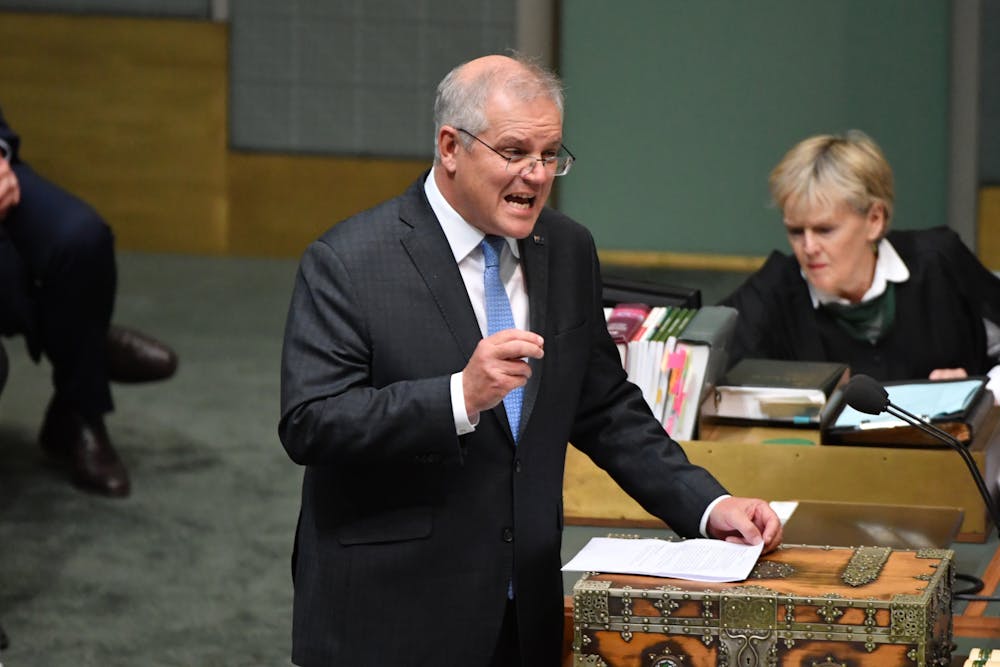 The Morrison government continues to spruik technology advancements to tackle Australia’s emissions, rather than set new climate change mitigation goals.
AAP Image/Mick Tsikas
The Morrison government continues to spruik technology advancements to tackle Australia’s emissions, rather than set new climate change mitigation goals.
AAP Image/Mick Tsikas
Climate change has the structure of a “collective-action problem”, where many nations have an interest in jointly preventing harm. Yet the independent efforts of each are arguably not cost effective, even for relatively “altruistic” nations that place higher premium on global well-being, due to making little difference to the global outcome.
This is why Australia’s contribution to climate change is unexceptional, and yet our response to the problem significant.
Read more: International Energy Agency warns against new fossil fuel projects. Guess what Australia did next?
If you take a “non-consequentialist” ethical stance towards collective harms, you might think the case for ambitious emissions reductions is straightforward: it’s not acceptable to contribute to a large harm, despite making a relatively small difference.
But those with “consequentialist” reasoning will maintain we must pick our battles and concentrate on where we can do the most good. That’s the charitable reading of the Morrison government’s half-hearted climate policies.
Such a strategy certainly guards against the risks of other nations free-riding off our possible climate efforts, rendering them costly and futile. In other words, we might spend big and yet make very little difference to the climate problem and hence the well-being of Australians and other global citizens.
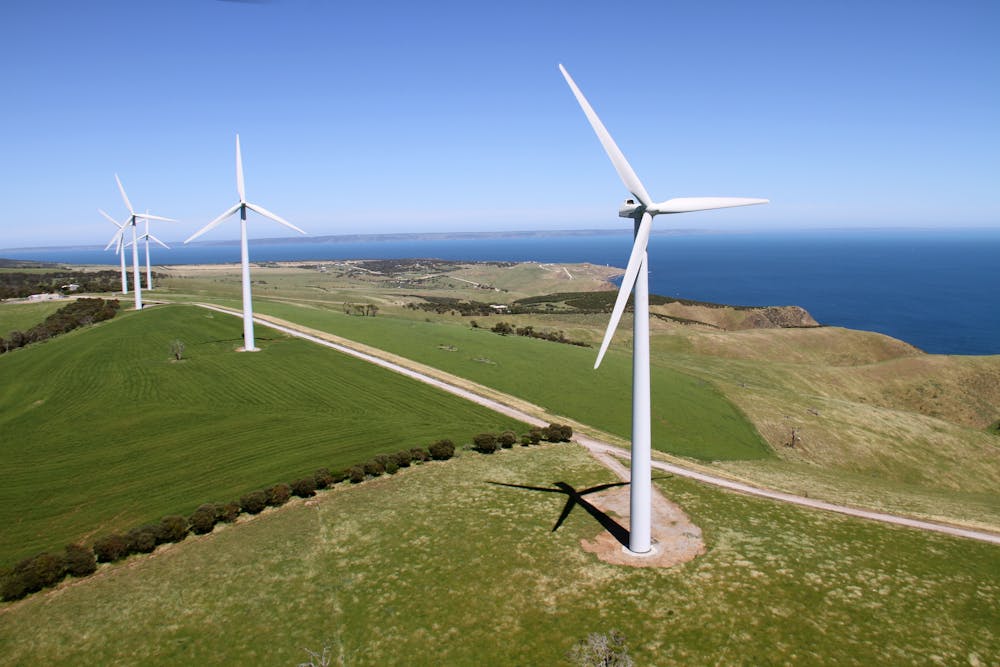 Conditional commitments could extend to fossil fuel production around the world.
Shutterstock
Conditional commitments could extend to fossil fuel production around the world.
Shutterstock
But will a concerted Australian effort to mitigate climate change necessarily achieve little good? It’s extremely risky to assume so.
Either Australia will be left out in the cold should an effective coalition of cooperating nations emerge, perhaps on the back of the slew of ambitions recently announced at US President Joe Biden’s global climate summit.
Or else the future will be as bleak for Australia, as for any other nation, should all cooperative efforts fail and we’re left to face an inhospitable climate.
Joining the climate club
Joining and enhancing an international coalition for climate action (or “climate club”) is a less risky way to negotiate a collective-action problem where much is at stake.
An important diplomatic strategy, to this end, are conditional commitments — pledges to undertake mitigation efforts in the event other nations fulfil similar obligations.
In this way, we can ensure when we buy one small “share” in a stable climate, we get many more shares for free. That is, while the direct effects of our emissions reduction on climate change would be small, the total indirect effects — the sum of all international emissions reductions in tandem with our own — would be substantial. And well and truly worth the punt.
 US President Joe Biden has been setting ambitious climate policies and encouraging other nations to do the same.
AP Photo/Evan Vucci
US President Joe Biden has been setting ambitious climate policies and encouraging other nations to do the same.
AP Photo/Evan Vucci
Let’s say there was a conditional commitment that extended to fossil fuel production: Australia would tax our coal production, if China were also to do so. If the free-rider problem is what prevents Australia from doing its fair share on climate change, this should be an attractive way forward.
Australia could then play a pivotal diplomatic role in extending the circle of conditional commitments to the other major coal producers in our region, such as India and Indonesia.
Read more: The Paris Agreement 5 years on: big coal exporters like Australia face a reckoning
There would be no reason for countries genuinely concerned about the global climate, such as the US under the Biden administration, to defect from this “coal tax club”. But broadening membership beyond such countries would require incentives, including special trading benefits, among those in the climate club.
This could be in the form of commitments to pursue trade in new green products, such as green steel and zero-carbon hydrogen, or exemption from border taxes (as per the European Union’s strategy).
If the more reluctant members failed to follow through on their commitments, they would be expelled from the club. But provided the incentives were good enough, this would be unlikely. And even then, it woudn’t be devastating to the collective effort, if enough enthusiastic cooperators remained.
Like a stack of dominoes
Of course, conditional commitments must be credible — others must believe they’ll be followed through. And that’s not easy to establish.
But this is where international meetings and treaties can play a crucial role. The next major international summit, COP26, will be held in November this year, where world leaders will try to agree on a new plan to tackle climate change.
With so much at stake, there’s no reason not to make grand and far-sighted conditional commitments that reflect the kind of climate we want to collectively bring about.
With careful treaty design, nations can effectively hedge their bets: either others will come to the party and make it worthwhile to invest heavily in emissions reduction, or others will not come to the party and we make a terrible situation no worse by lack of investment.
In this way, the risks of high costs and no appreciable climate benefit are reduced for those at the vanguard of climate action. And, like a stack of dominoes, the risks are reduced for everyone else, including those yet to be born.
Authors: Katie Steele, Associate Professor in Philosophy, Australian National University


 Daily Bulletin


