

Research now backs routinely offering pregnant women the mRNA COVID-19 vaccine
- Written by: Michelle Wise, Senior Lecturer, Department of Obstetrics and Gynaecology, University of Auckland
New Zealand and Australia will now routinely offer the Pfizer COVID-19 vaccine to women at any stage of pregnancy, following an update of vaccination advice.
This comes as research suggests the risk of severe outcomes from infection is significantly higher for pregnant women compared to the general population. At the same time, data from pregnant women who have already been vaccinated around the world have shown no safety concerns associated with COVID-19 vaccines.
Vaccination during pregnancy may also protect the baby. Research has identified antibodies in cord blood and breast milk, suggesting temporary protection (passive immunity) for babies before and after birth.
This is similar to influenza and whooping cough vaccines given during pregnancy to protect pēpi. There are no safety concerns for breastfeeding women receiving a COVID-19 vaccine, and women trying to become pregnant do not need to delay vaccination or avoid becoming pregnant after vaccination.
Prioritising pregnant women
When the New Zealand government announced its vaccine rollout plan in March, pregnant women were designated as a priority in the third group, which includes 1.7 million people who are at higher risk if they catch COVID-19.
This decision reflected the available information at the time from international research showing pregnant women with COVID-19 were more likely to be hospitalised and admitted to intensive care, compared to the rest of the population.
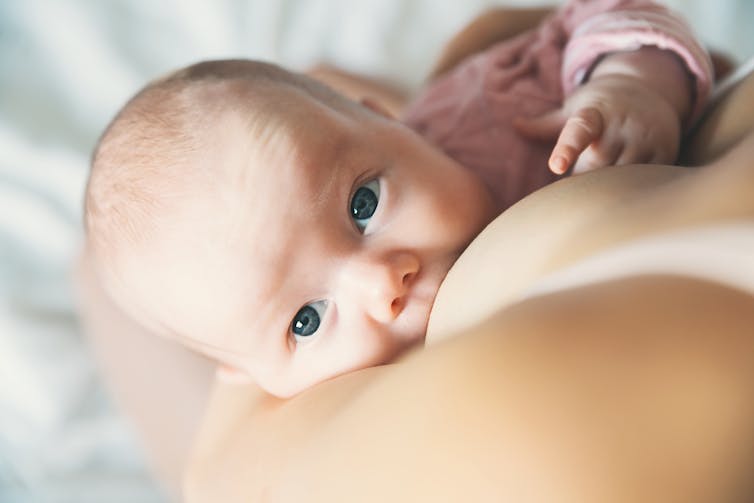 Vaccinating women during pregnancy is likely to provide temporary protection for babies as well.
Shutterstock/Natalia Deriabina
Vaccinating women during pregnancy is likely to provide temporary protection for babies as well.
Shutterstock/Natalia Deriabina
Read more: COVID-19 vaccines are highly effective for pregnant women and their babies – new study
The higher risk of hospitalisation is similar to other priority populations, including people aged 65 and over, and those with underlying health conditions or disabilities. People in these groups are also more likely to get very sick if they get COVID-19.
New Zealand’s decision was part of a principled strategy that aims to provide fair and equitable care based on scientific evidence, acknowledging research that places pregnant women in a high-risk group if they were to be infected.
Changing advice to pregnant women
Initial advice from the Immunisation Advisory Centre was that women could receive the vaccine at any time during pregnancy, but for those at low risk of exposure, they recommended delaying vaccination until after birth.
The Royal Australian and New Zealand College of Obstetricians and Gynaecologists (RANZCOG) published similar early advice, stating that women could choose to have the vaccine at any stage of pregnancy, particularly if they were in a high-risk population. But they did not recommend routine universal vaccination if levels of community transmission were low.
So what has changed since March? It became urgent to review the early advice as local vaccination centres have started vaccinating people in the third group of the rollout. Also, travel bubbles with Australia and the Cook Islands meant people were possibly more exposed to transmission.
The early advice in New Zealand and Australia was also diverging from other countries, such as Canada. And more research is coming out about the risks of COVID-19 infection in pregnancy, while international experience with mRNA-based vaccines (such as Pfizer-BioNTech) in pregnant women is growing.
Read more: COVID-19 and pregnancy: what we know about what happens to your immune system
Pregnant women were not included in the original clinical trials to test COVID-19 vaccines for safety. But there is no evidence of any harm associated with the vaccine during pregnancy.
Vaccine trials in the US are now actively recruiting pregnant women. We can expect research results by the end of this year. In the meantime, we can be reassured by registries, which are studies that track women who have had the vaccine during pregnancy and have given consent to have information collected about them and their babies.
Researchers in the US found women who received the vaccine during pregnancy had outcomes similar to background rates for the mother (regarding rates of miscarriage, diabetes, high blood pressure) and the baby.
Side effects from receiving the vaccine were also the same in pregnant and non-pregnant women, and it is safe to take paracetamol as needed to manage these.
Other countries, including the UK, have published decision aids to help with this important decision. I encourage professional groups to create one for New Zealand women planning or going through pregnancy.
Research supports routinely offering the vaccine to pregnant women, and it is up to individuals to decide whether to receive it or not, as part of a shared decision-making process with their midwife or doctor.
Authors: Michelle Wise, Senior Lecturer, Department of Obstetrics and Gynaecology, University of Auckland


 Daily Bulletin


