

Reaching net zero is every minister's problem. Here's how they can make better decisions
- Written by: James Ha, Associate, Grattan Institute
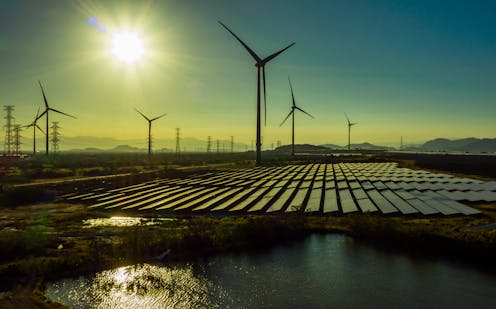
The federal government has finally committed to achieving net-zero emissions by 2050 – a target Prime Minister Scott Morrison will take to this week’s crucial United Nations climate summit in Glasgow.
Though unlegislated, the target represents a rare moment of bipartisanship in Australia’s climate wars, and brings the federal government into line with the states’ and territories’ own net-zero targets.
Yet the target is much closer to a ceasefire than a peace treaty. Without changes to how climate policy gets done in Australia, there will be many more skirmishes about how we should get to net zero, and how much carbon we emit along the way.
Australia can’t afford further delay: governments need to act now to avoiding locking in emissions, or there will be little chance of reaching net zero by 2050.
Read more: View from The Hill: Morrison's net-zero plan is built more on politics than detailed policy
Government-as-usual won’t cut it
Australian governments typically have a single minister for climate change or emissions reduction, who often has responsibility for the energy or environment portfolios too. But to reach net zero will take policies that span energy, industry, transport, agriculture, land use, even trade. Climate change is a whole-of-government issue. It’s every minister’s problem.
Now all governments are committed to net zero by 2050 or earlier, they need to ensure their policies are consistent with this target. Every government decision on planning, infrastructure, resource extraction, forests, national parks, and land management potentially locks in future emissions.
At a minimum, governments should stop subsidising further expansion of fossil fuel production – taxpayers should not be on the hook for industry handouts such as the A$217 million in federal funding for gas industry road upgrades in the Northern Territory or the Queensland government’s royalty holiday for the proposed Carmichael coal mine.
And governments should not weaken existing land-clearing laws, given the contribution avoided land-clearing is expected to make to future emissions reductions.

Climate policy should also be harmonised across tiers of government. Currently, there is a mess of divergent, sometimes contradictory policies. In the electricity sector, for example, the federal and state governments have repeatedly failed to implement any national emissions policy.
The vacuum has been filled by various renewable energy targets, pledges, electricity infrastructure roadmaps, deals with coal-fired power stations, contracts with wind and solar generators, and even the federal government deciding to build its own gas-fired generator.
Federal and state energy ministers used to meet and discuss reforms through the COAG Energy Council. But during the COVID-19 pandemic, the council was replaced by the clumsily-titled Energy National Cabinet Reform Committee.
The committee has curtailed opportunities for future coordination because of confidentiality requirements and a limited remit.
State and federal governments should re-establish the co-operative co-ordination structures formerly dealt with through the energy council, and create similar structures for climate policy and programs.
Climate change and the global transition to net zero will batter government revenues and create greater calls for government spending. All governments need to start planning how to replace the revenue they current derive from fossil fuels.
Better information is key
Up to this point, Australia has asked itself: what progress are we making in decarbonising the economy? What emissions target should we therefore set? And what is the emissions budget to meet this target?
Now that we’re agreed on net zero, the order of these questions need to be reversed. Our carbon budget should be set with respect to Australia’s fair share of contributing to the global net-zero goal.
Our near-term target should be set with respect to staying within this budget. And then policies should be set to achieve this target, and adjusted if they are failing.
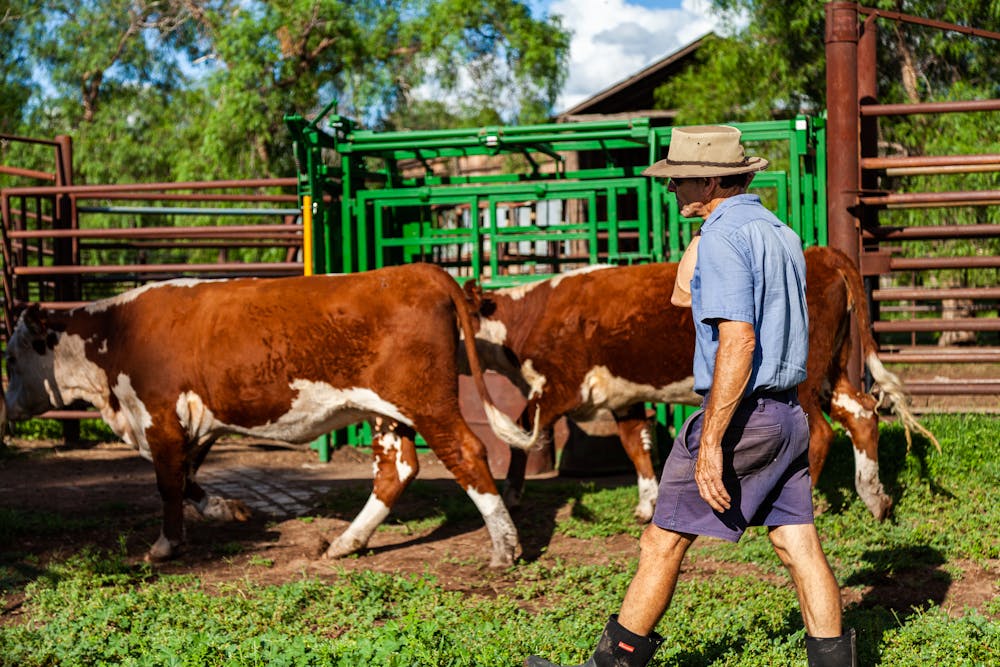 To reach net zero will take policies that span energy, industry, transport, agriculture, land use, even trade.
Shutterstock
To reach net zero will take policies that span energy, industry, transport, agriculture, land use, even trade.
Shutterstock
Setting a carbon budget also allows businesses to reach their own conclusions about how fast they might be required to reduce or offset emissions in the future. Once we have a carbon budget, the annual emissions projections become critical information about the future direction of the economy. They need to be developed, released, and treated with the same seriousness and commitment to rigour and independence as other economic data.
An emissions budget will determine the direction of economic policy for decades, so it requires bipartisan support. Evaluating policy effectiveness can be subject to politicisation, because there is always an incentive for governments to find fault with their predecessor’s policies, and seek praise for their own.
Luckily, as we note in our latest Grattan Institute report, Australia already has an institution tailor-made to provide independent, rigorous advice on issues like carbon budgets, emissions projections, and policy reviews. The Climate Change Authority, reinvigorated, could do all this, and could also advise governments on interim targets to keep Australia on the pathway to net zero.
Adopting the target is only the first step
Investing in new technology is one part of the puzzle, but these technologies won’t deliver emissions reductions until the 2030s or 2040s – and many of them may turn out to be dead-ends or failures.
There’s plenty governments could do now, through market-based policy approaches and technologies that already exist, to push emissions down.
Three of our suggestions are vehicle fuel emissions ceilings, a safeguard mechanism with real teeth, and a robust high-integrity offset market for the residual emissions that can’t be avoided.
It’s time to start.
Authors: James Ha, Associate, Grattan Institute


 Daily Bulletin


