

The endangered condor surprised researchers by producing fatherless chicks. Could 'virgin birth' rescue the species?
- Written by: Jenny Graves, Distinguished Professor of Genetics and Vice Chancellor's Fellow, La Trobe University
Virgin birth – which involves the development of an unfertilised egg – has preoccupied humans for aeons. And although it can’t happen in mammals, it does seem to be possible in other animals with backbones (vertebrates), such as birds and lizards.
A recent paper led by researchers from San Diego Zoo in the United States reports two fatherless male chicks raised in a program to save the Californian condor from extinction. Could the species be restored by a single surviving female?
Sexual reproduction is fundamental in all vertebrates. Normally it requires an egg from a female to be fertilised by a sperm from a male, so each parent contributes one copy of the genome.
Violation of this rule, as for the fatherless condor chicks, tells us a lot about why sexual reproduction is such a good biological strategy – as well as how sex works in all animals, including humans.
How the fatherless chicks were identified
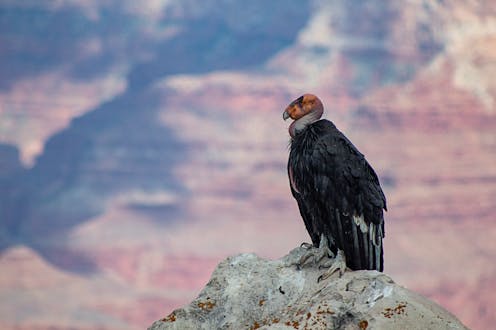
The magnificent California condor, a type of vulture, is the largest flying bird in North America. In 1982 the species declined to a population of just 22 individuals, sparking an ambitious captive breeding program led by San Diego Zoo which has seen numbers start to grow.
With so few birds, the team had to be careful not to choose parents that were closely related, as a lack of genetic variation would produce less vigorous offspring and steepen the slide to extinction.
The researchers conducted a detailed genetic study of the birds to avoid this, using DNA markers that were specific for condors and which varied between individual birds. They collected feathers, blood and eggshells from nearly 1,000 birds over 30 years.
By analysing these data, they established parentage, confirming that half the DNA markers in each chick came from a female and half from a male, as you’d expect. They continued to follow the fates of hundreds of captive-bred chicks in the colony, and after releasing them into the wild.
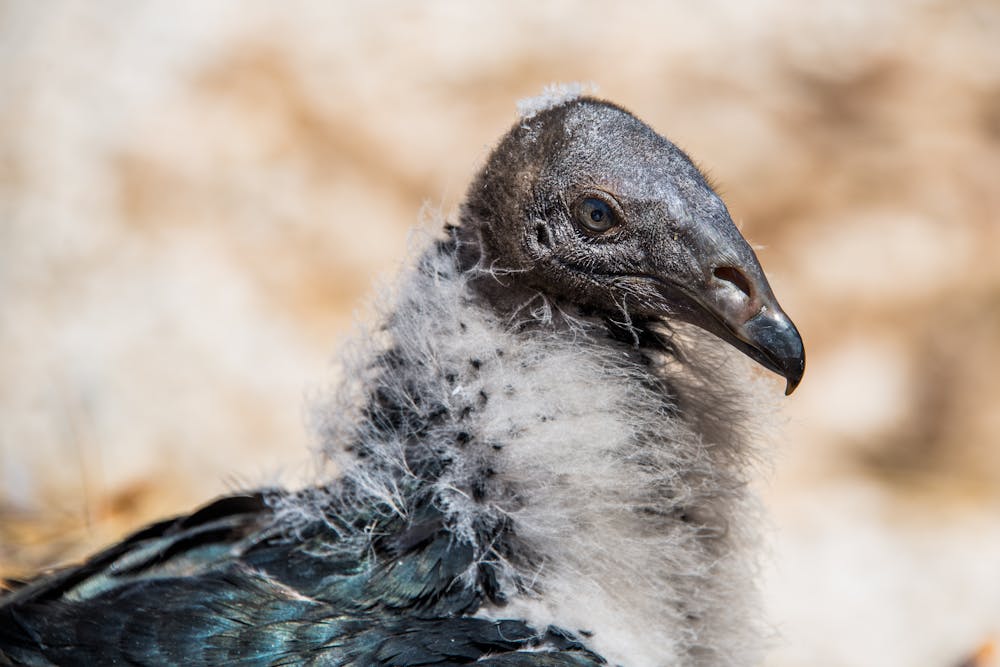
But there was something unusual about two male chicks, as detailed in the recent paper. These chicks, which hatched several years apart from eggs laid by different females, had DNA markers that all came from the female parent. There was no trace of markers from the male she’d been paired with.
Virgin birth
The development of unfertilised eggs is called “parthenogenesis” (from Greek words that literally mean “virgin creation”). It’s quite common in insects and other invertebrates like aphids and starfish, and can be accomplished by several different mechanisms. But it’s very rare in vertebrates.
There have been reports of parthenogenesis in fish and reptiles that were housed without males. In Tennessee, a lonely female Komodo dragon held in captivity for many years gave up on finding a mate and produced three viable offspring on her own. So did a female python and a boa, although these parthenogenic offspring all died early.
Some lizards, however, have adopted parthenogenesis as a way of life. There are female-only species in Australia and the US in which females lay eggs carrying only combinations of their own genes.
Parthenogenesis also happens in domesticated chickens and turkeys raised in the absence of a male, but the embryo usually dies. There are only a few reports of fatherless male turkeys that made it to adulthood, and just one or two that produced sperm.
How does it happen?
In birds, parthenogenisis always results from an egg cell carrying a single copy of the genome (haploid). Eggs are made in the ovary of a female by a special sort of cell division called meiosis, which shuffles up the genome and also halves the chromosome number. Sperm cells are made by the same process in the testis of a male.
Normally an egg cell and a sperm cell fuse (fertilisation), incorporating both parents genomes and restoring the usual (diploid) number of chromosomes.
But in parthenogenesis, the egg cell is not fertilised. Instead, it achieves a diploid state either by fusing with another cell from the same division — which is normally jettisoned — or by replicating its genome without the cell being divided.
So rather than getting one genome from the mother and a different one from the father, the resulting egg only has a subset of the mother’s genes in a double dose.
Fatherless birds will always be male
Condors, like other birds, determine sex by Z and W sex chromosomes. These work in the opposite way to the human XX (female) and XY (male) system, in which the SRY gene on the Y chromosome determines maleness.
However, in birds males are ZZ and females are ZW. Sex is determined by the dosage of a gene (DMRT1) on the Z chromosome. The ZZ combination has two copies of the DMRT1 gene and makes a male, whereas the ZW combination has only one copy and makes a female.
Read more: How birds become male or female, and occasionally both
Haploid egg cells receive either a Z or a W from the ZW mother. Their diploid derivatives will therefore be ZZ (normal male) or WW (dead). The reason WW embryos can’t develop is because the W chromosome contains hardly any genes, whereas the Z chromosome has 900 genes which are vital for development.
Fatherless chicks must therefore be ZZ males, as was observed.
Why virgin birth fails
Is it possible an endangered bird species such as the condor could be resuscitated from a lone female survivor, by hatching a fatherless male chick and breeding with it?
Well not quite. It turns out parthenogens (fatherless animals) don’t do so well. Neither of the two fatherless condors produced offspring of their own. One died before reaching sexual maturity and the other was weak and submissive – making it a poor prospect for fatherhood.
In chickens and turkeys, parthenogenesis produces either dead embryos or weak hatchlings. Even female-only lizard species, though they seem robust, are generally the product of a recent blending of two species which messed up meiosis and left them no other option. These species don’t seem to last long.
Why do parthenogens do so poorly? The answer goes to the core of a fundamental biological question. That is: why do we have sex at all? You’d think it would be more efficient for the mother’s genome to be simply handed down to her clonal offspring without bothering about meiosis.
Variation is key
But the evidence says it’s not healthy to have a genome consisting entirely of the mother’s genes. Genetic variation is all-important in the health of an individual and its species. Mixing the gene variants from male and female parents is vital.
Read more: These sex-starved creatures scavenge new genes from other pondlife
In diploid offspring with two parental genomes, good variants can cover for mutants. Individuals that inherit genes only from the mother may have two copies of a maternal mutant gene that weakens them – without a healthy version from a male parent to compensate.
Variation also helps protect populations from deadly viruses, bacteria and parasites. Meiosis and fertilisation provide many rearrangements of different gene variants, which can baffle pathogens. Without this added protection, pathogens could run amok in a population of clones, and a genetically similar population would not contain resistant animals.
So the ability of condor females to hatch chicks without a father is unlikely to save the species. On the bright side, human efforts have now led to hundreds of females – and males – flying the Californian skies.
Authors: Jenny Graves, Distinguished Professor of Genetics and Vice Chancellor's Fellow, La Trobe University


 Daily Bulletin


