

The sordid underbelly of Christmas past
- Written by: James A. T. Lancaster, Lecturer in Studies in Western Religious Traditions, The University of Queensland
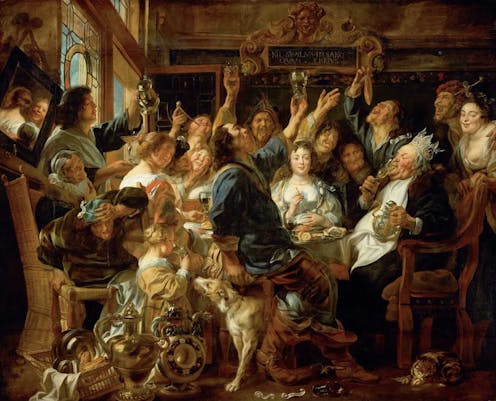
When English Puritans outlawed Christmas in 1647, it was not without good reason. When American Puritans, in turn, outlawed Christmas in Massachusetts between 1659 and 1681, it too was not without good reason.
Christmas past was anything but innocent.
Until the mid-19th century, Christmas was a time for drunkenness and debauchery.
Men dressed like women, women dressed like men, servants dressed like masters, boys dressed like bishops, everyone else either dressed as animals or wore blackface – all to subvert the godly order in the safety of anonymity.
Christmas was a carnival of drink, cross-dressing, violence and lust during which Christians were unshackled from the ethical norms expected of them the rest of the year.
No wonder the Puritans wanted it banned.
The Origins of Christmas Revelry
It was not until the 4th century that the Church of Rome recognised December 25 as the date to celebrate the birth of the messiah. And it did so knowing well that there were no biblical or historical reasons to place Christ’s birth on that day.
There is some evidence the Romans worshipped Sol Invictus, their sun god, on December 25. But what the Romans really celebrated during the month of December was Saturnalia, an end of harvest festival that concluded with the winter solstice. As historian Stephen Nissenbaum pointed out in his acclaimed The Battle for Christmas, the early Church entered into a compromise: in exchange for widespread celebration of the birth of Christ, it permitted the traditions of Saturnalia to continue in the name of the saviour.
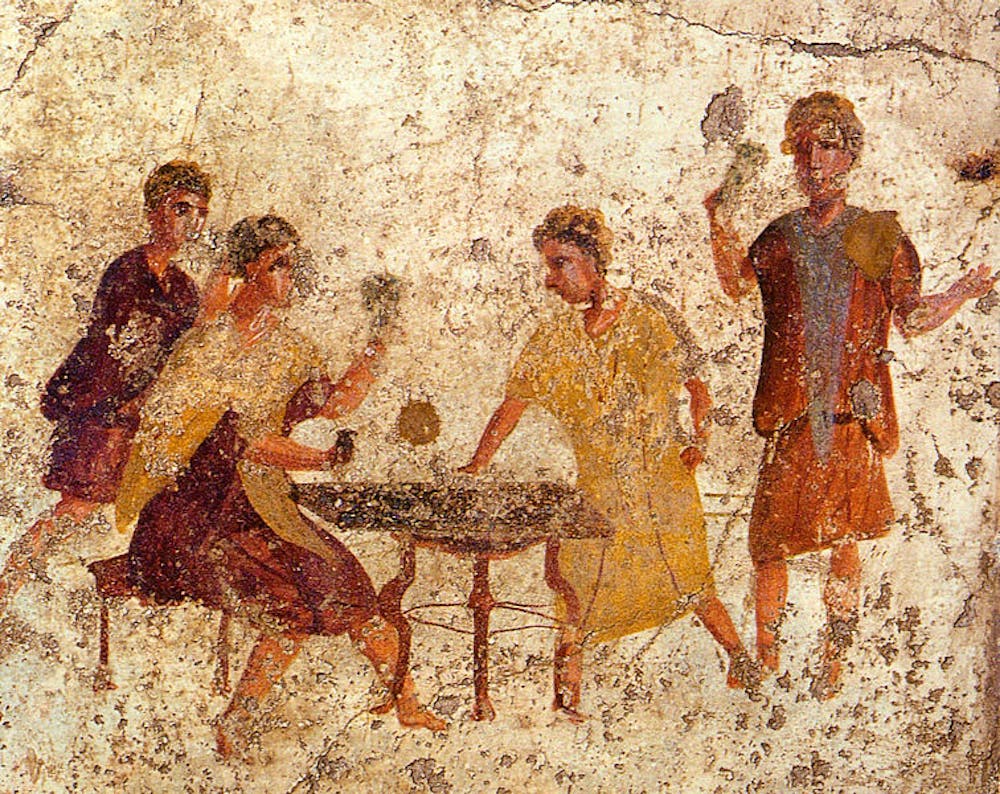
Gift-giving, feasting, candles, gambling, promiscuity and misrule were the hallmarks of Saturnalia. Add to this the holly, the mistletoe and (much later) the tree, and we have a Christmas inclusive of a variety of pagan traditions.
But as time went on, Church leaders became increasingly disillusioned by the way the carnival that was Saturnalia simply carried on under a thin veneer of Christian piety.
The 16th century bishop Hugh Latimer lamented that many Christians “dishonoured Christ more in the 12 days of Christmas than in all the 12 months besides.”
Lords and Ladies of Misrule
In early modern England, it was common practice to elect a “Lord of Misrule” to oversee Christmas celebrations. Revellers under the auspices of the “Lord” marched the streets dressed in costume, drinking ale, singing carols, playing instruments, fornicating and causing damage to property.
One account from Lincolnshire in 1637 relates how the revellers decided the Lord must have a “Christmas wife,” and brought him “one Elizabeth Pitto, daughter of the hog-herd of the town.” Another man dressed as a vicar then married the lord and lady, reading the entire service from the Book of Common Prayer, after which “the affair was carried to its utmost extent.” Had they not carried the matter so far, the account continues, “probably there would be no harm.” As it was, “the parties had time to repent at leisure in prison.”
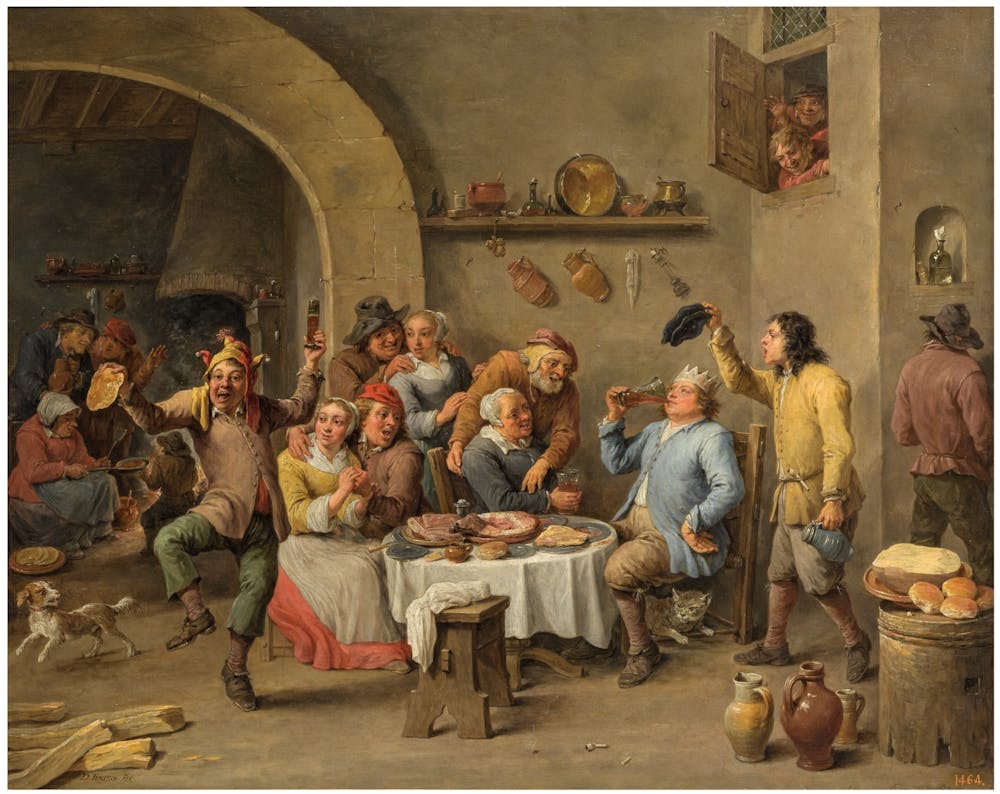 Twelfth-night (The King Drinks), painted by David Teniers the Younger, between 1650 and 1660.
© Museo Nacional del Prado, CC BY-NC-SA
Twelfth-night (The King Drinks), painted by David Teniers the Younger, between 1650 and 1660.
© Museo Nacional del Prado, CC BY-NC-SA
“December was called […] the Voluptuous Month” for a reason, wrote Reverend Increase Mather in 1687. Young men and women often took advantage of the moral laxity of the Christmas season to engage in late-night drinking and sex.
Not surprisingly, such seasonal merrymaking resulted in higher than usual birth rates in the months of September and October, as well as real rather than burlesque marriages.
Wassailing
Even Christmas charity was far from innocent. Gifting, this hallmark of the season, was rarely given freely, but demanded with threats of mischief or violence.
In the practice known as “wassailing” during the 17th and 18th centuries, roving bands of poor men and boys asserted their Christmas right to enter the houses of the prosperous and claim the finest food and drink, singing:
We’ve come here to claim our right, And if you don’t open up your door, We will lay you flat upon the floor.
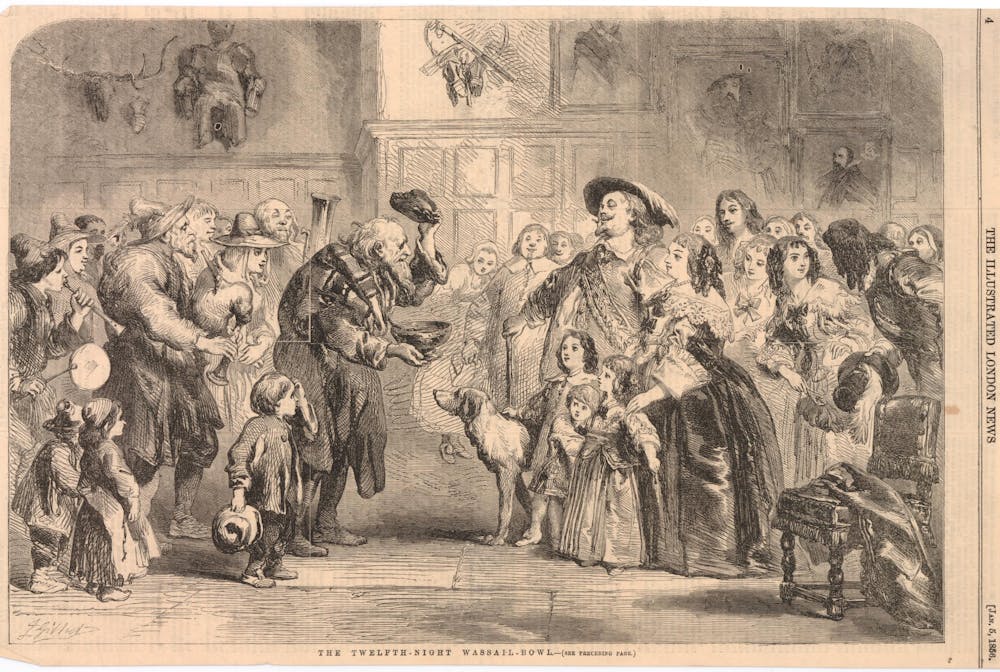 An depiction of wassailing from the Illustrated London News, 1856.
© The Trustees of the British Museum, CC BY-NC-SA
An depiction of wassailing from the Illustrated London News, 1856.
© The Trustees of the British Museum, CC BY-NC-SA
Though most wassailing ended without violence, the occasional stone was thrown through the window of an uncharitable lord. To the lord who was generous, the goodwill of the wassailers could be hoped for the rest of the year.
Domesticating Christmas
Ultimately, the efforts of Puritans to ban Christmas failed. The irreligious revelry that marked Christmas past was too deeply entrenched in Western culture. But where the forces of religion failed, the forces of the market would soon succeed in taming Christmas. The sordid behaviour of Christmas past would be substituted for another type of irreligion: consumerism.
Still, much of the sordid underbelly of Christmas past remains. That family member who always has a bit too much to drink, the overeating, the regretful rendezvous with a colleague at the office party – all telltale signs our oldest Christmas traditions are alive and well.
Authors: James A. T. Lancaster, Lecturer in Studies in Western Religious Traditions, The University of Queensland
Read more https://theconversation.com/the-sordid-underbelly-of-christmas-past-172873


 Daily Bulletin


