Natural wines: how are they made and what's the deal with sulfites? An expert explains
- Written by: Geoff Scollary, Adjunct Professor, Charles Sturt University
I was first introduced to natural wines in Paris about 20 years ago. My initial tasting experience did little to convince me this approach to winemaking would survive. Many showed faults reflecting oxidation or yeast- or bacterial-derived odours that smelled “off”.
The natural winemaking strategy has matured dramatically since then and the wines are now making significant inroads in Australia. In Paris and in France generally, natural wines have gone from strength to strength.
The natural wine movement in Australia is being driven by consumers from varied backgrounds who, according to one winemaker, demand “transparency and truth around the winemaking process”. Authenticity of the final product is key.
But how are natural wines made, and what makes them “natural”?
Read more: What drives our wine choice – taste, or the price tag?
Natural winemaking
The overall goal in natural wine production is to have as little human intervention as possible in the journey from the vineyard to the wine.
Grapes must be harvested manually from a vineyard managed by either organic practice or under biodynamic principles (such as those outlined here).
Once the grapes are crushed, fermentation is carried out by indigenous – sometimes called “wild” – yeasts on the skin of the grapes. In some styles, grape stalks may be included in the ferment.
These practices alone, however, are not unique to the natural winemaking process; they’re sometimes used in production of conventional wines, too.
But in conventional winemaking, a wide range of processing aids and additives may be used.
And this is the point of difference: in natural winemaking, no additions are made.
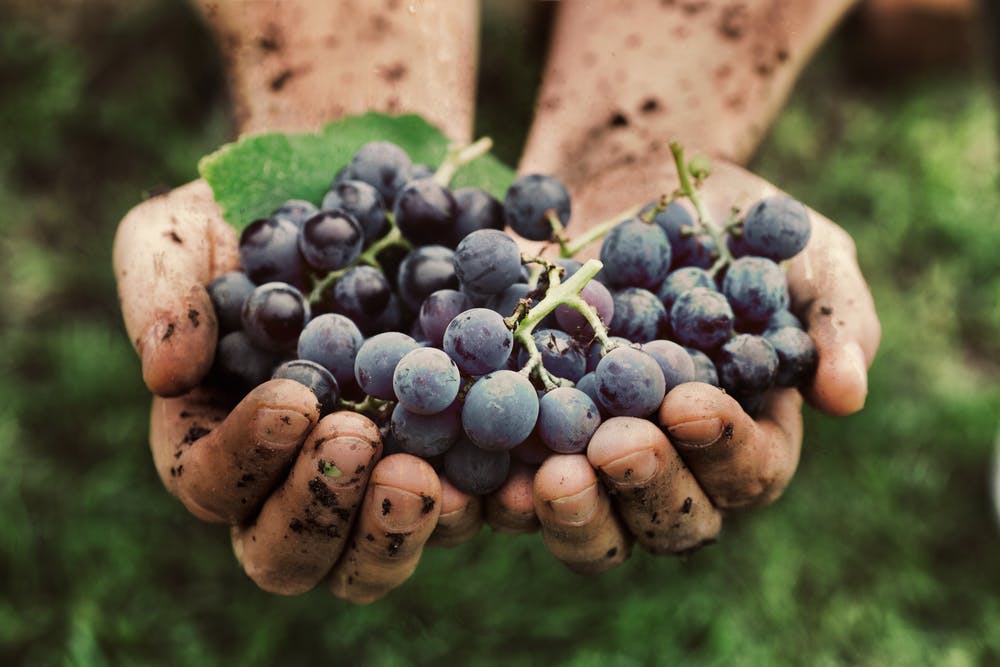
Processing aids and additives
The image here demonstrates this clearly. The list of processes and additives decreases markedly as one moves from conventional through organic, biodynamic to natural winemaking.
For natural wines, once the fermentation is finished, the wine is left enclosed for the waste grape material and dead yeast cells to settle before being decanted into clean vessels for bottling.
Some winemakers will use a simple cloth-type filtration to remove larger particles. High-tech filtration techniques, such as membrane or cross-flow filtration, are not allowed.
The resulting unfiltered wine in bottle will be cloudy.
For a conventionally made wine, this would be a definite marketing negative. But for natural wines, it is the norm.
On the tricky question of sulfites
A lot of wines contain a compound called sulfites, which can cause an allergic reaction in some people. In winemaking, they serve to reduce oxidation and limit bacterial growth.
The use of sulfites, also commonly called sulfur dioxide, in natural wines is a point of contention. There are many who refuse to use it, because they see it as an additive. Others argue a small addition to what is already present as a by-product of the fermentation can be beneficial.
Wine expert Isabelle Legeron – the first woman in France to have conferred upon her the prestigious title of Master of Wine – is a great advocate for natural wines.
In 2012, she established the RAW WINE community to support low intervention winemakers. In her monthly wine recommendations, Legeron lists those with no added sulfites and those with sulfites up to 70 mg/litre, somewhat higher than the more common upper limit of 30 mg/litre.
 In conventional winemaking, a wide range of processing aids and additives may be used. In natural winemaking, no additions are made.
Shutterstock
In conventional winemaking, a wide range of processing aids and additives may be used. In natural winemaking, no additions are made.
Shutterstock
In France, natural wines are now mainstream. Natural wine has, after many years of debate, been given formal recognition there under the designation “Vin Méthode Nature”, a strictly defined term now accepted by key government agencies and regulatory bodies.
There is a 12-point commitment charter to which winemakers must adhere to obtain the Vin Méthode Nature endorsement.
There is even a sticker that can be affixed to the bottle, one version of which indicates sulfur dioxide has been added to the wine.
The taste profile
Natural wines are different in appearance and taste. Although my early experience to these wines was not always favourable, production methods have matured. While many remain cloudy, as they are unfiltered, the palate structure can show the length and depth that I chase when selecting wine.
In 2017, wine media outlet Decanter reviewed 122 natural wines. The reviewers’ comments were overall positive, endorsing and reinforcing the place of natural wines in an expanding market.
Natural sparkling wines – commonly referred to Pétillant-Naturel or simply Pet Nat – are one of my favourites. Made by the ancestral method, fermentation begins in an open tank and, at some point, it is transferred to bottle to finish.
The wine is amazingly refreshing, albeit cloudy and lightly sparkling (about half the pressure of champagne). There is no secondary fermentation and no additives – the yeast is indigenous to the grape.
This is pretty much grapes into wine with minimal human intervention.
Read more: Appearance, aroma and mouthfeel: all you need to know to give wine tasting a go
Authors: Geoff Scollary, Adjunct Professor, Charles Sturt University


 Daily Bulletin