

Omicron will only add to looming workforce shortages already faced by key New Zealand industries
- Written by: David Dyason, Senior Lecturer in Property Studies, Lincoln University, New Zealand
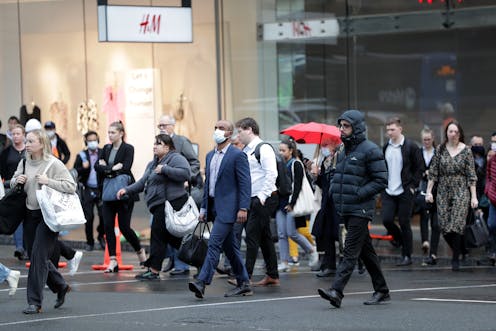
The Omicron wave about to wash across New Zealand will exacerbate an already tightening labour market. High employment and ongoing border restrictions mean regional labour forces are nearing peak capacity – and the country is running out of time to find solutions.
With border restrictions in place for much of the past two years, the domestic labour market has been the main source of human capital – and will likely continue to be for some time.
Combined with an ageing workforce, this is causing labour market tightening in most industries. Some form of intervention will be required to find skilled workers to fill the gaps emerging in specialised jobs – especially as the economy grows and older workers retire.
By looking at the Canterbury region as an example of how successive disasters influence the labour force, we can see how immigration policies can affect short- to medium-term labour requirements. Since the earthquakes of 2010 and 2011, Canterbury has been able to rely on skilled workers from outside the region to support economic activity.
According to a recent study of the region’s ability to navigate the pandemic, this pre-pandemic labour influx, coupled with slower economic activity in 2019-20, meant there was still a sufficient labour supply – even after the rebuild when employment opportunities decreased.
But this buffer is quickly reducing. It is estimated the region’s labour market is likely to peak as soon as 2023 due to more workers retiring and border restrictions limiting new labour supply.
The Christchurch rebuild offers a snapshot of how immigration policies affect economic growth. ShutterstockThe ageing workforce
What is taking place in Canterbury is reflected on a national level as well. Labour force projections to 2033 reveal an increasing proportion of people above the age of 65 in the workforce.
This reflects lifestyle changes and could offset some of the current labour tightening – especially at a time when there has been a net outward migration of people from New Zealand, even with border restrictions in place.
Read more: Pandemic disruption to PhD research is bad for society and the economy – but there are solutions
But job vacancies are higher than pre-COVID levels, and population projections show the international labour market remains key to future population growth in New Zealand.
These projections show natural population change – numbers of births minus numbers of deaths – is expected to tip into negative growth in the long run. Hence, net inward migration is expected to be the main driver of population and labour force growth.
The ageing workforce also needs addressing, especially at an industry level. As the labour market peaks and unemployment remains low, pressure on industry-specific labour supply is emerging, as the graphs below show.

Some industries will be harder hit
The growing proportion of workers over 60 is visible in some industries, but not all. Manufacturing, hospitality and construction have a noticeably lower share of people in the 60-plus age group.
On the other hand, four industries stand out as having a high and growing share of over-60s:
health care and social assistance
education and training
rental and hire services and real estate services
transport and storage (with possible supply chain disruption stretching beyond an Omicron wave).
In the short term, this trend is not surprising and aligns with the ageing population and baby boom generation moving through. But it is still worrisome in the context of a peaking labour force.
The likely impact of the Omicron variant, ongoing border closures and an ageing labour force are generating substantial shocks that are likely to cause further transformation in the economy.
While the ageing of the labour force is to be expected, restrictions on the movement of labour during the pandemic have created a labour market peak earlier than anticipated.
Aside from replacing retiring workers, immigration (including expats returning to New Zealand) further benefits the economy through the new skills and improved systems and production techniques that skilled migrants bring, which all enhance productivity.
Read more: COVID will dominate, but New Zealand will also have to face the 'triple planetary crisis' this year
Urgent action needed
How will the gaps be addressed? We could see industries replace labour with other means of capital or technology. But this will take time and is expensive. It’s possible some businesses might relocate, while others might even have to close.
Without significant changes in productivity, regions and countries that have historically relied on immigration to support their economies are likely to continue to rely on labour supplies from beyond their borders.
But New Zealand’s window to act is closing. While less stringent border restrictions would provide short-term relief, identifying likely shortages and implementing practical solutions should be the longer-term goal.
This should include encouraging vocational training in key industries, and providing the incentives and support to retain and train skilled workers in key industries – thus reducing potential outward migration when borders do reopen.
Authors: David Dyason, Senior Lecturer in Property Studies, Lincoln University, New Zealand


 Daily Bulletin


