

How Australia can boost the production of grains, while lowering its carbon footprint
- Written by: Maartje Sevenster, Research Scientist Climate Smart Agriculture, CSIRO
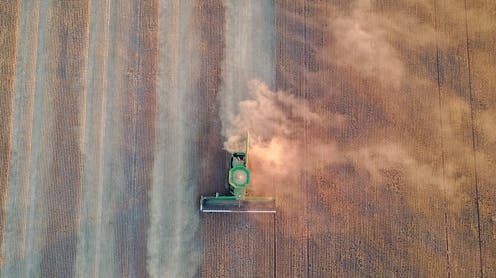
The need to feed a rising global population means agriculture is one of the most difficult sectors to decarbonise. This is especially true for growing grains – think wheat, barley, legumes and canola.
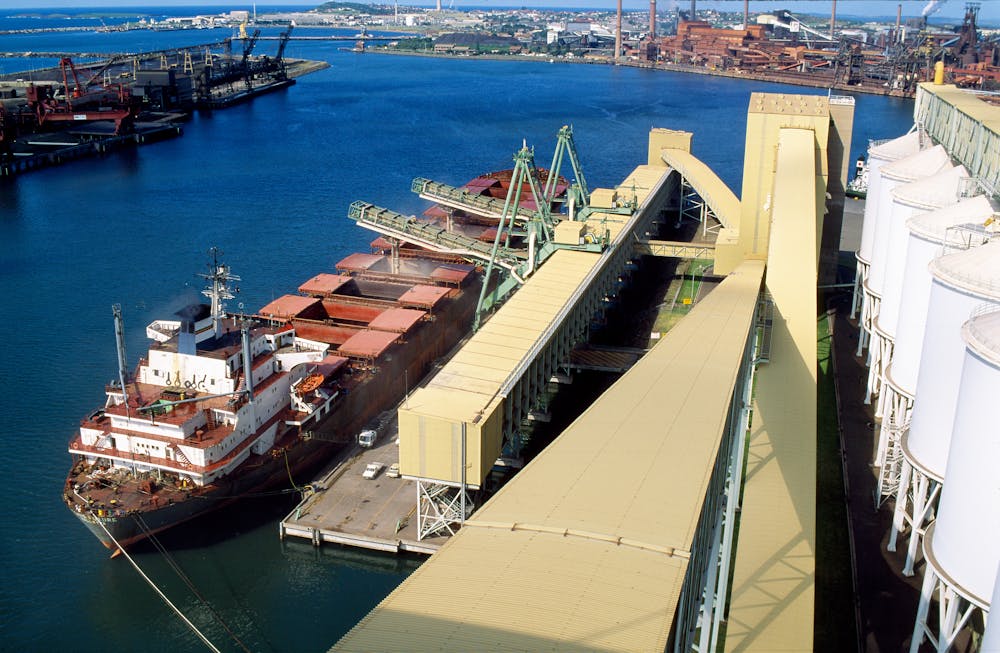
Australia is the third largest exporter of wheat after Russia and the US, with 11% of the world’s wheat trade shipped from our shores in 2017. Likewise, Australia is responsible for up to 20% of the world’s barley exports.
But our new report, published today, has found a way to potentially increase grain production by up to 40%, while reducing the carbon footprint per tonne of grain by up to 15%. The key is improving our use of fertiliser.
To produce the world’s grains with as few greenhouse gas emissions as possible, all countries, including Australia, need to play their part. The carbon footprint (greenhouse gas intensity) of Australian grain is lower than elsewhere, so on a global scale we have some room to increase production to help meet the demands of a growing population, ensuring Australian grains remain competitive in the global market.
Emissions from the grain sector
Our initial task was to estimate the greenhouse gas emissions the grains sector released in 2005. This is because 2005 is the standard baseline year we compare Australia’s emissions to today, in line with our obligations under the Paris Agreement.
We found the sector released 13.75 million tonnes of carbon dioxide equivalent in 2005. Grain emissions in 2005 were primarily under two categories: on-farm emissions (61%) and “embedded” emissions (39%). This breakdown is likely to be very similar for today’s grain sector emissions, but this needs to be confirmed with further data collection.
On-farm emissions are dominated by applying fertiliser, and the breakdown of plant residue, such as stalks, roots and grain that falls to the ground during harvest. On-farm emissions alone are responsible for 1.7% of Australia’s total.
Embedded emissions are associated with the supply chain of a product, such as the manufacturing of fertiliser and chemicals. We found the production of fertiliser was the largest contributor to embedded emissions.
It’s clear how we use and produce fertiliser is greenhouse gas intensive. However, fertilisers – along with the the breakdown of plant residue – are key in improving productivity on farms.
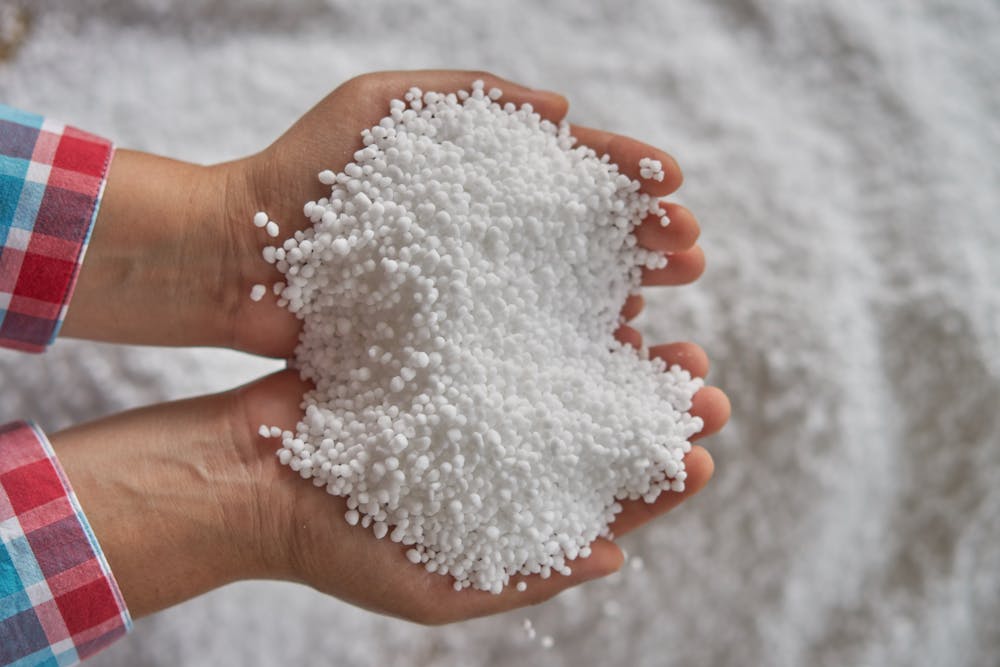 Nitrogen fertilisers improve productivity on farms.
Shutterstock
Nitrogen fertilisers improve productivity on farms.
Shutterstock
Grappling with fertiliser
Nitrogen from fertilisers and carbon from plant residues link two important greenhouse gases: nitrous oxide and carbon dioxide.
The relationship between nitrogen in fertiliser and carbon in plants is tightly interwoven – changing levels of nitrogen inputs will change the levels of carbon in the system, and vice versa.
To unpack this complex system, we ran simulations for different farm management practices. Our findings were surprising.
Counter-intuitively, we found increasing fertiliser (in a way that minimises nitrogen losses) sees almost constant net on-farm emissions, while considerably increasing the production of grains. This translates to a lower greenhouse gas intensity (carbon footprint). Let’s explore why.
Plants need nitrogen to grow. If not enough fertiliser is applied, the plants will take it from the soil. And when the soil loses nitrogen, carbon dioxide is also released into the atmosphere to balance the soil’s nitrogen and carbon levels.
Applying fertiliser in way that results in more efficient use of nitrogen will lead to greater plant growth and avoid depleting the soil. This will, in turn, see more plant residue go into the soil, again increasing the soil’s carbon levels.
But there’s a catch. Because those extra fertilisers must be manufactured, embedded emissions increase. Nevertheless, we found the increase in total emissions to be smaller than the increase in total production. Therefore, the greenhouse gas intensity associated with the production of a tonne of grain decreases.
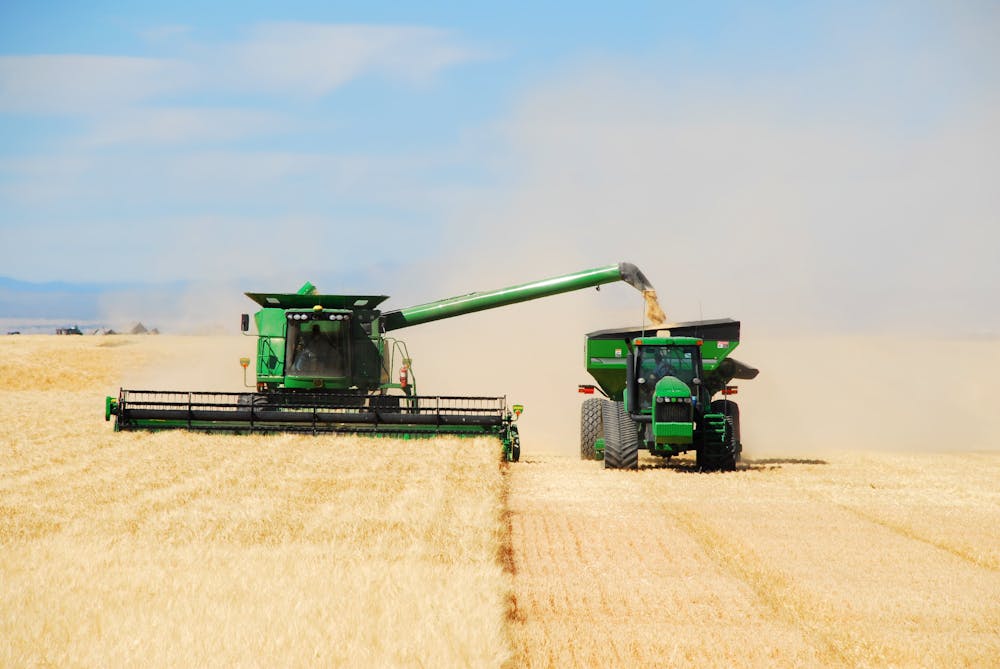 Australia is the third largest exporter of wheat after Russia and the US.
Shutterstock
Australia is the third largest exporter of wheat after Russia and the US.
Shutterstock
Where to from here?
These findings are a small but important part of the global effort to reduce emissions from the agriculture sector and maintain Australian industry competitiveness.
The next step is to conduct further research and develop technology to put our findings into practice, as well as develop more targeted incentives for customers, investors and other stakeholders.
With the increase in emissions taking place in the manufacture of fertiliser, rather than on the farm itself, it’s important the industry helps drive those embedded emissions down.
Some initiatives are already happening, especially the development of green hydrogen. Hydrogen is a key ingredient in the manufacture of fertiliser, so using green hydrogen can reduce fertiliser embedded emissions.
Read more: Our global food systems are rife with injustice: here's how we can change this
Authors: Maartje Sevenster, Research Scientist Climate Smart Agriculture, CSIRO


 Daily Bulletin


