

'Don't shove us off like we're rubbish': what people with intellectual disability told us about their local community
- Written by: Phillippa Carnemolla, Associate Professor, University of Technology Sydney
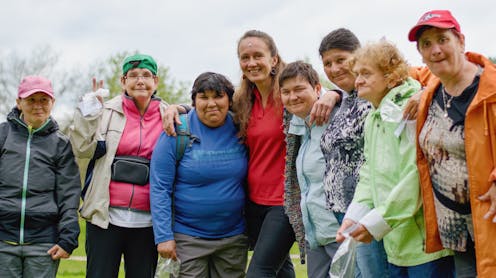
As the federal election approaches, civic engagement is back on people’s minds. But not everyone’s needs are well served in the political sphere – and one of the areas most ripe for improvement is actually at the local government level.
To find out more about their experiences of civic and social participation, we spent 12 months speaking with people intellectual disabilities about how they experience their local communities and the services local government provides.
Our study found there is huge opportunity to incorporate the ideas and opinions of people with intellectual disabilities about their local communities. This would help support greater civic inclusion for all.
Among other things, participants called for for access to better transport options, better maintained public toilets and more pedestrian crossings.
Many told us our focus group was the first time in their lives anyone had asked their opinion about these aspects of their local community.
What we did
Our project team included core members and researchers with intellectual disabilities. We conducted focus groups in six local government areas (a total of 45 people) in a mix of metropolitan and regional areas across New South Wales and Victoria.
To capture the types of improvements to local services and places that people with intellectual disability want to see, we asked participants: what would you change if you were the boss of your local government?
Our findings, published in the journal Sustainability, reveal people with intellectual disabilities are more than capable and willing to contribute to shaping local communities for the better – but are rarely asked about their opinions or experiences.
Our research suggests participation could be improved via several key changes.
1. Ensure accessible information and communication
One person with intellectual disability told us:
if you want us to participate, we need to know what things are happening and when […] and not just the disability events.
This was a common refrain. Many people with intellectual disability want their local government to provide more accessible information, in a range of formats, about what’s happening in the community and most importantly, how to participate.
One person told us:
If I was the boss of my council […] I would text people to let them know that they can call council.
2. Create inclusive employment opportunities
One of the most powerful messages in every focus group we conducted is a call for more employment opportunities. Participants spoke at length about hopes for a job, perhaps even one in local government. One person told us:
We could work at the front desk and be welcoming.
Another said:
I wish I could work but there are not many opportunities.
As one participant put it:
If I was the boss of my local council I would employ people with disability.

3, Ensure people feel safe and respected
Unfortunately, we heard many stories of people not feeling safe in their local community.
Participants also told us of many regular exchanges in public where they did not feel welcome or respected. Quotes from the focus groups included:
I wish people were more friendly to people with intellectual disability.
If I was the boss at [my council] I would make sure I listened to people. People don’t listen to me when I have a problem.
Sometimes, when I go to the shops, people just look at me […] I think the council could train people to help people with disability […] and be like ‘OK, are you sure you’re alright with this? We can help you out, if you need more help, just call us back.’ […] Not just shove us off like we are rubbish.
4. Create well-designed built environments
The design and maintenance of accessible public spaces, parks and recreational areas were a regular topic in our discussions.
Participants talked about how we could be improving the experiences of everyone in the community, telling us:
We need more accessible drop-offs right at the library [and pool] […] we have to walk too far and get tired as a group. It caused a problem before because we were always late to the class.
The council should fix our [pedestrian] crossing, they go too fast, someone nearly got hit last week.
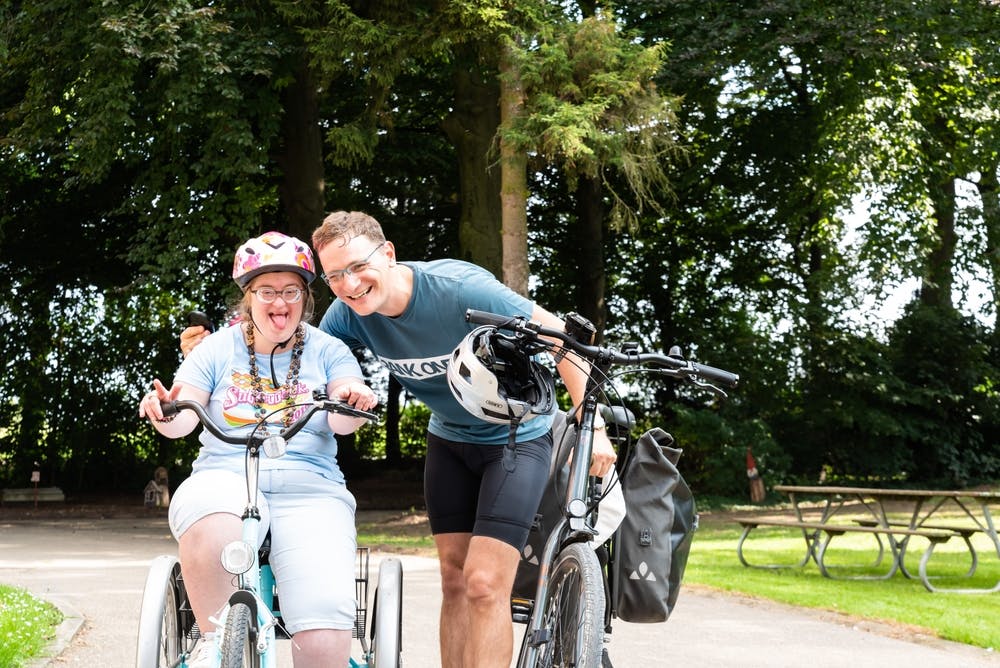 The design and maintenance of accessible public spaces, parks and recreational areas were a regular topic in our discussions.
Shutterstock
The design and maintenance of accessible public spaces, parks and recreational areas were a regular topic in our discussions.
Shutterstock
How councils can improve
Local governments and state government departments outline their inclusion plans and outcomes in a Disability Inclusion Action Plan. These plans – based around identified need through local consultations including people with disability, their carers and family – are designed to translate into direct actions by councils to provide more inclusive communities for all.
When we spoke to local government representatives about the findings of our research we found great variation in whether local governments have staff or resources to support inclusion of people with disability. But there is a genuine willingness and desire on their part to do things differently.
Conceptualising what inclusion is, and what it isn’t, is a good start. According to Jack Kelly, a member of our research team, and a person with a disability:
Holding an event once a year for International Day of People with A Disability doesn’t make your council inclusive.
One way to improve the confidence of local governments to engage more often and regularly with diverse local communities, including people with intellectual disabilities, is to provide some practical guidance on inclusive practice. There are myriad resources online to guide such a process.
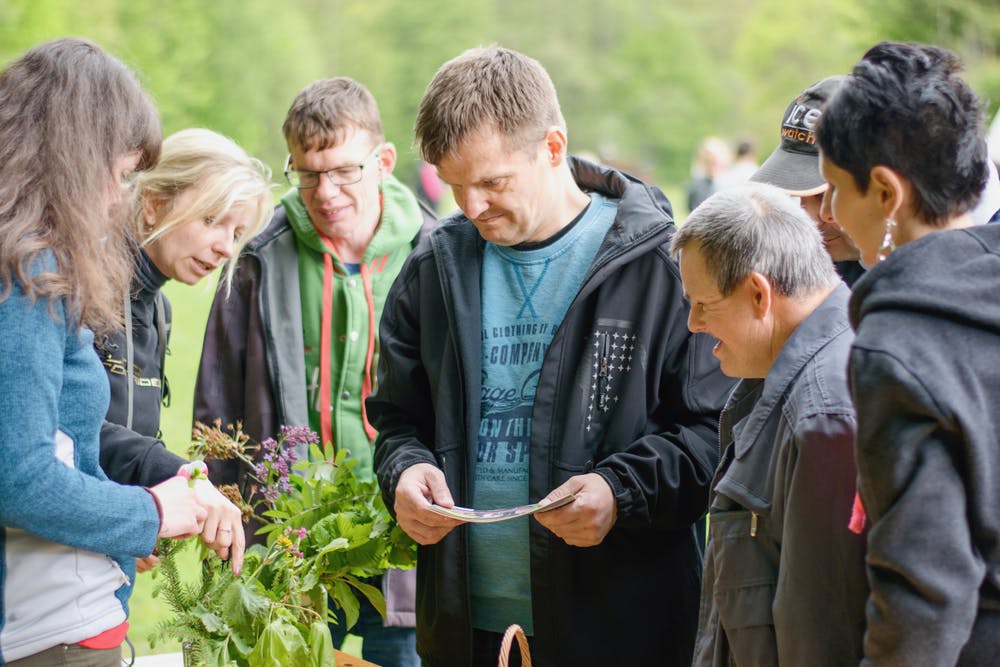 Many people with intellectual disability want their local government to provide more accessible information, in a range of formats, about what’s happening in the community and most importantly, how to participate.
Shutterstock
Many people with intellectual disability want their local government to provide more accessible information, in a range of formats, about what’s happening in the community and most importantly, how to participate.
Shutterstock
Looking beyond local government, every civic engagement opportunity, including urban planning processes and voting, is worthy of a review. We must explore ways to make information, communication and processes more inclusive.
Providing information in a range of formats and clearly explaining processes improves opportunities for civic inclusion for everyone, including people with low literacy, culturally and linguistically diverse communities, people with intellectual disabilities and all other communities in between.
But organisations should not rely solely on external resources.
As highlighted by people with intellectual disabilities themselves, inclusive employment represents one of the most important steps forward towards greater social and civic inclusion.
This would not only demonstrate that the contributions of people with disability are valued in their community, but would mean that knowledge and social capital about inclusion can be built from within.
As Justine O'Neill, CEO of Council for Intellectual Disability told us:
Employing people with intellectual disability in roles that support the purpose of the organisation changes attitudes, builds organisational capacity and confidence to be an inclusive employer and results in better informed work.
Authors: Phillippa Carnemolla, Associate Professor, University of Technology Sydney


 Daily Bulletin


