

NZ's health service is failing some communities: building a better national system requires local partnerships
- Written by: Kaaren Mathias, Senior Lecturer in public health, University of Canterbury
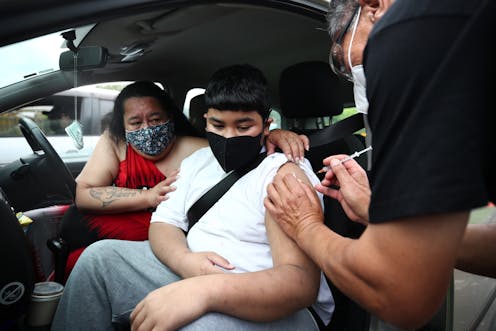
The New Zealand government is set to launch a massive overhaul of the health sector later this year. But to create a truly equitable system, local communities should be involved in developing the health services that affect them.
Today is World Health day. Themed “our planet, our health”, it re-imagines a world where people have control over their own and the planet’s health.
Globally, the climate crisis is causing premature deaths, malnutrition and poor mental health. Like COVID-19 and other global health threats, the effects of climate change are uneven and exacerbated by socioeconomic and political stressors.
We have begun to recognise that to improve health outcomes and address the social determinants of health, we must act hand-in-hand with local communities.
A focus on local needs
Each community and health system has its own geography, history, culture and assets, and when these are engaged with, health services are more acceptable, relevant and sustainable. They are also more equitable and increase collective wellbeing.
Sustainable systems enable local solutions that meet the different needs of each place. This might look like drive-in COVID-19 vaccine clinics for West Auckland or better roading and public transport for rural Northland.
Conventional health care priorities are typically underpinned by bio-medical evidence that prioritises measurable clinical interventions such as randomised controlled trials. While this can work well for trialling new drugs, quantitative studies can over-simplify the complex and unique settings of local communities.
Narratives and qualitative data are essential evidence to include in health service design. But change is often resisted by stakeholders invested in the status quo.
Four reasons to focus local
There are four compelling reasons to co-design health services with communities – firstly, because it leads to better health service quality and outcomes.
Read more: New Zealand's health restructure is doomed to fall short unless its funding model is tackled first
Among Canadian First Nations communities in Manitoba, the transfer of knowledge, capacity and funds to local control led to the development of new health programmes to meet local needs. Over time, these communities have seen lower rates of hospitalisation for preventable conditions than communities with limited involvement in setting health priorities.
In New Zealand, youth health services delivered by Youth One Stop Shops are co-governed by young people. They have increased access to care for youth with the most complex needs, and are viewed as more acceptable and relevant than mainstream care.
Secondly, co-designed health responses are more locally appropriate.
Many have praised the speed and scale of responses by local Māori health and social providers to the COVID-19 lockdown in March 2020. The provider Te Pūtahitanga, for example, surveyed over 18,000 people to identify key needs, and followed it with practical responses, such as supplying food packs and resources such as data access within South Island Māori communities.
Thirdly, when communities co-design health services, they build on local assets and strengths, moving from a focus on what is missing to what is already strong in community.
Identifying assets is central for Māori and indigenous communities. In the urban recovery process following the Christchurch earthquakes, Te Rūnanga o Ngāi Tahu, the resident iwi and kaitiaki (guardian) of the region, undertook leadership which collectivised and coordinated Māori providers to support the wider community, including Asian and refugee community members.
Read more: Why equal health access and outcomes should be a priority for Ardern's new government
Finally, when people engage in co-design of services, their wellbeing improves too.
Making it easy to be part of the process
How we engage communities in health is important.
Aotearoa’s past experiences with community participation and representation – elected members on district health boards, for example – have failed to reduce persistent health inequities that see Māori with less access to care and receiving poorer quality of care (such as treatment for lung and colon cancers).
The fundamental issue is one of power. To address inequities in health systems we must go beyond representation to involve communities in the design of health services.
So, how do we make it easy for communities to join in health service and system design?
When we include and represent diverse social groups in governance, service design and delivery it’s more likely that all groups will be cared for, which means health outcomes are more equitable.
Co-design has to be built on meaningful relationships that are developed over months and years. The community mental health needs and assets assessment we completed in a rural community in 2021 showed the importance of relationships of trust between community members and health providers to gain a genuine understanding of community priorities. This cannot happen in a hurry.
Funding for community health providers should also be equitable and underpinned by trust. Contracting relationships that are flexible and relationship-driven supports local solutions to local problems. Funding should enable community health providers to engage with their community and to recruit, retain and up-skill local staff who understand local assets and needs.
Real change will take time
Meaningful community co-design of health services requires time, relationship building, trust and responsive systems.
The upcoming health reforms propose the implementation of locality networks and Iwi Maori Partnership Boards, the latter working with Health NZ to set local priorities.
Locality networks present an opportunity to enhance community engagement and autonomy, foster links between sectors, and build on local strengths in health care delivery.
Where this is effective we will see lower levels of unmet need for health care, and fewer people admitted to hospital with potentially preventable conditions .
As we celebrate “our planet, our health” for World Health Day, we’re also celebrating all the ways health services are stronger because of community co-design.
Authors: Kaaren Mathias, Senior Lecturer in public health, University of Canterbury


 Daily Bulletin


