

Read The Times Australia

Daily Bulletin

New research detects pre-eruption warning signals at Whakaari White Island and other active volcanoes

  • Written by: David Dempsey, Senior lecturer, University of Canterbury
New research detects pre-eruption warning signals at Whakaari White Island and other active volcanoes

Scientifically and emotively, we think every volcano has its own “personality”. However, we’ve discovered that volcanoes share behaviour traits – and this could form the basis for an eruption warning system.

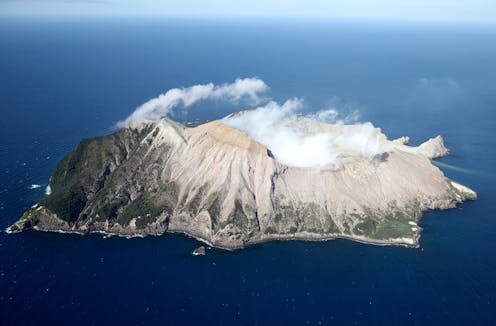
Whakaari White Island, a picturesque volcanic island in the Bay of Plenty, was a tourist magnet, with its alien landscape and spectacular hydrothermal features. This idyll was shattered on December 9 2019 when high-pressure steam and gas exploded, concentrating in a deadly surge of hot ash down its main access valley. Of the 47 guides and tourists present, 22 died while many others suffered horrific burns.

Two rescuers seen walking across an ash field on Whakaari White Island in December 2019.
An explosion of steam and gas shot hot ash across the main access valley of Whakaari White Island. New Zealand Defence Force via Getty Images

Since that tragedy, we have been studying past eruptions at Whakaari, and volcanoes like it, to identify the warning signs of an imminent eruption.

Deciphering volcanic language

Every volcano behaves differently: some have crater lakes while others are “dry”, they have diverse magmas and rise to different elevations. Despite these differences, we think volcanoes such as Whakaari, Ruapehu and Tongariro in New Zealand could be driven to eruption by common processes in the shallow sub-surface below their craters.

In our new research, we used machine learning to sift through 40 years of seismic data from the New Zealand volcanoes and three others around the world, listening for particular frequencies that track the depth where gas, magma or water are moving or building up.

Read more: Why White Island erupted and why there was no warning

We saw one pattern repeatedly in the days before all the known Whakaari eruptions over the past decade, and most Ruapehu and Tongariro ones. This pattern is a slow strengthening of a quantity called Displacement Seismic Amplitude Ratio (DSAR), which peaks a few days before each event.

DSAR is a ratio that compares the “activity” of fluids (gas, hot water, steam) at the volcano’s surface to those several hundred metres deep. When DSAR increases, surface fluids are quiet, but deep ones are still actively moving and circulating vigorously below ground.

This indicates a blockage or seal has formed, preventing gas escape. Like a pressure-cooker, if the gas can’t escape a volcano, it explodes.

What happened at Whakaari

About a month before the December 2019 eruption, deep gas started to rise into Whakaari’s hydrothermal system. This put pressure onto the groundwater, keeping it in a liquid state, even as it became “superheated”.

As this fluid circulates below the vent, it is registered as noise or “tremor” on seismometers. GNS Science noted this increased tremor and, on November 18, raised Whakaari’s alert level to Volcanic Alert Level (VAL) 2, which is the highest level outside an eruption.

A graphic showing key changes at Whakaari White Island leading up to the December 9 2019 eruption.
Key changes at Whakaari White Island leading up to the December 9 2019 eruption. Provided by author, CC BY-SA

About a week later, Whakaari began to pulse. Pressure and tremor would build over about 24 hours, before discharging explosively at the bottom of the crater lake. This resulted in geysers and fountains, throwing mud and debris up to the height of a ten-storey building.

Crucially, these gas bursts were safety valves, easing the pressure in the system.

Read more: New Zealand's White Island is likely to erupt violently again, but a new alert system could give hours of warning and save lives

At the beginning of December, the gas bursts stopped and the surface became quiet. Rather than being cause for relief, we think this indicated a new and much more dangerous phase. A seal had formed, trapping the gas. The high DSAR shows that below the seal, the system was as noisy as ever, with pressure continuing to rise.

Between 9pm and midnight on December 8 2019, there was a strong burst of seismic energy. This was likely fresh magmatic fluid arriving to ramp up the pressure on gas and water already trapped in the rock. It also began the process of explosive release, because it caused small cracks to form in the seal.

The growth of cracks began to accelerate, setting Whakaari on the path to a cascading system failure, as has been seen before in eruptions in 2012 and 2013. Once the weakness was widespread, the seal failed, disgorging the massive steam-explosion at 2:11pm on December 9.

Balloons are seen as family and friends of victims gathered a few days after the White Island eruption.
Of the 47 people on Whakaari on the day of the eruption, 22 died and many others suffered horrific burns. John Borren/Getty Images

Understanding Ruapehu

Mount Ruapehu is a 2800m stratovolcano in New Zealand’s central North Island.

It is also capped by a hydrothermal system and a warm crater lake (Te Wai a Moe). The temperature and level of its lake is known to vary in cycles, responding to changes in gas released into its base, local weather or the occasional formation of a gas seal.

Unfortunately, the lake is so large it hides the surface activity that is useful for diagnosing volcanoes like Whakaari.

Mount Ruapehu
The same patterns of gas build-up observed at Whakaari have also been seen at Mount Ruapehu. Shutterstock/bondjb

This is where DSAR is so powerful. We have spotted the same pattern that reveals gas sealing at Whakaari numerous times at Ruapehu. We monitor DSAR at Ruapehu closely: over the past month it has increased dramatically.

We think this shows a new seal has formed, building pressure. This could end in an eruption similar to the 2006/07 cycle that generated destructive lahars (volcanic mud flows).

GNS Science has reported similar concerns in their decision to raise Ruapehu’s alert level to VAL 2.

This type of analysis is so new we have not had many chances to test how reliable the DSAR and other automated measures are for forecasting. However, the current high DSAR and lake heating have put all scientist on alert. History shows this state does not always lead to an eruption, but we must remain vigilant.

Authors: David Dempsey, Senior lecturer, University of Canterbury

Read more https://theconversation.com/new-research-detects-pre-eruption-warning-signals-at-whakaari-white-island-and-other-active-volcanoes-181090

Business News

How Telematics Helps Australian Companies Improve Productivity

Operating a commercial fleet in Australia is a uniquely demanding endeavour. Between the sprawling urban sprawl of cities like Sydney and Melbourne and the immense, unforgiving stretches of the Outb...

Daily Bulletin - avatar Daily Bulletin

Inside the Icon: The BridgeMuseum Officially Opens at the Sydney Harbour Bridge

A bold new way to experience one of Australia’s most recognisable landmarks has arrived, with BridgeClimb Sydney officially opening the all-new BridgeMuseum.  Located inside the Sydney Harbour Brid...

Daily Bulletin - avatar Daily Bulletin

Is Your Brand Showing Up in AI Search? Most Melbourne Brands Aren't.

The New Front Door Nobody Told You About Something changed. Quietly. Without a press release. The way buyers find businesses in Australia has been rewired. Not replaced, rewired. Google isn't dead...

Daily Bulletin - avatar Daily Bulletin

How Australian Businesses Can Measure SEO ROI

SEO can feel vague when you are staring at a dashboard full of numbers that do not clearly connect to revenue. The key is to measure the right signals in the right order, then tie them back to outcome...

Daily Bulletin - avatar Daily Bulletin

How Commercial Roller Shutters Improve Site Security Without Slowing Operations

Security upgrades can be frustrating when they make everyday work harder. A door that takes too long to open, creates bottlenecks at shift change, or fails at the worst time can turn “better protectio...

Daily Bulletin - avatar Daily Bulletin

Why a Document Destruction Service Still Matters for Modern Businesses

Businesses generate large volumes of information every day, from staff records and contracts to invoices, reports and customer files. While attention often focuses on how documents are stored, the way...

Daily Bulletin - avatar Daily Bulletin

Bicycle Rack Safety and Space-Smart Storage

Bike storage problems usually show up as small annoyances first: tangled handlebars, scratched frames, and bikes that topple when you pull one out. Over time, those issues become safety risks, especia...

Daily Bulletin - avatar Daily Bulletin

How to Tell if a Childcare Centre Is a Good Fit for Your Child

Choosing childcare can feel like you’re making a huge decision with limited information. Tours are short, centres are often on their best behaviour, and your child might act differently in a new space...

Daily Bulletin - avatar Daily Bulletin

Car Import Timeline: What Usually Happens at Each Stage

Importing a car into Australia can feel confusing because multiple agencies and checkpoints are involved, and the timeline is shaped as much by paperwork quality as it is by shipping speed. The most u...

Daily Bulletin - avatar Daily Bulletin

The Daily Magazine

Gold Migration Lawyers in Liquidation: How the Closure Affects Your ART Appeal

If your appeal was with Gold Migration Lawyers, a recent change to how the Tribunal decides cases ...

The pressure cooker: life in urban Australia in 2026

Australian cities have always been demanding. Long commutes, rising housing costs, busy schedules a...

What Actually Makes a Good Criminal Lawyer in Melbourne

Most people only think about this question once. That is usually too late. Most people charged wi...

Why Working With A Chatswood Tutor Can Improve Academic Performance

Academic expectations continue increasing for students across primary school, high school, and senio...

Is It Worth Getting Solar Panels in Melbourne?

The real question is not whether solar works in Melbourne. It works. The question is what it is co...

How A Diploma Of Project Management Builds Practical Skills For Modern Work Environments

Developing the ability to plan, execute, and deliver outcomes efficiently is a key requirement in to...

How to Choose the Right Football for Every Level

Choosing a football may seem straightforward, but the right option depends on who will be using it a...

What to Ask a Wedding Photographer Before You Book

Booking a wedding photographer can feel deceptively simple: you like the photos, you like the vibe...

Why Stress Relief For Dogs Is Essential For Emotional Balance And Long-Term Wellbeing

Managing emotional health is just as important as physical care when it comes to pets, which is why ...