

People are shivering in cold and mouldy homes in a country that pioneered housing comfort research – how did that happen?
- Written by: Rachel Goldlust, Adjunct Research Fellow, School of Archaeology and History, La Trobe University

The poor state of Australia’s residential, and particularly rental, housing stock is attracting increasing attention. This week it has been reported many renters are living in unhealthily cold and damp housing. The head of UNSW’s School of the Built Environment, Philip Oldfield, recently described the average Australian home as “closer to a tent than an insulated eco-building”.
A joint statement by more than 100 property, community, health and environmental organisations has called on next week’s meeting of the nation’s building ministers to increase the energy efficiency of new homes. The alliance wants to lift National Construction Code standards, such as raising the minimum thermal performance to seven stars, alongside a “whole-of-home” energy budget. The statement said Australia lags far behind international energy-efficiency and building standards.
These concerns coincide with a growing housing shortage, rising building costs and a changing climate. But these circumstances are no reason to defer housing reforms. In the past, in a remarkably similar set of circumstances, Australia became a global innovator through a dedicated government agency focused on thermal comfort and performance.
We once led the way in building for the climate
We must go back to the second world war, though, to see Australia at the vanguard of housing built for the climate. The Ministry of Post-war Reconstruction’s substantial and alarm-raising Commonwealth Housing Report of 1944 had forecast a shortfall of 300,000 dwellings by war’s end. On top of a materials shortage and a rapidly growing population, Chifley’s Labor government was keen to tackle the housing crisis head-on and to demonstrate Australia’s scientific prowess across a range of technical industries.
As the magnitude of the looming housing shortage became clear, a group of architects established a Small House Bureau to reinvigorate the housing landscape. In Victoria, the director was celebrated architect Robin Boyd. He advocated for smaller homes, notably if the main building material could be earth.
Boyd told a growing readership desperate for cost-effective and accessible alternatives that earth walls were “cheap, strong, weatherproof, and highly insulating”. The materials are already on “your vacant building site”, he cried. Thus, it seemed reasonable to “make it of mud!”.
At the same time, the Commonwealth Experimental Building Station was set up on 16 hectares of bushland in Ryde, north of Sydney. Its mandate was to carry out experimental construction in different climatic and geographic locations. It was also to advise regulators, housing authorities and government departments.
Engineers, builders, architects and the public welcomed the innovative scientific approach to housing design across the nation’s varied and extreme weather and seasonal conditions. Post-war architects and scientists were keen to place a climatically defined framework on both the layout and construction of Australian homes.
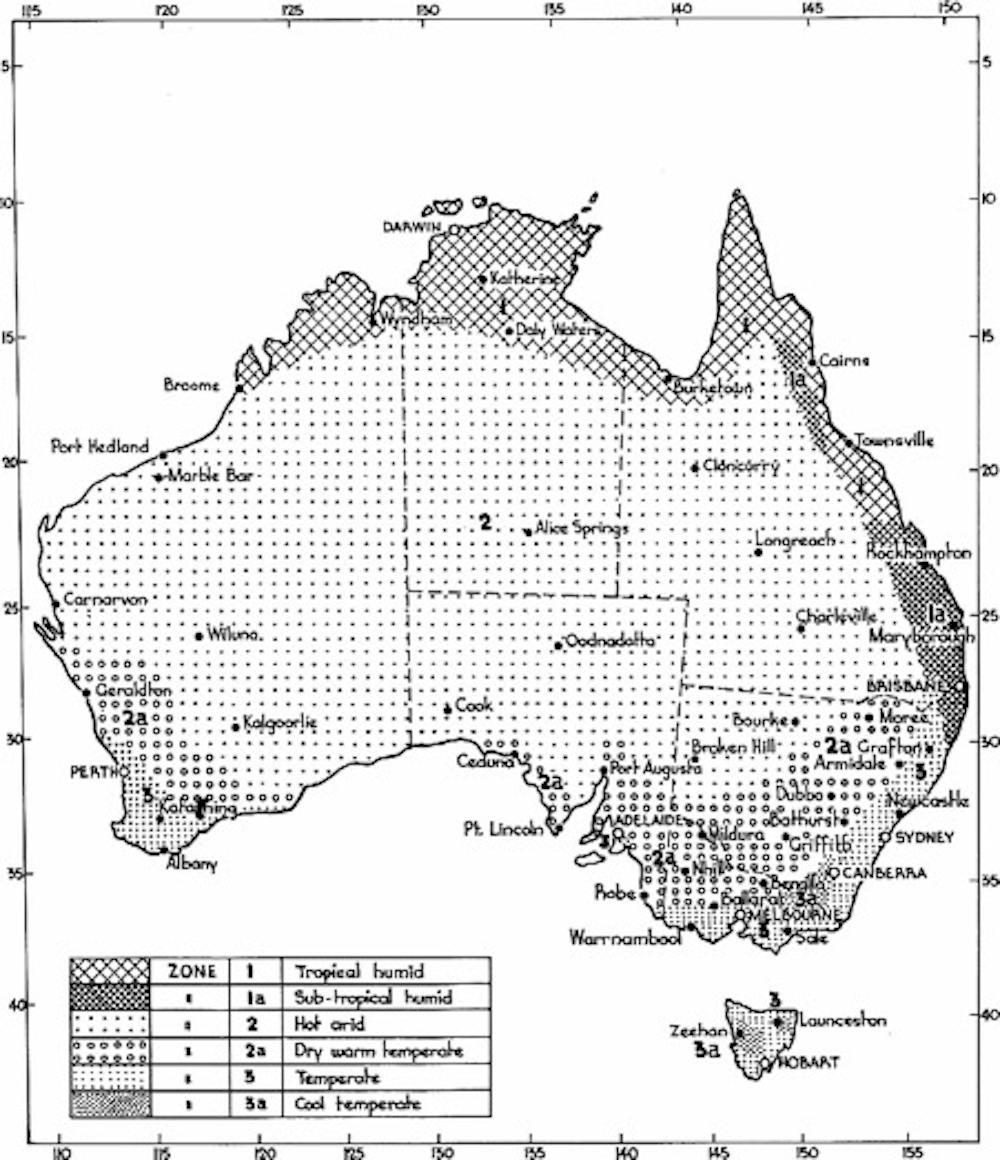
One of the station’s main directives was to address “heating, lighting, ventilation, sound and thermal transmission, and performance generally”. The station developed an advanced thermal modelling program to enhance indoor comfort. The modelling took into account solar radiation, the value of shading, strategic ventilation and insulation.
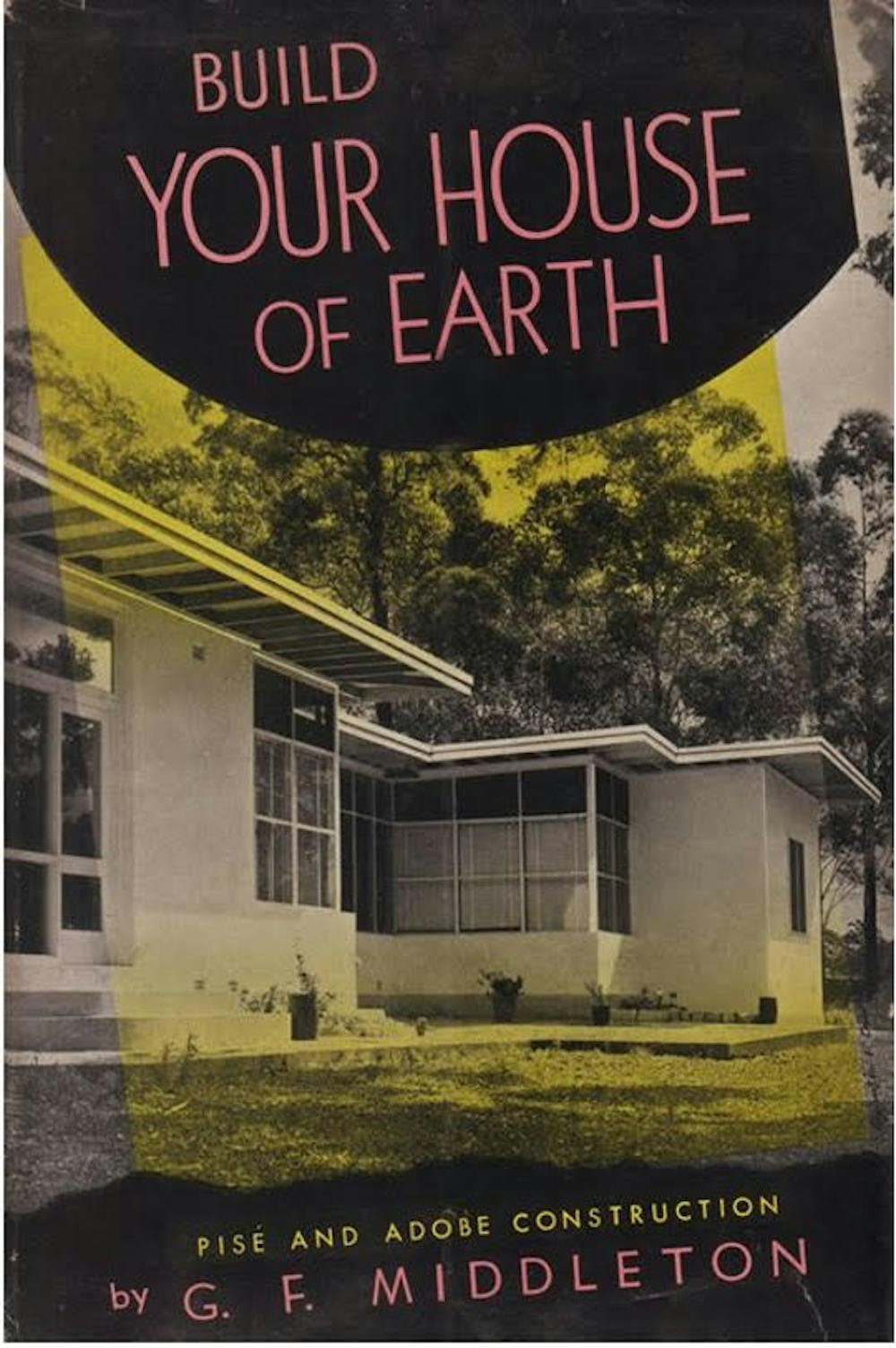 Build Your House of Earth by George F. Middleton.
Amidst a slew of controlled experiments, the station’s chief technical officer, English architect and engineer George Middleton, championed the practical application of earth walls. Following a scoping tour of England, America, Russia and across Australia, Middleton examined the structural integrity, durability and effective function of “Pisé” or rammed earth.
A devotee of the aesthetic qualities and durability of earth, he produced several technical papers that placed earth walls “high among the accepted building methods”.
Continuing to advocate for earth over prefabricated materials, Middleton released Build Your House of Earth in 1953. It remains the authoritative text on rammed-earth building in Australia.
In just a few short years, the station researched, experimented and built dozens of prototypes. Its thermal response analysis tool (replicated 20 years later by UK building authorities) was ground-breaking.
Australia needs to make up lost ground
Despite the station’s record of achievement, its funding for such investigations was cut in 1955. Some thermal investigations were all but abandoned. Without ongoing testing and field application, the capacity to influence material and performance standards waned.
The station did continue to provide regulations and standards for building systems and materials, and it was restructured in the mid-1980s into the National Building Technology Centre. It was later absorbed into CSIRO’s Division of Building, Construction and Engineering, which still oversees the Building Code of Australia.
At the centre of building research in Australia, the station was innovative and experimental. It was created decades before the energy conservation movement began to investigate building efficiency in North America and England.
But our innovation and desire for experimentation have faded. Decades of industry lobbying, toothless enforcement, a lack of investment in and subsidies for refurbishing existing dwellings, and an outdated rating scheme (NatHERS) have left many Australians out in the cold.
Read more: Keen to retrofit your home to lower its carbon footprint and save energy? Consider these 3 things
In a continent notorious for its extremes, it is time to invest again in thermal research and testing. Australia needs to build resilience into new and existing houses. In a rapidly changing climate, we must consider the capacity and efficiency of earth and other natural materials as a viable and proven alternative to prefabricated materials.
Authors: Rachel Goldlust, Adjunct Research Fellow, School of Archaeology and History, La Trobe University


 Daily Bulletin


