

Pakistan floods: will rich nations ever pay for climate loss and damage?
- Written by: Melanie Pill, Research fellow, Australian National University
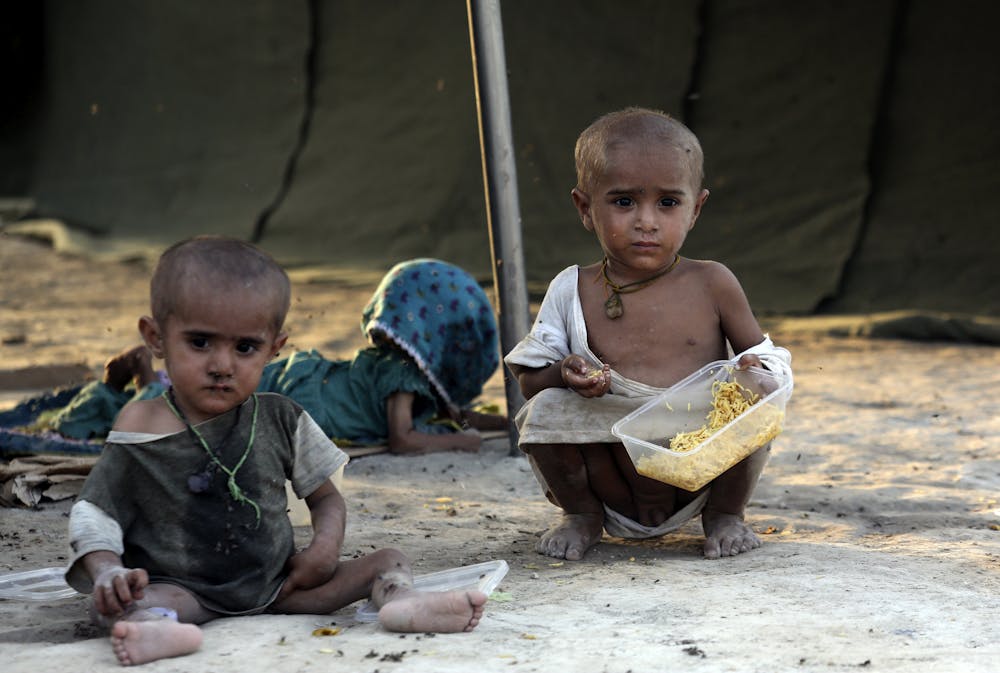
A third of the country underwater. Crops washed away. Some 33 million people homeless. Billions of dollars of damage. A looming food crisis. And still the unprecedented rains come. Pakistan’s mega-monsoon dumped up to 700% of the usual August rainfall on parts of the country, with floodwaters boosted by glacial melting from the enormous heatwave that hit the country in March. Climate experts say climate change amplified the event, at the very least.
It’s small wonder Pakistan’s climate minister, Sherry Rehman, is calling not only for immediate aid, but for compensation by rich industrialised countries for the damage caused by their greenhouse gas emissions.
As she told The Guardian, Pakistan has emitted less than 1% of the world’s greenhouse gases – but is already amongst the hardest-hit nations. “The bargain made between the global north and global south is not working … climate change is accelerating much faster than predicted.”
Rich countries, however, show very little enthusiasm for paying for loss and damage caused in part by their emissions. But as climate impacts worsen, can this last?
Rich countries don’t want to talk about compensation – and you can see why
One thing is not subject to debate: loss and damage from climate change is happening. “Loss and damage” is the phrase used by climate negotiators at the annual United Nations climate summits to refer to impacts caused by climate change.
But while all 165 nations party to the UN’s Framework Convention on Climate Change agree it is happening, there is no agreement on who should pay for it.
The recent G20 talks in Bali failed, in part over this exact issue. The question of who pays caused major debate between industrialised and developing nations, which also disagreed over how strongly to criticise the failure by rich countries to deliver a promised A$145 billion annually in climate finance by 2020.
Read more: Pakistan floods: what role did climate change play?
But this is changing. Increasingly, action and funding for loss and damage is being seen a necessity – even by developed countries. Even so, compensation for historical emissions is still off the table.
In part, this is fair enough. While we know early industrialising countries like the United States have emitted disproportionate volumes of greenhouse gases, it’s much harder to pin down how much climate change has contributed to specific events.
In Pakistan, for instance, the monsoon season has always been part of the region’s weather patterns. It would be challenging to fairly allocate compensation if you don’t know the amount a high-emitting nation contributed to the disaster.
Having said that, given the key role fossil fuel companies have played in causing climate change – and in lobbying to prevent climate action – it will likely be easier to determine liability for private companies rather than whole nations.
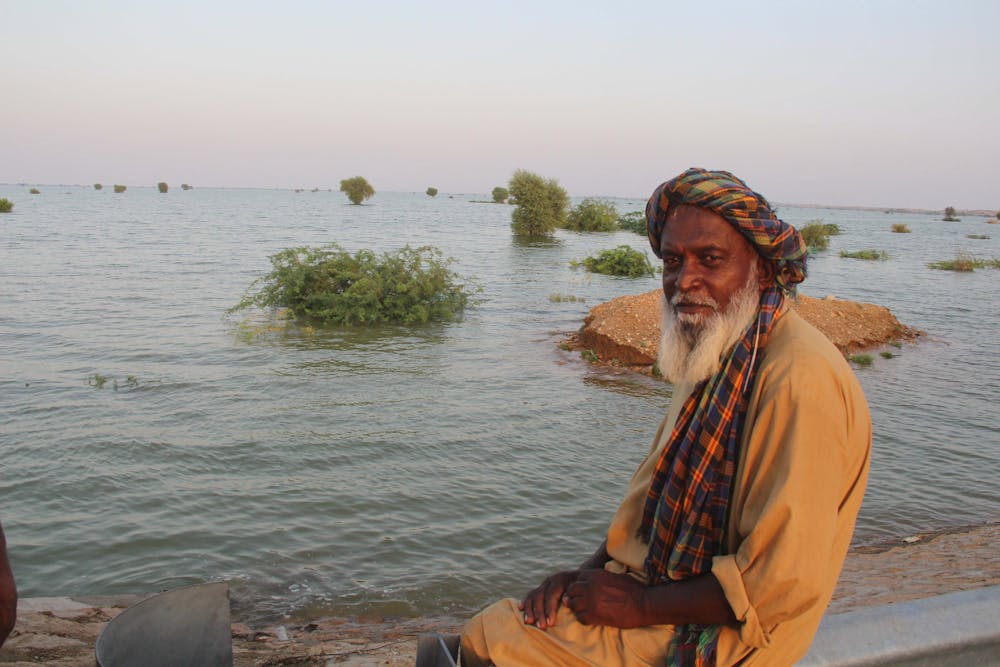 Much of Pakistan is like an inland sea, with millions displaced.
Nadeem Khawar/EPA
Much of Pakistan is like an inland sea, with millions displaced.
Nadeem Khawar/EPA
That’s not the only problem. Where would compensation go? Would it flow to the most-affected communities, or would much of it be absorbed by central bureaucracies? And what about emerging high polluters such as China, which is still considered a developing country but emits about a third of global greenhouse gas emissions – more than double the annual emissions of the US? Which courts would decide on the compensatory amount, given there are no “climate courts” equipped to deal with these questions?
Perhaps most important is the legal precedent set if rich nations explicitly compensated developing nations for losses due to climate change. Legally, compensation is paid by a person, organisation or country to a victim. So if rich countries begin to pay compensation, it could become a bottomless pit.
This is why the topic of compensation is fraught and contentious. Despite its popularity with some leaders of developing nations and climate justice advocates, the legal complexities and potentially enormous sums involved mean it’s never likely to get traction.
What we’re more likely to see is increased funding and ambition for climate adaptation and disaster response – climate finance, as it’s known. The difference here is the funding is being given willingly. But at present, climate finance is not flowing at anywhere near the levels needed.
 Pakistan’s climate minister Sherry Rehman has called for climate compensation - but will the idea get traction?
Rahmat Gul/AP
Pakistan’s climate minister Sherry Rehman has called for climate compensation - but will the idea get traction?
Rahmat Gul/AP
Will the issue of compensation stall climate progress?
Despite the improbability, some developing countries are strongly focused on compensation. That’s understandable, given their relatively minuscule emissions and the disproportionate damage being done. But it remains a dealbreaker for rich countries.
The problem is, the issue risks overshadowing crucial climate negotiations. As the question of compensation is politicised, it stalls other areas of climate change action where we urgently need progress, such as securing more immediate funding for people affected by climate-fuelled natural disasters.
Pakistan will head the bloc of developing countries in negotiations at the November COP27 climate change conference in Egypt. Expect to see fierce negotiations and strong opinions on compensation payments and finance for loss and damage.
This year’s conference was already expected to be tense, given the background of the energy crisis gripping Europe and the scramble for more fossil fuels to shore up supply gaps, as well as multiplying climate disasters. We can expect to see fierce negotiations and strong opinions on compensation payments and finance for loss and damage.
As the unprecedented European and American droughts show us, rich countries are hardly immune to climate impacts. They do, however, have a greater ability to cope and bounce back.
Research has shown communities and global policymakers are not convinced compensation is a solution.
What is clear is that climate finance needs to ramp up and be spent effectively. It must be pragmatic and practical, moving away from politicised debate over loss and damage and compensation in favour of making sure people on the ground – such as the millions left without homes in Pakistan – can access help.
Read more: Climate change is white colonisation of the atmosphere. It's time to tackle this entrenched racism
Authors: Melanie Pill, Research fellow, Australian National University


 Daily Bulletin


