

Read The Times Australia

Daily Bulletin

Scientists have mimicked an embryo's heart to unlock the secrets of how blood cells are born

  • Written by: Robert E Nordon, Associate Professor, Biomedical Engineering, UNSW Sydney
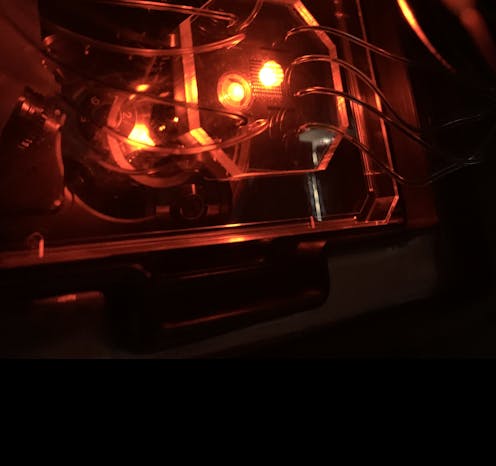
Scientists have mimicked an embryo's heart to unlock the secrets of how blood cells are born

Stem cells are the starting point for all other cells in our bodies. The first such cells to be found were blood stem cells – as the name suggests, they give rise to different types of blood cells.

But there’s much we don’t know about how these cells develop in the first place. In a study published today in Cell Reports, we have shown how a lab simulation of an embryo’s beating heart and circulation lead to the development of human blood stem cell precursors.

The tiny device mimics embryonic blood flow, allowing us to directly observe human embryonic blood formation under the microscope. These results may help us understand how we can produce life-saving therapies for patients who need new blood stem cells.

Growing life-saving therapies in the lab

To treat aggressive blood cancers such as leukaemia, patients often need extremely high doses of chemotherapy; a blood stem cell transplant then regenerates blood after the treatment. These are life-saving therapies but are restricted to patients who have a suitable tissue-matched donor of blood stem cells.

A way around this problem would be to grow more blood stem cells in the lab. Unfortunately, past experiments have shown that harvested adult blood stem cells lose their transplantation potential if grown in the lab.

The discovery of induced pluripotent stem cells – stem cells made out of adult cells – in 2006 led to a promising new approach. Induced pluripotent stem cells are made from the patient’s own cells, so there is no problem with tissue rejection, or the ethical issues surrounding the use of IVF embryos.

These cell lines are similar to embryonic stem cells, so they have the potential to form any tissue or cell type – hence, they are “pluripotent”. In theory, pluripotent stem cell lines could provide an unlimited supply of cells for blood regeneration because they are immortalised – they can grow in the lab indefinitely.

But the development of processes to allow us to grow particular types of tissues, organs and cell types – such as blood – has been slow and will take decades to advance. One must mimic the complex process of embryogenesis in the dish!

Read more: World's first 'synthetic embryo': why this research is more important than you think

Engineering an embryonic heart

Current understanding of how embryonic blood stem cells develop is based on animal models. Experiments with anaesthetised zebrafish embryos have shown that blood stem cells arise in the wall of the main blood vessel, the aorta, shortly after the first heartbeat. For ethical reasons, it’s obvious this type of study is not possible in human embryos.

This is why we wanted to engineer an embryonic heart model in the lab. To achieve this, we used microfluidics – an approach that involves manipulating extremely small volumes of liquids.

A clear chip with colourful tubes coming out on both ends
The microfluidic device, with cell-seeding channels filled with red food dye; the heart ventricular contraction control channels and circulation valve control channels are filled with blue and green food dye respectively. UNSW/Jingjing Li, Author provided

The first step in generating blood stem cells from pluripotent stem cells is to coax the latter to form the site where blood stem cells start growing. This is known as the AGM region (aorta-gonad-mesonephros) of the embryo.

Our miniature heart pump and circulation (3 by 3 centimetres) mimics the mechanical environment in which blood stem cells form in the human embryo. The device pumps culture media – liquids used to grow cells – around a microfluidic circuit to copy what the embryo heart does.

A step closer to treatment

Once we got the cells to form the AGM region by stimulating cells on day two of starting our cell culture, we applied what’s known as pulsatile circulatory flow from day 10 to day 26. Blood precursors entered the artificial circulation from blood vessels lining the microfluidic channels.

Then, we harvested the circulating cells and grew them in culture, showing that they developed into various blood components – white blood cells, red blood cells, platelets, and others. In-depth analysis of gene expression in single cells showed that circulatory flow generated aortic and blood stem precursor cells found in the AGM of human embryos.

This means our study has shown how pulsatile circulatory flow enhances the formation of blood stem cell precursors from pluripotent stem cells. It’s knowledge we can use in the future.

The next step in our research is to scale up the production of blood stem cell precursors, and to test their transplant potential in immune-deficient mice that can accept human transplants. We can do this by using large numbers of pluripotent stem cells grown in bioreactors that also mechanically stimulate blood stem cell formation.

If we can easily produce blood stem cells from pluripotent stem cell lines, it would provide a plentiful supply of these cells to help treatments of cancer or genetic blood diseases.

Read more: Gut bacteria nurture the immune system – for cancer patients, a diverse microbiome can protect against dangerous treatment complications

Authors: Robert E Nordon, Associate Professor, Biomedical Engineering, UNSW Sydney

Read more https://theconversation.com/scientists-have-mimicked-an-embryos-heart-to-unlock-the-secrets-of-how-blood-cells-are-born-190530

Business News

Options Available When a Company Faces Financial Distress

Financial distress can develop gradually or arrive suddenly, and when it does, the decisions made in the early stages often determine what options remain available later. Directors who act promptly ...

Daily Bulletin - avatar Daily Bulletin

What Healthcare Teams Look for When Choosing Specialist Surgical Supplies

In clinical environments, small details rarely stay small. A delayed instrument, a poorly matched device or inconsistent supply quality can affect theatre flow, staff confidence and patient outcomes. ...

Daily Bulletin - avatar Daily Bulletin

Reducing Sales Friction Through Centralized Content Delivery

Sales friction appears whenever buyers or sales teams face unnecessary obstacles in the buying journey. It can happen when information is hard to find, when messaging feels inconsistent, when product ...

Daily Bulletin - avatar Daily Bulletin

Why Choosing the Right Bollard Supplier Matters for Australian Businesses and Public Spaces

From busy CBD streetscapes to sprawling warehouse loading docks, bollards have become one of the most essential safety and security fixtures across Australia. Whether protecting pedestrians from veh...

Daily Bulletin - avatar Daily Bulletin

Why Modular Content Is Transforming Modern Marketing Teams

Modern marketing teams are expected to produce more content than ever before. They need to support websites, landing pages, email campaigns, social channels, product pages, sales enablement material...

Daily Bulletin - avatar Daily Bulletin

Everything You Need to Know About Getting Support from Optus

Whether you've been an Optus customer for years or you've just switched over, at some point you'll probably need to contact their support team. Maybe your bill looks different from what you expected. ...

Daily Bulletin - avatar Daily Bulletin

The Marketing Strategy That’s Quietly Draining Sydney Business Owners’ Bank Accounts

Sydney businesses are investing more in digital marketing than ever before. The intention is clear. More visibility should mean more leads, more customers, and steady growth. However, many business ...

Daily Bulletin - avatar Daily Bulletin

Why Mining Hose Solutions Are Essential For High-Performance Industrial Operations

In environments where the ground itself is constantly shifting, breaking, and being reshaped, every component must be built to endure. Mining operations are among the most demanding in the industria...

Daily Bulletin - avatar Daily Bulletin

The Reason Talented Teams Underperform

If you’re in business, you might have seen it before. A team of capable and smart people just suddenly slows down, and things start spiraling out of control. On paper, everything looks perfect, but ...

Daily Bulletin - avatar Daily Bulletin

The Daily Magazine

Why Stress Relief For Dogs Is Essential For Emotional Balance And Long-Term Wellbeing

Managing emotional health is just as important as physical care when it comes to pets, which is why ...

Australia’s Best Walking Trails and the Shoes You Need to Tackle Them

Australia is not short on spectacular walks. You can follow ocean cliffs in Victoria, cross ancien...

Why Pre-Purchase Building Inspections Are Essential Before Buying a Home in Australia

source Have you ever walked through an open home and started picturing your furniture, family d...

5 Signs Your Car Needs Immediate Attention Before It Breaks Down

Car problems rarely appear without warning. In most cases, your vehicle gives clear signals before...

Ensuring Safety and Efficiency with Professional Electrical Solutions

For businesses in Newcastle, a safe and fully functioning workplace remains a key part of day-to-d...

Choosing The Right Bin Hire Solution For Hassle-Free Waste Management

When it comes to managing waste efficiently, finding the right solution can save both time and eff...

Why Cleanliness Is Critical In Childcare Environments

Children explore the world with curiosity, often touching surfaces, sharing toys, and interacting ...

What to Look for in a Reliable Australian Engineering Partner

Choosing an engineering partner is rarely just about technical capability. Most businesses can fin...

How to Choose a Funeral Home That Supports Families with Care

Choosing a funeral home is rarely something families do under ideal circumstances. It often happen...