

Climate change threatens up to 100% of trees in Australian cities, and most urban species worldwide
- Written by: Manuel Esperon-Rodriguez, Lecturer and Research Fellow, Hawkesbury Institute for the Environment, Western Sydney University
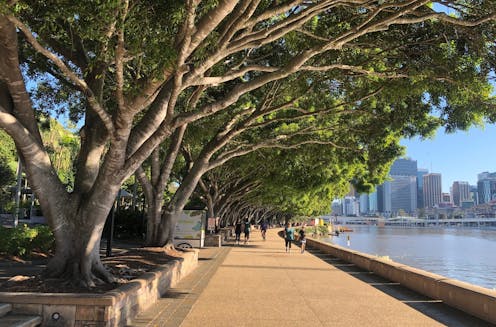
To anyone who has stepped off a hot pavement into a shady park, it will come as little surprise that trees (and shrubs) have a big cooling effect on cities.
Our study published today in Nature Climate Change found climate change will put 90-100% of the trees and shrubs planted in Australian capital cities at risk by 2050. Without action, two-thirds of trees and shrubs in cities worldwide will be at potential risk from climate change.
Increasing city temperatures mean their trees are becoming more important than ever. More than just shade umbrellas, the natural air-conditioning magic of trees happens as water moves up from the soil through their roots and evaporates out of their leaves into the air.
But how will the trees themselves cope with climate change as conditions shift beyond their natural tolerance limits for high temperatures or lack of water? Our team of scientists from Australia and France examined the impacts of temperature and rainfall changes projected for coming decades on 3,129 tree and shrub species planted in 164 cities across 78 countries.
About half of these urban tree and shrub species are already experiencing climate conditions beyond their natural tolerance limits.
These findings sound bleak – but read on. We have also identified steps people can take to help their local trees survive, thrive and keep on cooling.
Read more: A solution to cut extreme heat by up to 6 degrees is in our own backyards
Risks in Australia are higher
In Australia, reduced rainfall will be the most common stress on urban trees, but increasing temperatures will also be a major factor, especially in Darwin.
By 2050, the proportion of urban tree species that might be at risk of projected temperature increases in Australian cities is very high. Among the major cities with inventories of urban plantings, those with high percentages at risk include: Cairns 82%, Melbourne 93%, Perth 95%, Hobart 95%, Sydney 96%, Canberra 98% and Darwin 100%.
Common native species, including manna gum, swamp gum, yellow box, narrow-leaved peppermint, blackwood and brush box, and well-loved introduced species, such as jacaranda, oaks, elms, poplars and silver birch, are among the trees that could be at risk in Australia.
By at risk, we mean these species might be experiencing stressful climatic conditions that could affect their health and performance. However, we could buffer the risk for these species by providing water or creating other microclimate conditions. Also, urban trees may exhibit plasticity in traits that govern survival, growth and environmental tolerance, which can help them to adapt to local environmental conditions.
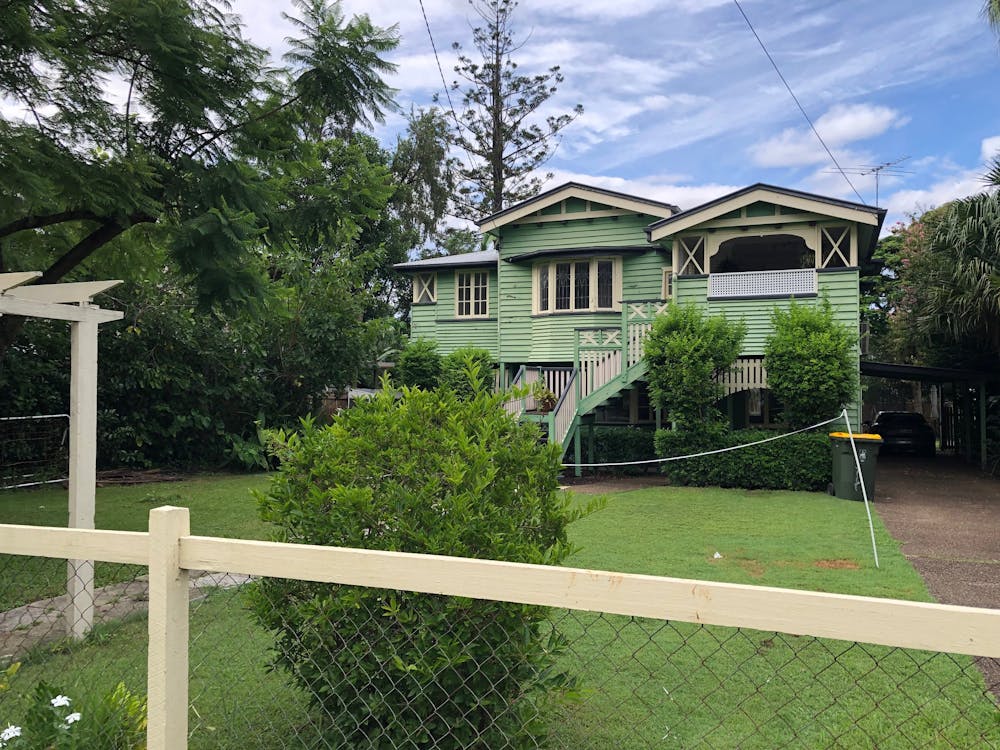 Houses surrounded by trees and shrubs stay cooler in warm weather.
Photo: Jaana Dielenberg, Author provided
Houses surrounded by trees and shrubs stay cooler in warm weather.
Photo: Jaana Dielenberg, Author provided
Read more: Our cities need more trees, but some commonly planted ones won't survive climate change
More than 1,000 tree species at risk globally
Worldwide, we found common species of cherry plums, oaks, maples, poplars, elms, pines, lindens, wattles, eucalypts and chestnuts are among more than 1,000 species that have been flagged at risk due to climate change in most cities where they occur.
Even more worryingly, the number of species affected, and the scale of the impacts, will increase markedly by 2050 as temperatures increase. These trends jeopardise the health and longevity of urban forests and the benefits they provide to society.
 Urban forests like these horse chesnut trees in the Père Lachaise Cemetery in Paris are valuable for cooling cities and making them more liveable.
Photo: Akvile Jureviciute-Lenoir, Author provided
Urban forests like these horse chesnut trees in the Père Lachaise Cemetery in Paris are valuable for cooling cities and making them more liveable.
Photo: Akvile Jureviciute-Lenoir, Author provided
The United Nations predicts the world’s population will grow to around 8.5 billion by 2030, with more than half of those people living in cities. Climate change will further heat up the urban heat islands created by millions of people, vehicles and industries generating heat that’s retained among buildings and other infrastructure.
Urban trees have a vital role to play in keeping cities liveable. As they cool their surroundings, they reduce our electricity use for air conditioning, while also absorbing carbon dioxide, purifying the air, reducing city noise and providing wildlife habitat. They are also inherently beautiful, living things that underpin much of the biodiversity on Earth.
Being around their natural greenness also improves our mental health and well-being. Trees have helped us through stressful times such as pandemics.
However, when climatic conditions exceed the natural tolerance of trees, not only can this lead to poor tree health and limited growth, but it can also reduce their cooling effect and eventually lead to tree dieback. During drought or heat stress, trees can stop releasing water vapour from their leaves or shed leaves to reduce tissue damage. This means that at a time when we most need their natural air conditioning, they are more likely to be switching off.
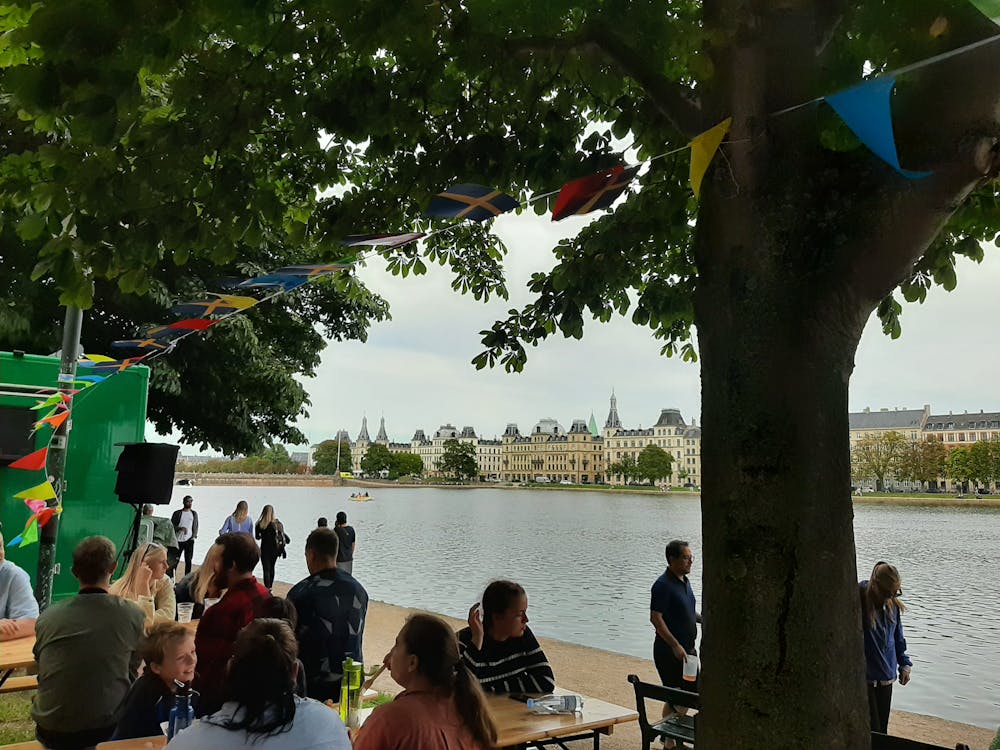 People enjoying trees in Copenhagen, Denmark.
Photo: Rachael Gallagher
People enjoying trees in Copenhagen, Denmark.
Photo: Rachael Gallagher
What can we do to protect our trees?
Increasing the number of trees and shrubs in our cities, collectively called urban forests, is a key climate change adaptation and liveability strategy being used around the world. Until now, though, little information was available on whether or not current climatic conditions exceed what urban forests can stand, or how these conditions compare with projected changes in temperature and precipitation (drought, rain and snow) around the world.
Our study provides guidance to urban forest managers in 164 cities about which species might be at risk and should be monitored. It also identifies which species are likely to be resilient to climate change and so suitable for future plantings.
The authors explain their findings and what they mean for trees and shrubs planted in our cities.People can help urban forests to survive and keep providing their many benefits in a few simple ways:
1) reduced rainfall and soil moisture are a big threat to many species, so you can help rain soak into the ground to ensure precious water is not wasted down the drain – consider diverting water from your downpipe to a raingarden or a rainwater tank that trickle-feeds the garden (this also helps your local creek).
2) plant even more trees and shrubs, which helps to keep city temperatures comfortable for them and us – get advice from your local council or horticulturalists about suitable climate-resilient species for your area.
3) leave trees and shrubs in place – think twice before cutting down trees and shrubs, as they are providing you with more benefits than you realise.
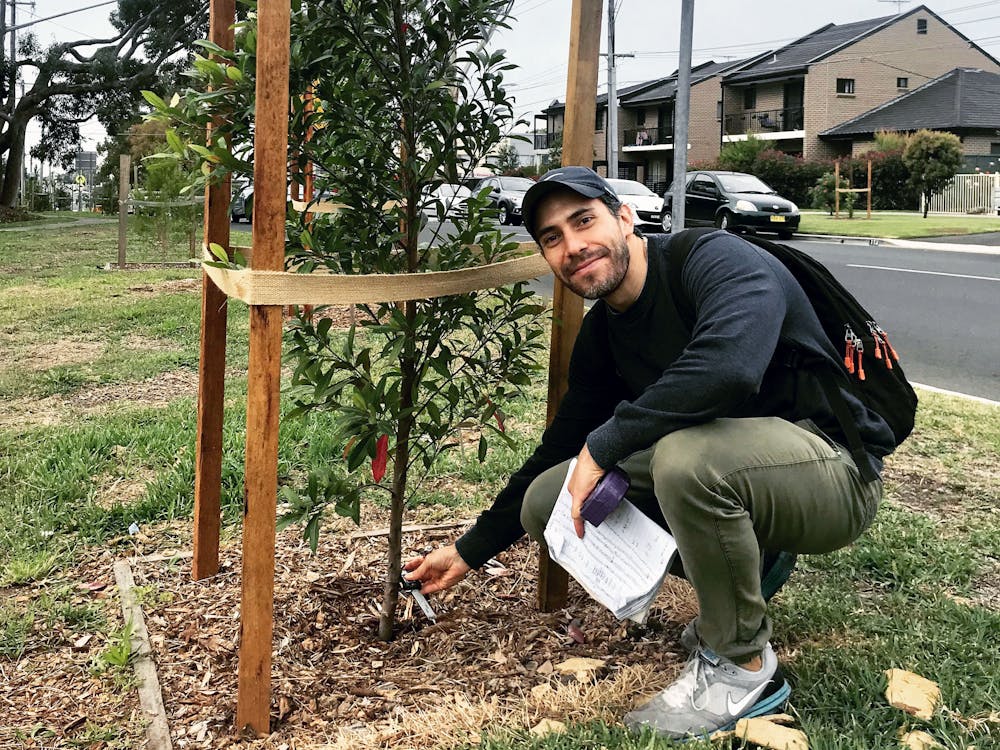 Author Manuel Esperon-Rodriguez checks on a young tree – the more we plant, the more they can cool their surroundings and improve their odds of coping with climate change.
Author provided
Author Manuel Esperon-Rodriguez checks on a young tree – the more we plant, the more they can cool their surroundings and improve their odds of coping with climate change.
Author provided
Read more: Residential green spaces protect growing cities against climate change
Authors: Manuel Esperon-Rodriguez, Lecturer and Research Fellow, Hawkesbury Institute for the Environment, Western Sydney University


 Daily Bulletin


