

Shifting ocean currents are pushing more and more heat into the Southern Hemisphere’s cooler waters
- Written by: Moninya Roughan, Professor in Oceanography, UNSW Sydney
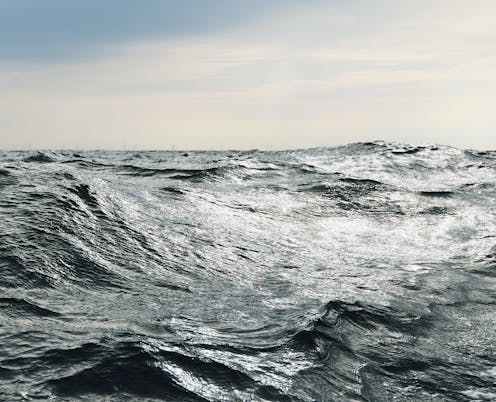
The oceans absorb more than 90% of all extra heat trapped by the emissions we’ve produced by burning fossil fuels. This heat is enormous. It’s as if we exploded an atom bomb underwater, every second of every day.
The ocean isn’t warming at the same rate everywhere. We know the heat is concentrated in the fast, narrow currents that flow along the east coasts of the world’s continents and funnel warm water from the tropics down towards the poles.
In the Southern Hemisphere, these currents – known as the western boundary currents – are warming faster than the global average at their southern limits, creating ocean warming hotspots.
Until now, we haven’t known exactly why. These western boundary currents are particularly important in the Southern Hemisphere, which is more than 80% ocean compared to just 60% for the Northern Hemisphere.
Our new research has found a vital part of the puzzle: strong easterly winds in the mid-latitudes are moving south, driving the western boundary currents further south and leading to faster ocean warming in these areas.
What are these currents and why do they matter?
These streams of warm water are like fast-flowing rivers in the oceans. They flow rapidly in a narrow band along the western side of the world’s major ocean basins, passing densely populated coastlines in South Africa, Australia and Brazil where hundreds of millions of people live.
These currents often play a role in regulating local climates. Think of the most well known of these currents, the Northern Hemisphere’s Gulf Stream, which has for millennia ensured Europe is much warmer than it would otherwise be given its latitude.
In the Southern Hemisphere, we have three major sub-tropical western boundary currents, the Agulhas Current in the Indian Ocean, the East Australian Current in the Pacific Ocean and the Brazil Current in the Atlantic Ocean.

In recent decades, these currents have become hotspots for ocean warming, carrying larger and larger amounts of heat south. Since 1993, the East Australian Current has moved southward at around 33 kilometres per decade, while the Brazil Current is moving south by around 46 kilometres per decade. The currents send heat and moisture into the atmosphere as they flow. In their southernmost reaches, the heat they carry displaces the colder ocean and warms it rapidly. These areas of the ocean are warming two to three times faster than the global average.
As the currents carry more heat energy, they also generate more ocean eddies – large rotating spirals of water spinning off from the main current. If you’ve looked closely at the way a fast flowing stream flows, you’ll see small eddies forming and dissolving all the time.
Why do these eddies matter? Because they’re the way heat actually ends up in the cold seas. As the eddies get faster and more loaded with heat, they act as path-breakers, carrying heat further south and eventually into the deep ocean. This is why NASA is soon to launch a new satellite to track these eddies, responsible for up to half of all heat transfer to the deep.
Our team have a research cruise planned for September next year aboard RV Investigator, Australia’s research vessel, to explore eddies under the path of this new satellite. This will shed new light on eddy processes in the warming ocean.
How do the winds fit in?
Western boundary currents are driven by large-scale winds blowing across ocean basins.
You might have heard of the trade winds. These are the winds traders and mariners used for centuries to go from east to west, taking advantage of winds blowing constantly from the southeast across the tropics and subtropics.
Further south, the strongest winds are the prevailing westerlies, better known by sailors as the Roaring Forties. These westerly winds carry cold fronts and rain, and often stray north to dump rain over Australia.
These westerlies can change track over time, shifting northwards and southwards, depending on a pattern known as the Southern Annular Mode.
At present, this belt of strong westerly winds has strengthened and moved southward in what’s known as the mode’s positive phase. Since 1940, this climate pattern has increasingly favoured this positive phase, which tends to bring drier conditions to Australia.
When we analysed changes in the tropical trade winds over the past three decades, we found they too had shifted poleward 18 km per decade since 1993.
So what does this mean? The trade winds have been pushed further south while the Southern Annual Mode is increasing. As they move south, they drive the western boundary currents further southward.
Even though these currents are carrying ever-warmer water southwards from the tropics, they have not actually become stronger. Rather, they’ve become less stable in their southern regions as they’ve elongated. As the currents are pushed south, they transfer heat energy into the cold seas through chaotic eddies mixing the warmer water with the cold. These eddies aren’t small – they’re between 20 and 200 kilometres wide.
What does this mean for people and nature?
Western boundary currents have long played a key role in stabilising our climate, by carrying heat southwards and moderating coastal climates. As these currents warp and become less predictable, they will change how heat is distributed, how gases are dissolved in seawater, and how nutrients are spread across the oceans. In turn, this will mean major changes to local weather patterns and marine ecosystems.
More intense eddies are likely to warm our coastal oceans, too, by moving warm waters closer to shore.
For many people, these currents are out of sight, out of mind. They won’t stay that way. As these vital currents change, they will change the lives and livelihoods of hundreds of millions of people who live along the coasts of South Africa, Australia and Brazil.
Authors: Moninya Roughan, Professor in Oceanography, UNSW Sydney


 Daily Bulletin


