

Sea urchins have invaded Tasmania and Victoria, but we can’t work out what to do with them
- Written by: Neil Andrew, Professor of fisheries and international development, University of Wollongong
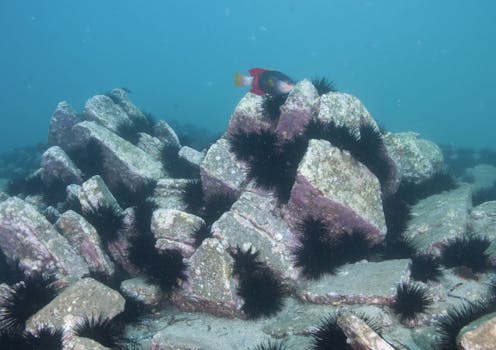
While crown-of-thorns starfish on the Great Barrier Reef have long been ecological villains in the popular imagination, sea urchins have mostly crawled under the national radar – until now.
Long-spined sea urchins (Centrostephanus rodgersii) have invaded Tasmania and Victoria from their historical range in New South Wales. Where it occurs, this species dominates near-shore reefs to create “barrens habitat”. This is where at high densities sea urchins remove all large brown algae (kelp), and few abalone and other important species for fishers remain.
Both climate change and over-fishing of its main predators have been blamed for the urchin’s southward extension.
This is a central issue in the ongoing Senate inquiry into climate-related marine invasive species, which has brought the challenges and contradictions of managing the marine estate into sharp relief. The inquiry received over 40 diverse and often contradictory submissions.
It’s clear there is little national consensus about the nature of the sea urchin problem, its causes, or what to do about it. In Tasmania and Victoria, policy directions are clear and being implemented. But managing barrens within New South Wales seascapes isn’t as clear cut. Although a single solution may not be clear now, there is a path forward.
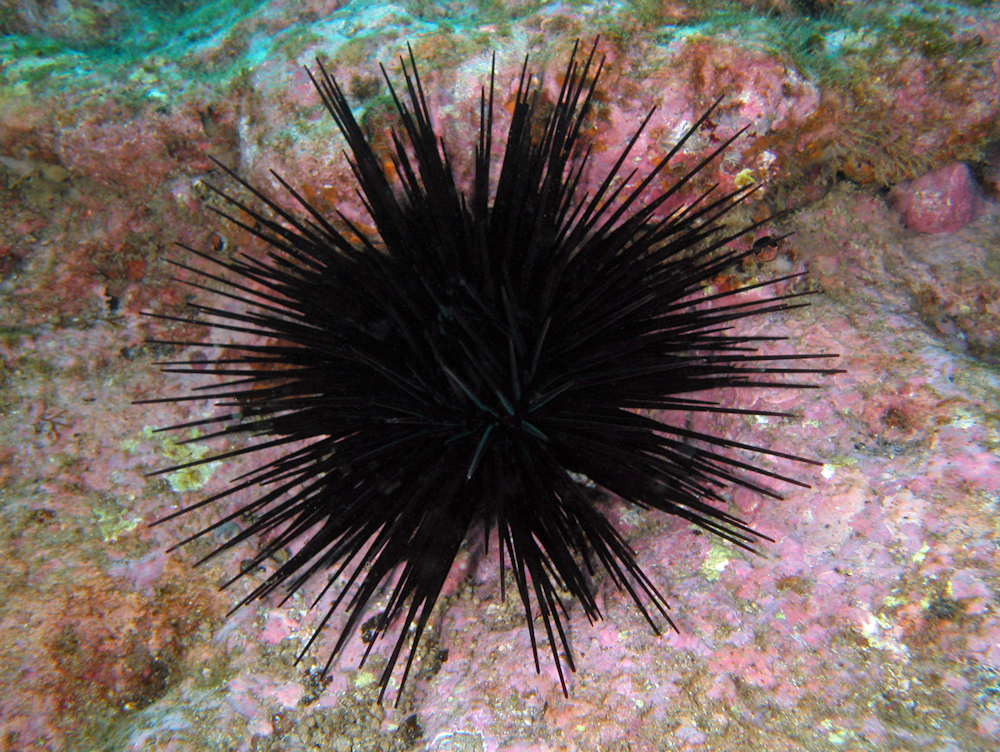
Meet the long-spined sea urchin
Long-spined sea urchins defend themselves with a menacing armoury of long, hollow spines. By day they are found in crevices or aggregated on the reef, and emerge to forage at night. As with many sea urchins, their roe (unfertilised fish eggs and sperm) is edible and the species is harvested in all three southeastern states.
They begin their lives as minute larvae. Ocean currents carry the larvae to reefs where they settle and grow. Understanding the relative importance of processes that limit them as larvae and as grazing urchins on reefs is crucial to discerning what controls their populations.
In Tasmania and Victoria, the larval supply horse has bolted. Over the last half century, the East Australian Current has pushed further south more often as it eddies into the Tasman Sea. This incursion of warmer water into cooler, southern seas has been attributed to climate change.
Urchin larvae can tolerate a wide temperature range and survive when food is limited, making the species a good coloniser.
Still, in 2009 researchers concluded larval supply was not a sufficient explanation for urchin numbers rising in Tasmania. Rather, they argued the population boomed because a predator, the southern rock lobster (Jasus edwardsii) has been overfished.
More recent research published this year has challenged the notion that southern rock lobster predation limits long-spined sea urchin numbers.
Sea urchins in Tasmania and Victoria are currently managed with a patchwork of diver culling, subsidised sea urchin fisheries and marine reserves. Despite local successes, Centrostephanus populations continue to boom and to expand their geographic spread.
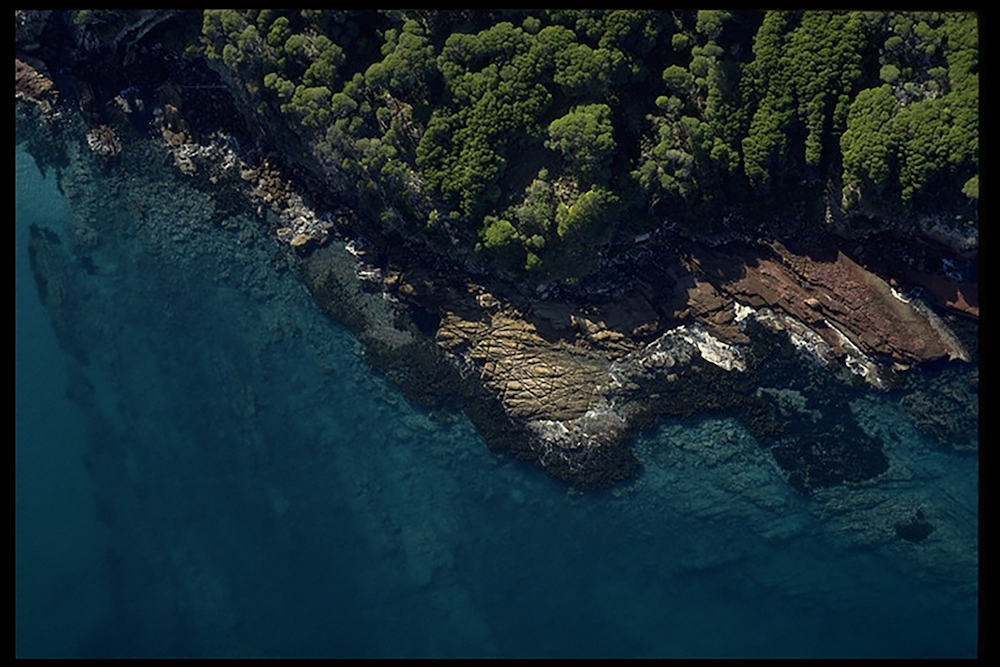 Barrens habitat in Disaster Bay, NSW, showing dominance of barrens habitat (the pale areas) with kelp inshore.
BHP Technologies, Author provided
Barrens habitat in Disaster Bay, NSW, showing dominance of barrens habitat (the pale areas) with kelp inshore.
BHP Technologies, Author provided
Sea urchins in NSW
Although it waxes and wanes on local scales, the total area of barrens habitat in NSW has been a relatively stable and prominent feature of reefs for more than 60 years.
But it’s not clear whether the extent of barrens habitat in NSW is “natural” or a long-term artefact of overfishing.
For example, a different lobster, the eastern rock lobster (Sagmariasus verreauxi), has been cited as a missing predator, along with the fabulous eastern blue groper (Achoerodus viridis). Certainly, both lobster and groper eat sea urchins and have historically been overfished, but the evidence for them acting as a controlling influence is weak.
Strong opinions notwithstanding, predatory control of sea urchins in NSW remains an unresolved question for now.
Innovative and committed mitigation programs can make a difference locally. Nevertheless, fishing and/or culling sea urchins has not successfully reduced overall populations in NSW where the geographic range is so large.
Sea urchins, for their part, have just got on with being good echinoderms – colonising, eating and reproducing.
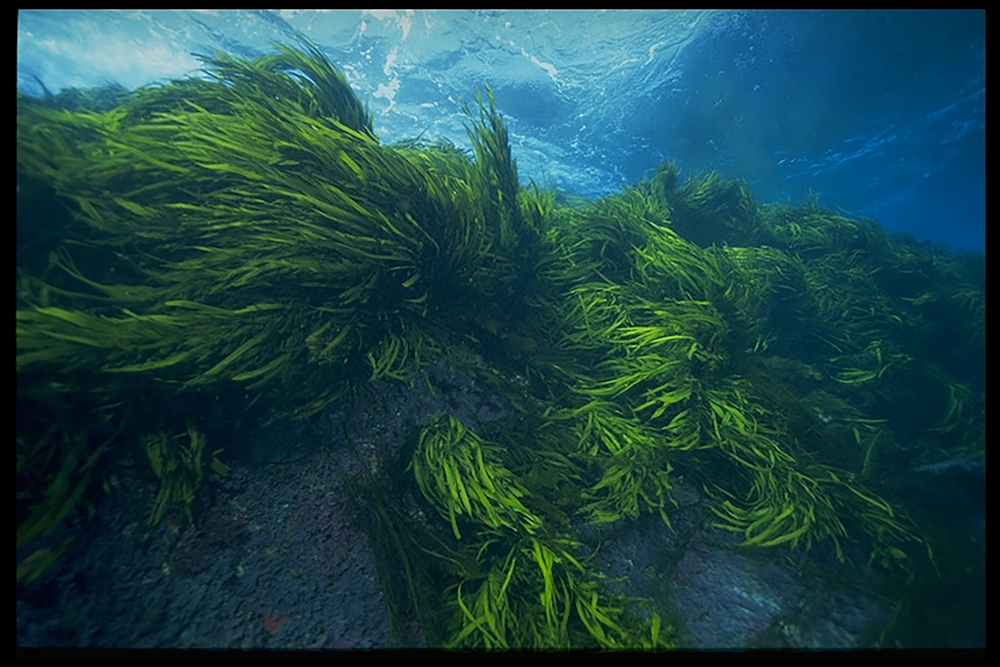 Dense crayweed on a shallow fringing reef in NSW.
Nokome Bentley, Author provided
Dense crayweed on a shallow fringing reef in NSW.
Nokome Bentley, Author provided
The stories we tell ourselves and others
If we can’t settle on what’s driving the long-spined sea urchin boom in Victoria, Tasmania and NSW, then it’s no surprise we’re struggling to agree on how to manage them. As in many fields, this is classically a wicked problem.
If you prioritise conservation values, livelihoods, commercial fisheries or, more fundamentally, First Nations communities’ rights and aspirations, you see the problem differently. And so be guided toward different solutions.
For Traditional Owners and abalone divers, sea urchins impinge on a range of economic, cultural and social values. For others, black sea urchins are a natural and important element of the ecosystem.
Along with diverse and incompatible views, legal instruments to manage the marine estate, First Nations rights, and fisheries overlap, further defying simple solutions.
For example, the NSW Fisheries Management Act has traditionally focused on the sustainability of fisheries, while the NSW Marine Estate Management Act has a much broader focus than harvesting marine species.
The urchins may be seen as a symptom rather than a cause of a suite of ecological, institutional and political problems. These larger issues include climate change, marginalisation and lack of voice, conflicting worldviews, and institutional paralysis.
A way forward for NSW
The Senate inquiry should prompt new ways to manage the marine estate. We need a form of transparent, flexible and inclusive governance, consistent with fisheries and other legislation.
Structured management experiments to manage the marine estate, including sea urchins, should be implemented in small zones to learn how reefs respond to different management.
A diverse range of people should be brought together to design and implement such experiments. As examples of what may be considered as interventions:
the urchin fishery should be co-managed with abalone to optimise yields, maximising profitability rather than environmental sustainability
the abalone industry should be enabled and supported to cull sea urchins and otherwise fish in ways that boost productivity
First Nations communities should be enabled and supported to manage Sea Country
and Marine Sanctuary Zones should be monitored, not fished.
Shifting the centre of gravity of managing the issue to those most affected and with the greatest experience creates an opportunity for collaboration. This means marine estate managers, industry, and First Nations peoples need to be at the forefront. Researchers have important, but secondary roles, in monitoring and evaluation.
Although solutions may not be clear now, they will emerge as shared understanding evolves into common purpose. This is difficult work, but in a quote Sir Peter Medawar ascribes to philosopher Thomas Hobbes, “there can be no contentment but in proceeding”.
Authors: Neil Andrew, Professor of fisheries and international development, University of Wollongong


 Daily Bulletin


