

Research linking soot in Antarctic ice exclusively with early Māori fires was flawed – there were other sources elsewhere
- Written by: Rewi Newnham, Professor in Physical Geography, Te Herenga Waka — Victoria University of Wellington
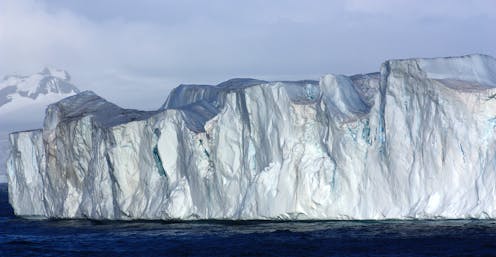
When a recent study implicated forest fires set by early Māori in a hemisphere-wide rise in emissions, it ignited controversy.
The incriminating evidence comes from Antarctic ice cores containing so-called refracted black carbon – essentially far-flung soot derived from wildfires in the southern mid-latitudes.
The strongest response, coming from Māori scholars, raised concerns about ignored local knowledge and cultural perspectives.
Inadvertently, these responses have diverted attention from some flaws in the fundamental science, which mean the evidence doesn’t stack up with the headline conclusion.
My research scrutinises palaeo-ecological records to show that burning across southern New Zealand had already declined by the time the ice cores record the peak in black-carbon levels (from 1,600-1,700AD). Instead, this period coincides with increased burning across Patagonia, at the time of early European settlement there, and in southwest Tasmania.
Mismatched periods of burning
The original study shows the highest black-carbon levels in ice cores from the Antarctic Peninsula between 1,600AD and 1,700AD, following an earlier rise from background levels that started around 1,300AD.
The researchers used a two-step approach to finding the most likely culprit. First, they used atmospheric circulation patterns and known regions of substantial vegetation cover to narrow down the list of potential sources to sizeable landmasses south of 40° South. That leaves three suspects: Patagonia, Tasmania and southern New Zealand (essentially the South Island/Te Waipounamu).
Then, they interrogated each of the three suspects by examining records of charcoal from local lake sediments that, just like Antarctic ice, have accumulated evidence of changing environmental conditions over time.
From these interrogations, the investigation concluded the charcoal records from Patagonia and Tasmania didn’t match the Antarctic black-carbon pattern. But early Māori, they argue, have no such alibi as it is well established the initial settlement of Te Waipounamu, commencing around 1,300AD, was accompanied by extensive forest clearance by fire.
Read more: New research shows ancestral Māori adapted quickly in the face of rapid climate change
But there’s a problem. While charcoal records from Te Waipounamu consistently show extensive early burning from around 1,300AD, the phase was very brief. The most extensive damage and maximum emissions are likely to be confined to what has been dubbed the initial burning period, commencing in the late 13th century and lasting only about 50 years.
By 1,600AD, when the phase of peak black-carbon levels begins in Antarctic records, the emissions from forest fires in southern New Zealand have long since declined. These and other changes in Māori land use during the brief course of New Zealand prehistory are well established in archaeological and palaeo-ecological records.
Early Māori moved with the climate
Intriguingly, climate change was a factor for early Māori. The decline in burning following the initial burning period, around 1,400AD, coincides broadly with the Little Ice Age and with abandonment of traditional settlements in southern regions, presumably in response to less hospitable climates.
While early Māori must have contributed to the rising black-carbon levels in Antarctica from 1,300AD, they have a solid alibi for the ultimate crime: the peak levels of black carbon from 1,600AD to 1,700AD.
Which returns us to the burning question: If not Māori, then who?
Patagonia is the obvious suspect. It is just a relative stone’s throw from the Antarctic Peninsula (in comparison to New Zealand). It also has greater potential for biomass burning because of its larger, vegetated landmass, more drought-susceptible climate and larger population.
It was not by accident that Magellan named its southern tip Tierra del Fuego (Land of Fire) when first sighted in 1,520AD, at a time when black-carbon levels were rising in Antarctic Peninsula ice. Of course, Magellan was paving the way for the subsequent European colonisation of Patagonia, which introduced a new dimension for fire from 1,600AD.
With this conundrum in mind, I have conducted my own interrogation of Patagonian fire history. After helpful discussions with Patagonian scientists and historians, I have found at least eight published charcoal records that contradict the one record used in the original study.
These records attest to high levels of burning across Patagonia, accompanying the early European settlement phase and coinciding with peak levels of black carbon in Antarctic ice.
This is also true for Tasmania. Again, a single record (Lake Vera) was selected in the original study to represent the regional fire history and to eliminate Tasmania as a candidate for the peak in black-carbon emissions. But a composite record from 14 sites in southwest Tasmania shows higher levels from 1,600AD to 1,800AD than at any other time during the previous 600 years.
So has justice been served in this case? Or, as I would argue, is there a case for a retrial in which a wider spectrum of humanity – and not just one brief cultural phase – is implicated in the Antarctic black carbon whodunnit?
Authors: Rewi Newnham, Professor in Physical Geography, Te Herenga Waka — Victoria University of Wellington


 Daily Bulletin


