

Read The Times Australia

Daily Bulletin

Why taxing the world's biggest companies at 15% won't fix the gaping hole in global tax rules

  • Written by: Kerrie Sadiq, Professor of Taxation, QUT Business School, and ARC Future Fellow, Queensland University of Technology
Why taxing the world's biggest companies at 15% won't fix the gaping hole in global tax rules

Australia’s federal government has a plan to discourage companies from shifting profits to tax havens. The idea is to impose a “global minimum tax” on large Australian and foreign-owned companies with subsidiaries in low or no-tax countries.

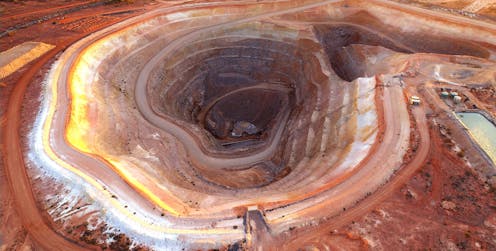
Australia’s largest mining companies are notorious for shifting profits to avoid the 30% company tax rate. It is common to use marketing hubs in Singapore, where the headline tax rate is 17% but various incentives often lower the effective rate to about 5%. Paying Singaporean subsidiaries for “services” performed, such as marketing or to use trademarks or patents owned by the group, can reduce a company’s Australian profits, and its tax bill.

The Albanese governent’s proposal, announced in the federal budget, embraces an OECD/G20 program to reduce profit shifting by multinationals through a uniform global 15% tax on all companies. Almost 140 countries have agreed to implement the tax, though to date only a handful have enacted it.

Read more: $1 trillion in the shade – the annual profits multinational corporations shift to tax havens continues to climb and climb

Any locally or foreign owned company in Australia that has overseas subsidiaries and annual global group revenue of more than €750 million (about A$1.2 billion) will be taxed the difference between the rate paid by the associated entities overseas and the 15% rate.

A 15% minimum tax rate will also apply to domestic companies with revenue of €750 million. Currently generous tax concessions – such as generous deductions or credits for activities like research and development – allow Australian businesses to reduce their tax burden from the headline 30% rate to less than 15%.

At first glance, these new taxes seem like a good idea. Proponents argue that putting a floor on corporate tax rates will slow “the race to the bottom”, which has seen governments lower corporate tax rates to attract or keep corporate capital.

However, for Australia it is likely to accelerate the problem. By implicitly accepting the legitimacy of profit shifting, the government does nothing to address the fundamental problem that enables multinationals to exploit the global tax system.

Recouping a pittance

The budget papers don’t say how many companies will be affected, but globally the OECD says no more than 100 corporations will have to pay the tax.

The budget estimates the Australian government will raise an extra $160 million in 2025-26, and $210 million in 2026-27. This is less than 0.5% of the $93 billion in company tax revenue in 2023-24, and a pittance compared with the tax lost through profit shifting by multinationals

For example, in the Australian Taxation Office’s most recent settlement with a company over disputed profit shifting, fuel company Ampol agreed to pay $157 million for avoided taxes dating back to 2014. This arose from Ampol Australia unnecessarily paying for oil imports acquired through a related Singapore procurement hub, instead of buying oil directly.

Rio Tinto, the world’s second-biggest mining company, agreed in 2022 to pay almost $1 billion to the tax office over money channelled to its Singapore marketing hub.

BHP, the world’s biggest mining company, agreed in 2018 to pay the tax office $529 million in extra taxes for profit-shifting arrangements between 2003 to 2018. This dispute also related to transactions between its Australian headquarters and marketing operations in Singapore.

In each of these settlements the companies admitted no wrongdoing. Details are confidential, so it is impossible to know how much tax the Australian Tax Office claimed was due. But it seems likely Australian taxpayers got less than the tax avoided.

Read more: The Pandora Papers show the line between tax avoidance and tax evasion has become so blurred we need to act against both

Fundamental problem remains

Rather than ending the race to bottom from international profit shifting, the 15% tax is likely to entrench it. It ensures companies that successfully shift profits out of Australia will pay no more than a 15% tax rate.

This will continue so long as different parts of a multinational corporation are treated as if they are separate entities for tax purposes. This is nothing more than a legal fiction.

The only way to prevent this is through real and substantive changes in the way governments tax multinationals.

The obvious solution is to treat multinationals as the global entities they are. Then allocate profits for tax purposes to the countries in which real activities creating those profits take place.

In the case of Australian mining companies, that should be where they dig their riches out of the ground.

Authors: Kerrie Sadiq, Professor of Taxation, QUT Business School, and ARC Future Fellow, Queensland University of Technology

Read more https://theconversation.com/why-taxing-the-worlds-biggest-companies-at-15-wont-fix-the-gaping-hole-in-global-tax-rules-206400

Business News

The Rise of Digital Marketplaces in the Australian Trade Sector

For decades, the Australian trade and construction sector operated almost entirely on word-of-mouth recommendations and local community networks. Small business owners typically relied on local newspa...

Daily Bulletin - avatar Daily Bulletin

How Immigration Lawyers Can Help

Introduction Visa decisions can shape employment, family life, study plans, travel, and future residence. A small omission can lead to delay, added expense, or refusal. Immigration lawyers assess l...

Daily Bulletin - avatar Daily Bulletin

How Industrial Drying Equipment Supports Efficient Processing

Many industrial processes require moisture to be removed from compressed air, products or process materials before they move to the next stage. Excess moisture can affect equipment performance, produc...

Daily Bulletin - avatar Daily Bulletin

Practical Ways a Whiteboard Can Improve Workplace Communication

Effective communication helps teams stay organised, share ideas and keep track of important information. While digital tools are now common in many workplaces, a whiteboard continues to provide a simp...

Daily Bulletin - avatar Daily Bulletin

Designing Eco-Friendly Custom Water Bottles for Your Next Event

The Evolution of Sustainable Event Merchandise Event planning has undergone a massive transformation over the last decade. Gone are the days when organizers could hand out cheap, single use plastic...

Daily Bulletin - avatar Daily Bulletin

Why Choosing a Professional Florist Melbourne Makes Flower Delivery Impactful

Flowers have a great power to speak when humans cannot express their feelings with right words. Flowers are the best gifts when you are celebrating a birthday or welcoming a newborn child into your fa...

Daily Bulletin - avatar Daily Bulletin

The Business Case for Choosing Australian Fabricators Over Imported Alternatives

For a long time, you might have defaulted to overseas suppliers when sourcing fabricated metal components for a project. The unit price was lower on paper, and the maths seemed straightforward. That...

Daily Bulletin - avatar Daily Bulletin

Australian organisations are relying on business continuity plans built for a far more predictable world

Tariff escalations, supply chain fragility, geopolitical events, and the ongoing threat of cyber disruption have reshaped the risk environment facing Australian organisations. The problem is that ma...

Daily Bulletin - avatar Daily Bulletin

How to Rent a Car for Uber in Melbourne: What Every New Driver Needs to Know

Starting out as an Uber driver in Melbourne is not as complicated as it sounds but getting the vehicle right is where most new drivers get stuck. Uber has strict requirements around vehicle age, condi...

Daily Bulletin - avatar Daily Bulletin

The Daily Magazine

How to Ensure Safe and On-Time Building Material Delivery with Sydney Cargo Transportation Services

Managing a construction site requires precise coordination, where even a minor delay can stall an en...

What to Ask Your Cosmetic Surgeon About Liposuction and Thigh Lift Reduction in Perth

Establishing the Surgeon’s Credentials and Local Experience Your safety depends heavily on the cred...

Top Ergonomic Tips to Enhance Your Neck Pain Treatment and Prevent Back Pain In Sydney

Many office workers in New South Wales spend upwards of eight hours a day hunched over a keyboard, l...

What to Ask Your Hire Specialist Before Booking Commercial Vehicles Inter-State

Planning a long-haul commercial trip across Australia requires more than just booking a vehicle an...

What Candidates Should Do Before and After Non-Surgical Skin Tightening in Melbourne

Achieving firm, youthful skin no longer requires invasive surgery or lengthy downtime. Melbourne res...

How to Prepare Your Skin for Laser Treatments in Brisbane and Gold Coast

Achieving radiant, clear skin often leads people to consider advanced clinical procedures. If you ar...

How Labour Gaps Delay Residential Building Projects

A residential build rarely stalls because of one dramatic event. More often it stalls because the ri...

Reducing Sales Content Management Complexity Through Structured Systems

Sales content can quickly become difficult to manage as a business grows. Product descriptions, pitc...

Stainless Steel Supplier: Finding the Right Materials for Your Project

Why the Choice of Supplier Matters The supplier you choose can affect the quality and progress of...