

YIMBYs and NIMBYs unite! You can have both heritage protection and more housing
- Written by: James Lesh, Lecturer in Cultural Heritage and Museum Studies, Deakin University
Heritage conservation has been blamed for making the housing crisis worse by standing in the way of new, higher-density housing. But protecting heritage and increasing housing should be complementary objectives. Heritage suffers when not enjoyed by our growing communities. Housing suffers when not shaped by our communal heritage.
YIMBYs and NIMBYs are usually on opposing sides of this debate. Yet what they agree on is the desirability of heritage areas. People in both the Not In My Back Yard and Yes In My Back Yard camps want to live in established suburbs, often in the inner city, with attractive historic urban landscapes.
Unfortunately, NIMBYs have exploited heritage loopholes to prevent development. There is a problem with how overly cautious practitioners and under-resourced authorities are applying heritage protections. So, YIMBYs wrongly blame heritage itself for housing issues.
Empirical evidence that heritage is a barrier to housing supply is practically non-existent. It’s not a talking point among housing experts. The real issues are urban policy, the tax system and housing supply.
Read more: Why heritage protection is about how people use places, not just their architecture and history
In support of both heritage and housing
Heritage should be seen as part of the housing solution. Advocates for both heritage and housing can and have been allies.
In Victoria, for example, architect and politician Evan Walker introduced the first comprehensive local protections in the mid-1980s. He was ably supported by David Yencken, who had been the first chairman of the Australian Heritage Commission and a developer of innovative suburban housing. These city visionaries recognised that we could keep the best of the past and complement it with new, higher-density builds.
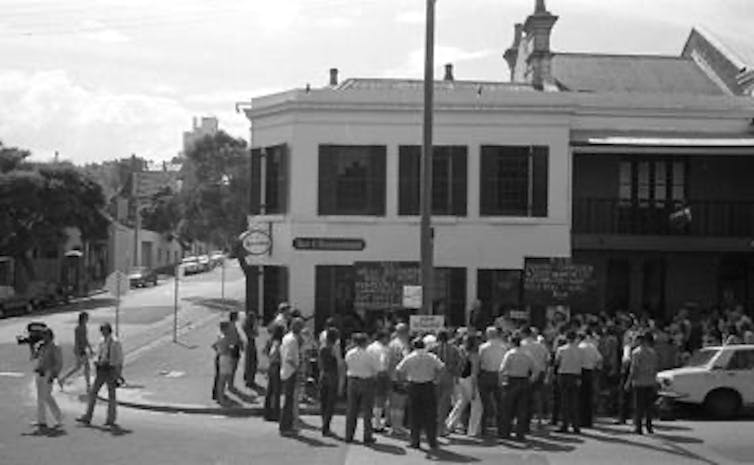
Heritage protections were created at a time when our historic neighbourhoods were at risk of widespread demolitions for inferior new buildings. High-rise towers threatened areas like The Rocks in Sydney and Carlton in Melbourne. A surge in ad-hoc redevelopment put valued homes at risk in suburbs such as Brisbane’s New Farm, North Adelaide and Perth’s Subiaco.
Our heritage suburbs were not desirable like today. We only have our fabulous cities of villages because people fought hard for heritage protections.

Read more: Our cities owe much of their surviving heritage to Jack Mundey
Heritage is about what we find significant. Eroding protections risks the social, physical and historic fabric of heritage neighbourhoods, the very reasons so many of us – including both YIMBYs and NIMBYs – want to live in them. These areas have vibrant high streets, excellent services such as schools and hospitals, and many transport options.
It’s notable, too, that the smaller block sizes in older suburbs already produce high levels of density by Australian standards. Their walkability and infrastructure also make them more liveable. This heritage of urban vitality is worth conserving and replicating.
We can build more housing in heritage areas
A more palatable and sustainable solution is to build well-designed homes, hapartments and townhouses in and around heritage areas. There are architects and developers who do this. It may be a case of adapting obsolete historical buildings or constructing new buildings on appropriate sites.
When done well, new builds and incremental change improve our historic urban landscapes. Good examples include Perth’s Northbridge, Melbourne’s Collingwood and Sydney’s Chippendale.
Importantly, the best-designed new homes respect local history, prevailing design forms and neighbourhood character. That is a great strength of heritage: it allows us to embrace the most significant and beautiful aspects of our existing built forms and social lives.
Read more: Preserving cities: how 'trendies' shaped Australia's urban heritage
Heritage is not just about protecting grand monuments along Spring or Macquarie streets. It is also about everyday aspects of our suburbs: the sturdy stone street kerb, the intricate iron and lacework terrace, the worker’s timber cottage, the subdivided Federation home, the industrial warehouse turned apartment block and, of course, uplifting gardens, parks and trees.
The precincts, places and features that are heritage-protected reflect decades of community efforts. Today, residents still must have a right to have a say in planning and to see their heritage protected. Conservation is enshrined in planning and heritage legislation and widely supported by the community.
Overcoming barriers to densifying heritage areas
Authorities too often say “no” to appropriate housing in heritage areas. It happens for many reasons, though so-called NIMBYism is a factor.
Many local councils have also had funding for conservation cut, while federal and state leadership in urban heritage is minimal.
Some traditional approaches to conservation do tend to prevent rather than promote reasonable change to heritage places. This is also unsustainable: adapting existing buildings is good for the environment.
Read more: Frozen in time, we've become blind to ways to build sustainability into our urban heritage
Many authorities lack the knowledge and resources to ensure new housing is consistent with heritage. We need to equip them with the innovative heritage approaches and creative design outlook they need to make better decisions. Planning and design panels with wide-ranging skills, including heritage, could work with communities to increase housing supply and choice where people want to live.
It’s essential to address the housing crisisc. More people should be able to enter the housing market and enjoy living in established suburbs. We have the heritage, planning and design tools to achieve both objectives.
Heritage strategies for increasing housing supply can include subdivision, adaptive reuse and infill development in and around heritage areas. It’s about designing the best housing for the specific context. Heritage policies should be reviewed and updated across Australia to support these kinds of outcomes.
The urban heritage of Australia’s cities is what makes them among the world’s most liveable. Heritage should not be about blocking housing, but rather about asking “how can we build housing better?”. Let’s embrace our urban past to shape our urban future.
Read more: War on the demolishers? Probably not, and timing of NSW heritage review is curious
Authors: James Lesh, Lecturer in Cultural Heritage and Museum Studies, Deakin University


 Daily Bulletin


