

Utopia gone wrong: identity and history intersect in Jenny Erpenbeck’s haunting new novel
- Written by: Isabelle Hesse, Senior lecturer, English, University of Sydney

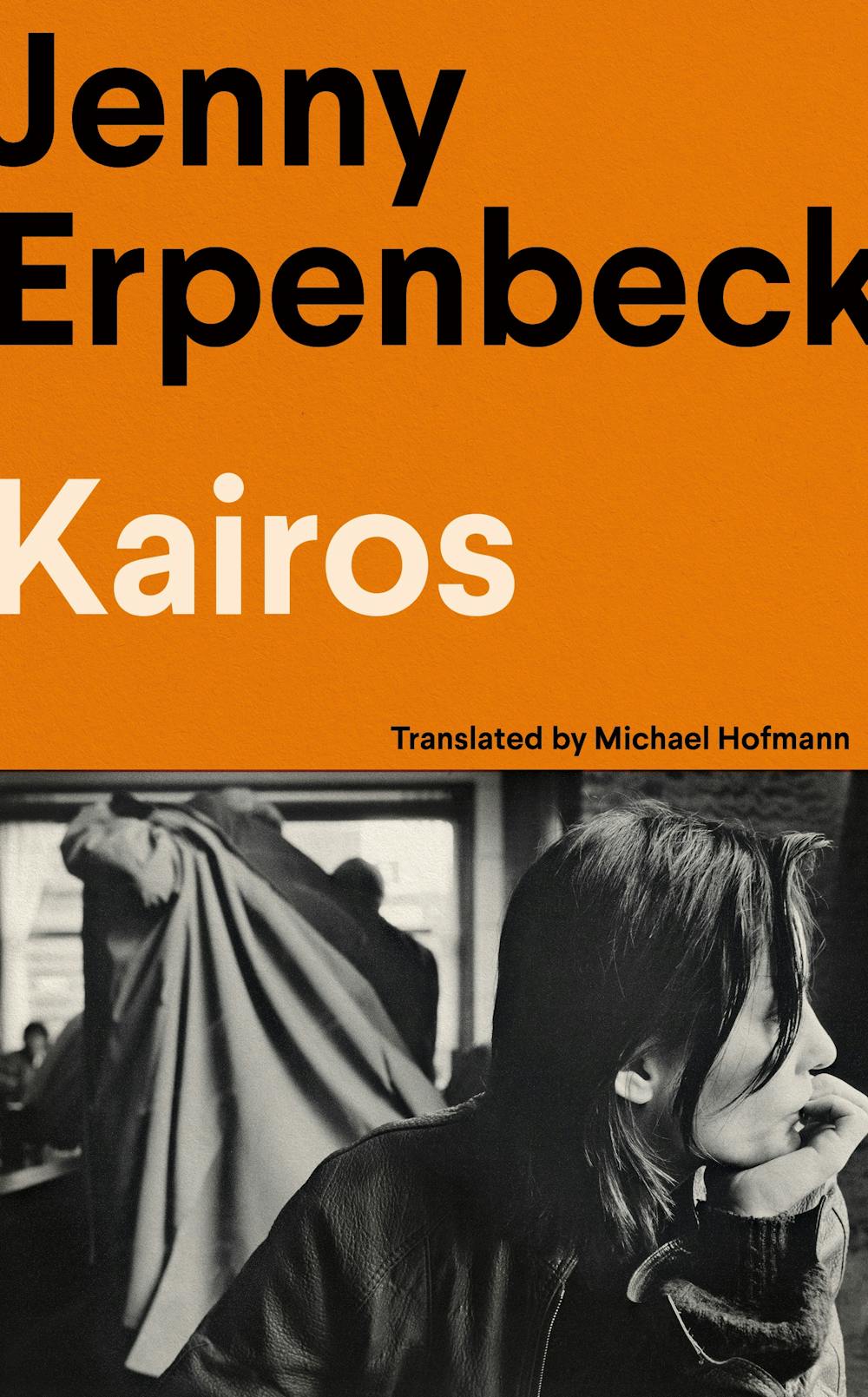
Jenny Erpenbeck’s new novel Kairos, translated by Michael Hofmann, is a story about a relationship between a young woman and an older married man, set against the backdrop of the final years of the German Democratic Republic.
But Kairos is much more than a story about an affair. It is about chance encounters and finding one’s place in a world on the cusp of disintegration.
Review: Kairos – Jenny Erpenbeck, translated by Michael Hofmann (Granta)
Its title is one of two ancient Greek words for time. Where chronos refers to linear time, kairos refers to the most propitious time for an action or argument. In rhetoric, it describes an ability to make “exactly the right statement at exactly the right moment”.
Erpenbeck’s novel starts with its protagonist Katharina going through two boxes of papers that belonged to Hans, her former lover. This leads Katharina to reminisce about their relationship:
Kairos, the god of fortunate moments, is supposed to have a lock of hair on his forehead, which is the only way of grasping hold of him. Because once the god has slipped past on his winged feet, the back of his head is slick and hairless, nowhere to grab hold of. Was it a fortunate moment, then, when she, just nineteen, first met Hans?
Fortune and fortunate encounters are important aspects of Kairos, as are time and timing. This applies to the timing of Katharina and Hans’s relationship, which coincides with the impending collapse of the East German republic. The novel captures the zeitgeist of the final years of the German Democratic Republic and the uncertain future facing the country and its citizens in the late 1980s.
When she was asked in an interview why she wrote about this period of East German history, Erpenbeck explained:
What interested me was how something that started as a great idea, as a kind of utopian vision, how this can turn into something that feels wrong?
 Jenny Erpenbeck.
Amrei-Marie, via Wikimedia Commons, CC BY-SA
Hans is also living in the past. He reflects that “the present only made sense for him when he could see it as a past-in-waiting that he could control”.
This desire to control is a key aspect of his relationship with Katharina. His increasingly abusive treatment of her is linked to what he perceives as moments of transgression and attempts to escape his control.
The first time Hans ties Katharina up and beats her with his belt, she reflects, “Did he give himself up to her, or she to him?” But soon after, Hans’s need to control Katharina manifests itself as jealousy and suspicion when she meets male friends. This is compounded by his inability to write his book and his wife throwing him out when she finds a photo of Katharina in the pocket of his jacket.
After Katharina interns at a theatre in Frankfurt, Hans becomes convinced she has had an affair with a colleague named Vadim. He thinks every aspect of their lives has been tainted by Vadim, from the music they listen to together to Katharina’s handwriting, so he starts making cassettes for Katharina, recording himself talking about her transgressions, drawing attention to her flaws, real and imagined. On the first cassette, he says:
Our “together” is over. We now stand in opposition to each other.
But as the novel goes on to show how, even in opposition, Hans and Katharina have a bond that cannot be broken, unhealthy and abusive though it may be.
Read more:
True writing is a convulsive act: inside the mind of Elena Ferrante
The mirror
Kairos has contradictory meanings in the field of rhetoric. It can be defined as a “principle of adaptation and accommodation to convention, expectation, predictability”. But it can also mean “the uniquely timely, the spontaneous, the radically particular”. It is something that can “encourage us to be creative in responding to the unforeseen, the lack of order in human circumstances”.
Hans can be seen as an example of someone who has conformed to expectations, but is struggling to adapt to the new world that lies ahead. Katharina, on the other hand, emerges as an example of a new generation – a generation that will also struggle with the loss of their East German identity, but will adapt to becoming citizens in a reunified Germany.
Katharina and Hans thus represent two possible ways of responding to change. This is emphasised in the novel through the idea of reflection and the recurring image of the mirror. When Katharina visits her family in Cologne, West Germany, she has the following thought:
Each time Katharina is in the bathroom, she walks up to the mirror in the door, and each time she thinks, it’s not Hans’s mirror. She stood in front of it with him, hand in hand in the dark corridor.
The mirror in her grandmother’s house reflects only Katharina, not Hans, conveying a sense that her identity is incomplete without his presence. The scene implies her identity is not fully reflected in West Germany, where she feels a sense of unease, but also disillusionment. For all the freedom the capitalist country promises, and indeed offers, Katharina also sees its darker sides, such as the homeless people begging in the street.
Kairos ends on a cryptic note. In its final pages, Katharina reads the file that the Stasi, the East German secret police, kept on Hans as an unofficial collaborator. Her almost final sentence is: “If only I’d known then that I was your mirror image.”
As Hans’s mirror image, Katharina sees herself on some level as a collaborator and potentially a traitor for adapting her East German identity after the fall of the Berlin Wall. But mirror images are also opposites. The novel’s final moment both confirms and disavows the similarity between Hans and Katharina, between East and West, and the difficulty and ambivalence of reunification.
Authors: Isabelle Hesse, Senior lecturer, English, University of Sydney
Jenny Erpenbeck.
Amrei-Marie, via Wikimedia Commons, CC BY-SA
Hans is also living in the past. He reflects that “the present only made sense for him when he could see it as a past-in-waiting that he could control”.
This desire to control is a key aspect of his relationship with Katharina. His increasingly abusive treatment of her is linked to what he perceives as moments of transgression and attempts to escape his control.
The first time Hans ties Katharina up and beats her with his belt, she reflects, “Did he give himself up to her, or she to him?” But soon after, Hans’s need to control Katharina manifests itself as jealousy and suspicion when she meets male friends. This is compounded by his inability to write his book and his wife throwing him out when she finds a photo of Katharina in the pocket of his jacket.
After Katharina interns at a theatre in Frankfurt, Hans becomes convinced she has had an affair with a colleague named Vadim. He thinks every aspect of their lives has been tainted by Vadim, from the music they listen to together to Katharina’s handwriting, so he starts making cassettes for Katharina, recording himself talking about her transgressions, drawing attention to her flaws, real and imagined. On the first cassette, he says:
Our “together” is over. We now stand in opposition to each other.
But as the novel goes on to show how, even in opposition, Hans and Katharina have a bond that cannot be broken, unhealthy and abusive though it may be.
Read more:
True writing is a convulsive act: inside the mind of Elena Ferrante
The mirror
Kairos has contradictory meanings in the field of rhetoric. It can be defined as a “principle of adaptation and accommodation to convention, expectation, predictability”. But it can also mean “the uniquely timely, the spontaneous, the radically particular”. It is something that can “encourage us to be creative in responding to the unforeseen, the lack of order in human circumstances”.
Hans can be seen as an example of someone who has conformed to expectations, but is struggling to adapt to the new world that lies ahead. Katharina, on the other hand, emerges as an example of a new generation – a generation that will also struggle with the loss of their East German identity, but will adapt to becoming citizens in a reunified Germany.
Katharina and Hans thus represent two possible ways of responding to change. This is emphasised in the novel through the idea of reflection and the recurring image of the mirror. When Katharina visits her family in Cologne, West Germany, she has the following thought:
Each time Katharina is in the bathroom, she walks up to the mirror in the door, and each time she thinks, it’s not Hans’s mirror. She stood in front of it with him, hand in hand in the dark corridor.
The mirror in her grandmother’s house reflects only Katharina, not Hans, conveying a sense that her identity is incomplete without his presence. The scene implies her identity is not fully reflected in West Germany, where she feels a sense of unease, but also disillusionment. For all the freedom the capitalist country promises, and indeed offers, Katharina also sees its darker sides, such as the homeless people begging in the street.
Kairos ends on a cryptic note. In its final pages, Katharina reads the file that the Stasi, the East German secret police, kept on Hans as an unofficial collaborator. Her almost final sentence is: “If only I’d known then that I was your mirror image.”
As Hans’s mirror image, Katharina sees herself on some level as a collaborator and potentially a traitor for adapting her East German identity after the fall of the Berlin Wall. But mirror images are also opposites. The novel’s final moment both confirms and disavows the similarity between Hans and Katharina, between East and West, and the difficulty and ambivalence of reunification.
Authors: Isabelle Hesse, Senior lecturer, English, University of Sydney


 Daily Bulletin


