

We found 3 types of food wasters, which one are you?
- Written by: Trang Nguyen, Postdoctoral Fellow, University of Adelaide
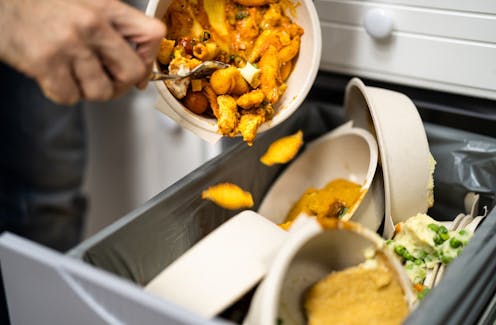
Each year, Australian households discard about 2.5 million tonnes of food. Most (73%) of this food waste ends up in landfill.
This is costly and contributes to escalating greenhouse gas emissions, because food waste rotting in landfill produces methane. So reducing household food waste and diverting it from landfill saves money, improves food security and benefits the environment.
To address the problem, we need to understand how people generate and dispose of food waste. In our new study, we found households fell into three categories – based on the amount of food wasted, how much of that waste was avoidable and how it was sorted. These insights into consumer behaviour point to where the most worthwhile improvements can be made.
Tips and tricks for reducing household food waste from the Fight Food Waste Cooperative Research Centre.Read more: The case for compost: why recycling food waste is so much better than sending it to landfill
Three types of households
We conducted an online survey of 939 households in metropolitan Adelaide between April and May 2021.
The sample closely matched the national Australian population in terms of gender, age and income.
We asked about the types of food waste produced, the amount of food waste typically discarded in a week and motivations towards reducing and sorting food waste.
We identified three distinct types of households:
Warriors are typically older and highly motivated to reduce and sort food waste. They generate minimal waste (9.6 litres per week), such as bones and vegetable peels, that is mostly unavoidable. This group comprised 39.6% of the sample.
Strugglers mainly consist of families with children who produce the largest amount of food waste (33.1 litres per week). They produce the highest proportion of avoidable food waste, such as uneaten fruits and vegetables, bread and cereals. They are moderately motivated to reduce and sort food waste, but more than half of their food waste still ends up in landfill. This group made up 19.6% of the sample.
Slackers are generally younger. They show little concern about reducing or sorting food waste. Slackers produce the smallest amount of food waste overall (9 litres a week), but the proportion of avoidable food waste (such as mixed leftovers) is significantly higher (38.9%) compared to warriors (24.5%). They are more than twice as likely to live in units, with 17.2% doing so, compared to just 7.8% of warriors. This group was 40.8% of the sample.

Read more: We can't keep putting apartment residents' waste in the too hard basket
What can households do about their food waste?
Reducing household food waste involves changing behaviours in both food management (“upstream”) and waste management (“downstream”).
Upstream measures aim to prevent food waste in the first place. For example, households can avoid buying or cooking too much food. Supporting households to plan and buy just the right amount of food is a great starting point.
Once food waste has been produced, downstream measures come into play. The focus shifts to how we handle and dispose of this waste.
When households engage in food waste recycling they start thinking more about their behaviour including purchasing and cooking.
In Australia, food waste management is mainly the responsibility of local councils.
There are three ways to target household food waste management and drive behavioural change:
providing kerbside collection of food organics and garden organics, also known as “FOGO”
changing social norms around food waste
offering economic incentives and disincentives.
1. Providing a FOGO system
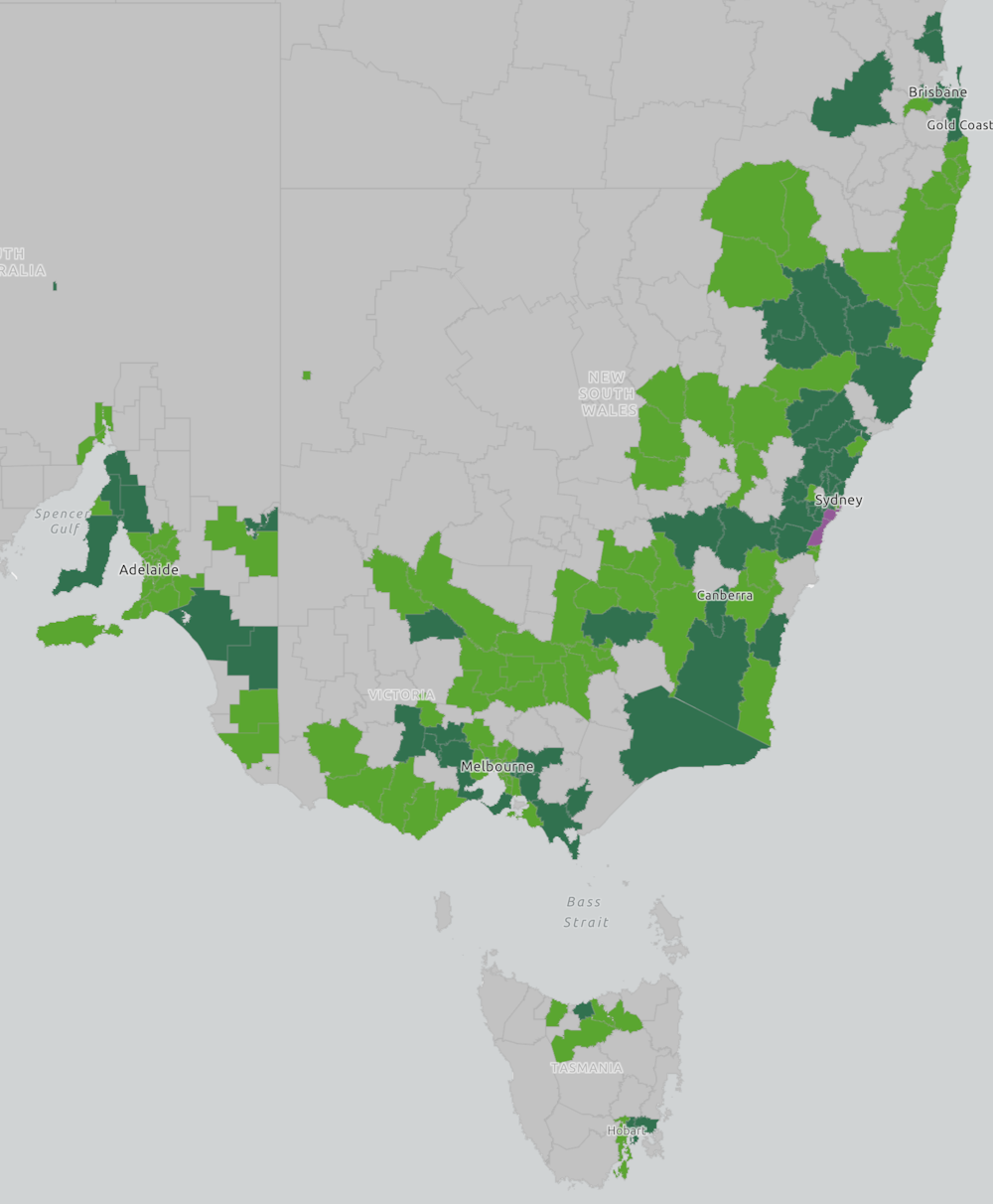 The FOGO interactive map shows the local government areas that currently have a food waste collection service, data is current as of February 2023. Bright green is FOGO, dark green is garden organics only.
The Department of Climate Change, Energy, the Environment and Water
The FOGO interactive map shows the local government areas that currently have a food waste collection service, data is current as of February 2023. Bright green is FOGO, dark green is garden organics only.
The Department of Climate Change, Energy, the Environment and Water
Councils should provide this option at a minimum. This ensures sufficient infrastructure is available to support motivated households to sort food waste.
Unfortunately fewer than half of Australian councils provide a garden organics system and only a quarter of councils provide a FOGO system.
You can explore the FOGO interactive map to see how your area stacks up.
Most councils in metropolitan Adelaide provide access to food waste recycling through the FOGO bin. But our research indicates more than half of household food waste still ends up in landfill. So we need additional programs to promote more sustainable behaviours.
2. Changing social norms
Social norms, the unspoken rules about what behaviours are deemed appropriate, can drive behavioural change.
Examples of promoting social norms around food waste reduction include a nationwide consumer campaign on stopping food waste and the kitchen caddy for benches to increase convenience for collecting food waste.
But our research suggests some groups, like slackers, remain unmotivated without additional incentives. Economic incentives might motivate this group to engage in more sustainable behaviours.
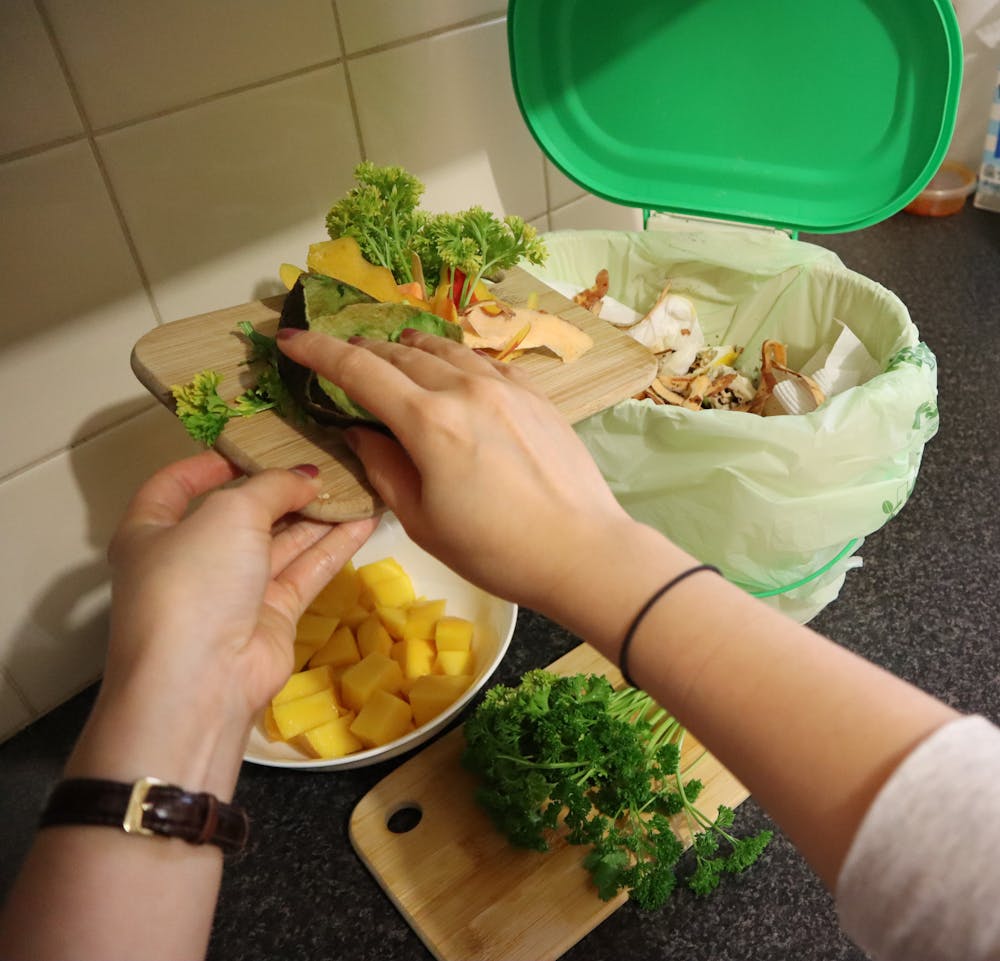 A benchtop kitchen caddy with a compostable liner for food waste scraps, provided by Adelaide City Council.
Trang Nguyen
A benchtop kitchen caddy with a compostable liner for food waste scraps, provided by Adelaide City Council.
Trang Nguyen
3. Economic incentives
Currently, Australians pay for waste management through their council rates. This is a “pay-as-you-own” system.
The cost is determined by the property’s value, regardless of the amount of waste generated. Renters indirectly contribute to this cost by paying rent.
Neither owner-occupiers nor renters have any incentive to reduce waste generation when the cost is levied on property value rather than the amount of waste.
An alternative approach gaining momentum in other parts of the world is the “pay-as-you-throw” approach, such as Stockholm and Taipei. This system charges households based on the weight of their waste, usually the general waste that needs to be discarded in landfill, while the collection of food waste and other recyclables remains free to encourage waste sorting.
Recent research in Italy shows pay-as-you-throw schemes result in significant reductions in both the quantity of waste and costs associated with waste disposal in many Italian municipalities.
The reduced costs flow on to savings for councils that could potentially reduce waste management fees passed on to homeowners and renters through council rates. Giving households incentives to reduce waste and find alternatives to disposal encourages residents to place a higher value on food that may otherwise be sent to landfill.
Read more: Want to reduce your food waste at home? Here are the 6 best evidence-based ways to do it
Reducing food waste is a win-win
Tackling food waste is a win-win for people and the planet. It’s worth using various approaches to encourage people to change their behaviour.
Our findings can help inform the design of interventions aimed at reducing and sorting food waste in specific segments of the Australian population.
No time to waste: Halving Australia’s food waste by 2030 (Fight Food Waste Cooperative Research Centre)Authors: Trang Nguyen, Postdoctoral Fellow, University of Adelaide
Read more https://theconversation.com/we-found-3-types-of-food-wasters-which-one-are-you-214482


 Daily Bulletin


