

Universalism or tribalism? Michael Gawenda's memoir considers what it means to be a Jew in contemporary Australia
- Written by: Dennis Altman, VC Fellow LaTrobe University, La Trobe University
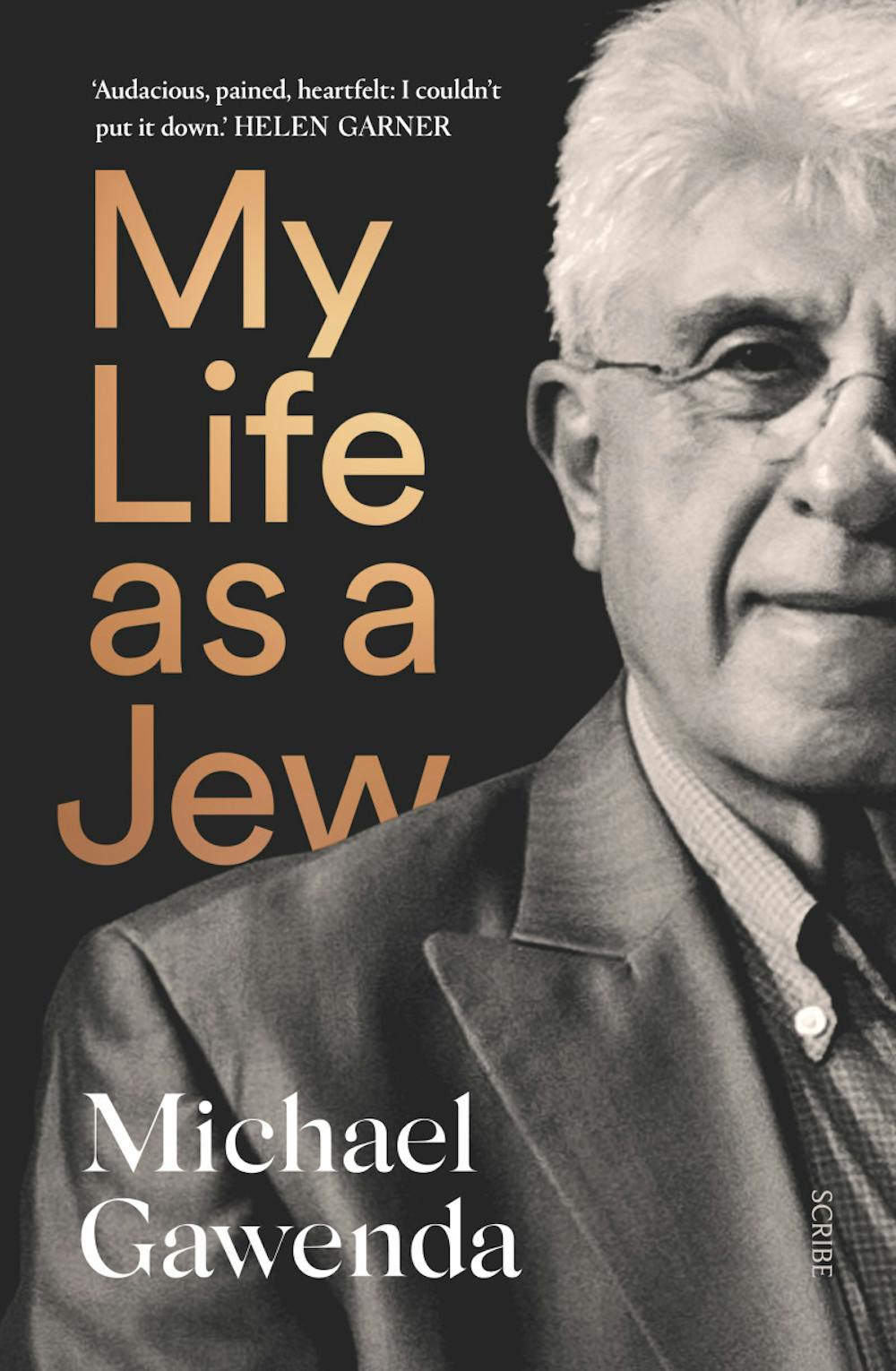
At one point in this book, journalist Michael Gawenda claims “only progressive, secular reviewers are chosen to review books about Jews.” So I need begin my review of My Life as a Jew by acknowledging that I fit this description.
Like Gawenda, I am the son of Jewish refugees, although I grew up in a totally secular home. I think of myself as Jewish, although on the census forms I tick “no religion”. I have virtually no contact with the organised Jewish community. For much of his adult life, that might also have described Gawenda.
Positioning myself at the outset is important because Gawenda has written a very personal book, which in some ways is a direct challenge to Jews like me who are deeply critical of Israel. I am also friends with several of the people he criticises, particularly Louise Adler and Peter Beinart.
Gawenda came out of a specifically left Jewish tradition, that of the Bund, which was secular, socialist and, in its origins, opposed to Zionism. Like many others who grew up in Bundist households, Gawenda has constantly struggled with his growing identification with Israel, which is simultaneously a foreign country and one that grants citizenship to all Jews.
“Whether I liked it or not,” he writes, “I was connected to Israel, the Jewish state.”
Review: My Life as a Jew – Michael Gawenda (Scribe)
For most of his professional life, including a period as Editor in Chief of the Melbourne Age, Gawenda did not see his Jewishness as central to his being. My Life as a Jew traces a growing sense of Jewish identity, in large part due to his sense of growing antisemitism on the left, which makes him increasingly uneasy about his former political allies.
 A Palestinian pushes a burning tyre during clashes with Israeli troops at the northern entrance of the West Bank city of Ramallah, near the Israeli settlement of Beit El, October 20, 2023.
Alaa Badarneh/AAP
Ours is an age of tribalism and Gawenda is honest when he writes: “I know and have heard Israeli voices in a way I never have the voices of the Palestinians.” He then acknowledges this is a flaw shared by much Western media reporting, which seems strange given his earlier complaints about the Australian journalist John Lyons, whose booklet, Dateline Jerusalem: Journalism’s Toughest Assignment, makes precisely this point.
Gawenda taps into the underlying anxiety all Jews feel whenever debate about Israel moves into antisemitism, as happened in very ugly ways in the past few weeks. Opposition to Israel and antisemitism are logically separate, but the line is blurred both by defenders of Israel and its most vociferous opponents. Of course, Israel also has some strong defenders among people who are antisemitic, such as sections of the American Christian right.
In his concern with growing antisemitism, Gawenda devotes considerable attention to what he sees as the “de-Jewification” of the Holocaust, some of which he lays at the feet of Hannah Arendt, whose study of Adolf Eichmann and her phrase “the banality of evil” he sees as contributing to this.
A Palestinian pushes a burning tyre during clashes with Israeli troops at the northern entrance of the West Bank city of Ramallah, near the Israeli settlement of Beit El, October 20, 2023.
Alaa Badarneh/AAP
Ours is an age of tribalism and Gawenda is honest when he writes: “I know and have heard Israeli voices in a way I never have the voices of the Palestinians.” He then acknowledges this is a flaw shared by much Western media reporting, which seems strange given his earlier complaints about the Australian journalist John Lyons, whose booklet, Dateline Jerusalem: Journalism’s Toughest Assignment, makes precisely this point.
Gawenda taps into the underlying anxiety all Jews feel whenever debate about Israel moves into antisemitism, as happened in very ugly ways in the past few weeks. Opposition to Israel and antisemitism are logically separate, but the line is blurred both by defenders of Israel and its most vociferous opponents. Of course, Israel also has some strong defenders among people who are antisemitic, such as sections of the American Christian right.
In his concern with growing antisemitism, Gawenda devotes considerable attention to what he sees as the “de-Jewification” of the Holocaust, some of which he lays at the feet of Hannah Arendt, whose study of Adolf Eichmann and her phrase “the banality of evil” he sees as contributing to this.
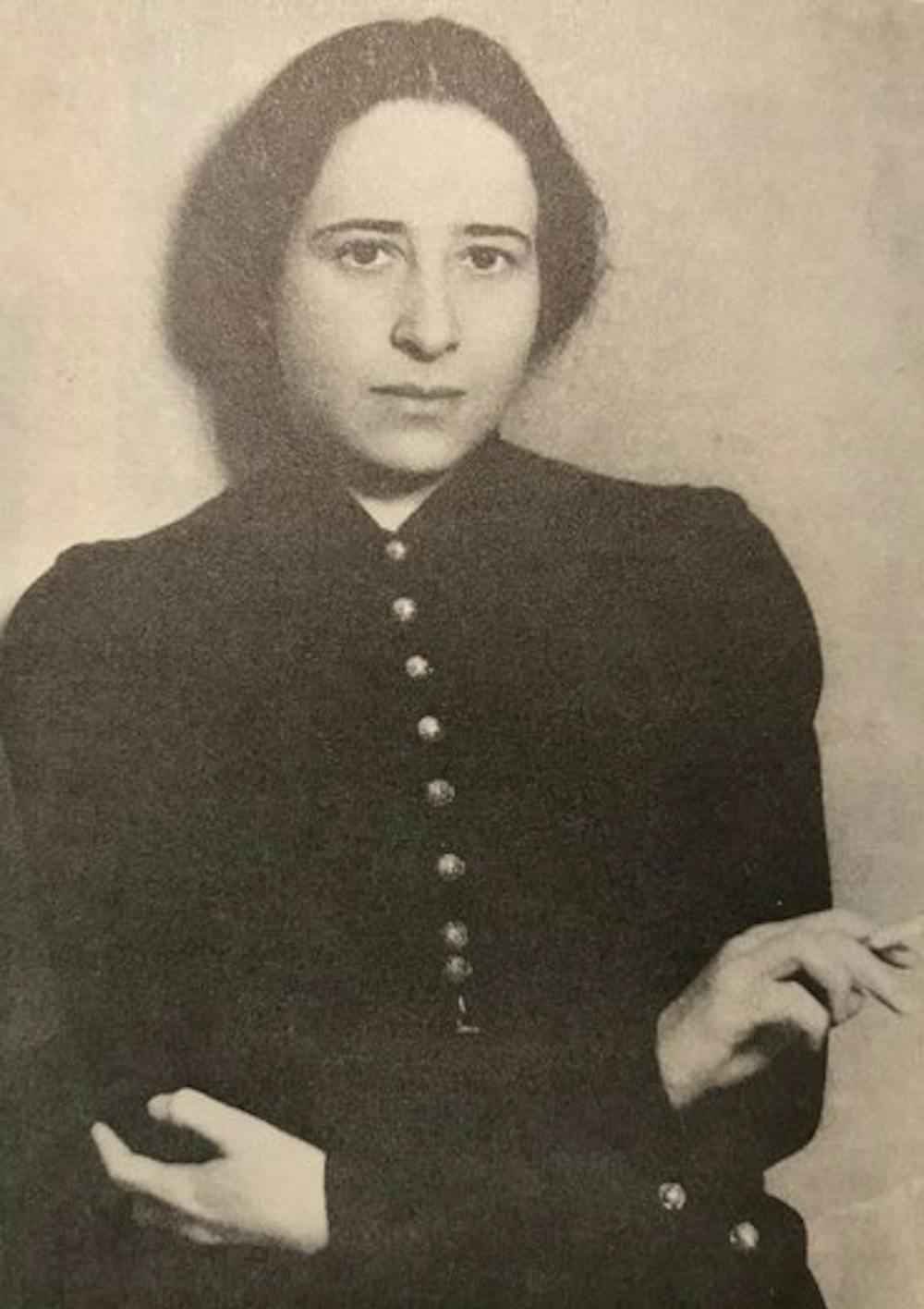 Hannah Arendt in 1933.
Public domain, via Wikimedia Commons
I think there is a stronger case to be made that there is rapidly declining knowledge of the Holocaust, and indeed of the inclusion of Roma and homosexuals as targets.
There is hard evidence antisemitism is growing in Australia and I wish Gawenda had spent more time analysing it, rather than relying on overseas examples. We are all aware of the rise of a small Nazi movement and fringe elements of the Palestinian movement; what is less obvious is the existence of persistent prejudices and stereotypes which too often go unchallenged.
Read more:
Why government action to thwart neo-Nazi groups is far more difficult than it appears
In contemporary Australia, the real question of how to tackle antisemitism gets too easily misdirected into semantic wrangles. Currently, our universities are arguing about which definition of antisemitism to adopt, rather than thinking through how best to tackle the root causes of antisemitism and racism.
Antisemitism feeds on many sources other than hatred of Israel, from the genteel British version, apparent in many of Agatha Christie’s writings, to the religious intolerance many migrants bring with them from ancestral feuds. My Life as a Jew is so focused on opposition to Israel it passes over the more pervasive low-level antisemitism we encounter all too often.
Gawenda still identifies as a “secular Jew”, but struggles to reconcile his growing sense of belonging to a Jewish world with a recognition that: “I do not believe that being a Jew will ever encompass all that I am and all that I believe.” The book fluctuates between the two poles of tribalism and universalism, which at its most eloquent echoes debates that have divided Jews over the past century.
My Life as a Jew is a book full of contradictions. This is not necessarily a criticism. As Freud observed: “Only in logic are contradictions unable to coexist; in feelings they quite happily continue alongside each other”. The real strength of this book comes from Gawenda’s honesty about his struggles to define exactly what it means to be a Jew in contemporary Australia.
The most moving part of the book comes as Gawenda talks of returning to the Yiddish he heard as a child, to which his own children have returned through song and language. At this point, My Life as a Jew speaks far beyond our tribe to the reality for millions of Australians, caught between the dominant culture and memories of the cultures they have left behind.
Authors: Dennis Altman, VC Fellow LaTrobe University, La Trobe University
Hannah Arendt in 1933.
Public domain, via Wikimedia Commons
I think there is a stronger case to be made that there is rapidly declining knowledge of the Holocaust, and indeed of the inclusion of Roma and homosexuals as targets.
There is hard evidence antisemitism is growing in Australia and I wish Gawenda had spent more time analysing it, rather than relying on overseas examples. We are all aware of the rise of a small Nazi movement and fringe elements of the Palestinian movement; what is less obvious is the existence of persistent prejudices and stereotypes which too often go unchallenged.
Read more:
Why government action to thwart neo-Nazi groups is far more difficult than it appears
In contemporary Australia, the real question of how to tackle antisemitism gets too easily misdirected into semantic wrangles. Currently, our universities are arguing about which definition of antisemitism to adopt, rather than thinking through how best to tackle the root causes of antisemitism and racism.
Antisemitism feeds on many sources other than hatred of Israel, from the genteel British version, apparent in many of Agatha Christie’s writings, to the religious intolerance many migrants bring with them from ancestral feuds. My Life as a Jew is so focused on opposition to Israel it passes over the more pervasive low-level antisemitism we encounter all too often.
Gawenda still identifies as a “secular Jew”, but struggles to reconcile his growing sense of belonging to a Jewish world with a recognition that: “I do not believe that being a Jew will ever encompass all that I am and all that I believe.” The book fluctuates between the two poles of tribalism and universalism, which at its most eloquent echoes debates that have divided Jews over the past century.
My Life as a Jew is a book full of contradictions. This is not necessarily a criticism. As Freud observed: “Only in logic are contradictions unable to coexist; in feelings they quite happily continue alongside each other”. The real strength of this book comes from Gawenda’s honesty about his struggles to define exactly what it means to be a Jew in contemporary Australia.
The most moving part of the book comes as Gawenda talks of returning to the Yiddish he heard as a child, to which his own children have returned through song and language. At this point, My Life as a Jew speaks far beyond our tribe to the reality for millions of Australians, caught between the dominant culture and memories of the cultures they have left behind.
Authors: Dennis Altman, VC Fellow LaTrobe University, La Trobe University


 Daily Bulletin


