

Can I actually target areas to lose fat, like my belly?
- Written by: Nick Fuller, Charles Perkins Centre Research Program Leader, University of Sydney
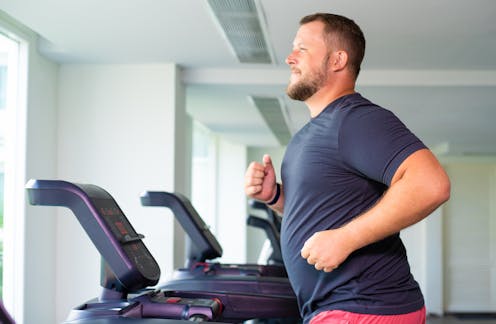
Spend some time scrolling social media and you’re all-but-guaranteed to see an ad promising to help you with targeted fat loss. These ads promote a concept known as “spot reduction”, claiming you can burn fat in a specific body area, usually the belly, with specially designed exercises or workouts.
It’s also common to see ads touting special diets, pills and supplements that will blast fat in targeted areas. These ads – which often feature impressive before and after photos taken weeks apart – can seem believable.
Unfortunately, spot reduction is another weight-loss myth. It’s simply not possible to target the location of fat loss. Here’s why.
Read more: Using BMI to measure your health is nonsense. Here's why
1. Our bodies are hardwired to access and burn all our fat stores for energy
To understand why spot reduction is a myth, it’s important to understand how body fat is stored and used.
The fat stored in our bodies takes the form of triglycerides, which are a type of lipid or fat molecule we can use for energy. Around 95% of the dietary fats we consume are triglycerides, and when we eat, our bodies also convert any unused energy consumed into triglycerides.
Triglycerides are stored in special fat cells called adipocytes, and they’re released into our bloodstream and transported to adipose tissue – tissue we more commonly refer to as body fat.
This body fat is found all over our bodies, but it’s primarily stored as subcutaneous fat under our skin and as visceral fat around our internal organs.
These fat stores serve as a vital energy reserve, with our bodies mobilising to access stored triglycerides to provide energy during periods of prolonged exercise. We also draw on these reserves when we’re dieting and fasting.
However, contrary to what many spot-reduction ads would have us think, our muscles can’t directly access and burn specific fat stores when we exercise.
Instead, they use a process called lipolysis to convert triglycerides into free fatty acids and a compound called glycerol, which then travels to our muscles via our bloodstream.
As a result, the fat stores we’re using for energy when we exercise come from everywhere in our bodies – not just the areas we’re targeting for fat loss.
Research reinforces how our bodies burn fat when we exercise, confirming spot reduction is a weight-loss myth. This includes a randomised 12-week clinical trial which found no greater improvement in reducing belly fat between people who undertook an abdominal resistance program in addition to changes in diet compared to those in the diet-only group.
Further, a 2021 meta-analysis of 13 studies involving more than 1,100 participants found that localised muscle training had no effect on localised fat deposits. That is, exercising a specific part of the body did not reduce fat in that part of the body.
Studies purporting to show spot-reduction benefits have small numbers of participants with results that aren’t clinically meaningful.
Read more: Does exercise help you lose weight?
2. Our bodies decide where we store fat and where we lose it from first
Factors outside of our control influence the areas and order in which our bodies store and lose fat, namely:
our genes. Just as DNA prescribes whether we’re short or tall, genetics plays a significant role in how our fat stores are managed. Research shows our genes can account for 60% of where fat is distributed. So, if your mum tends to store and lose weight from her face first, there’s a good chance you will, too
our gender. Our bodies, by nature, have distinct fat storage characteristics driven by our gender, including females having more fat mass than males. This is primarily because the female body is designed to hold fat reserves to support pregnancy and nursing, with women tending to lose weight from their face, calves and arms first because they impact childbearing the least, while holding onto fat stored around the hips, thighs and buttocks
our age. The ageing process triggers changes in muscle mass, metabolism, and hormone levels, which can impact where and how quickly fat is lost. Post-menopausal women and middle-aged men tend to store visceral fat around the midsection and find it a stubborn place to shift fat from.
Read more: Is menopause making me put on weight? No, but it's complicated
3. Over-the-counter pills and supplements cannot effectively target fat loss
Most advertising for these pills and dietary supplements – including products claiming to be “the best way to lose belly fat” – will also proudly claim their product’s results are backed by “clinical trials” and “scientific evidence”.
But the reality is a host of independent studies don’t support these claims.
This includes two recent studies by the University of Sydney that examined data from more than 120 placebo-controlled trials of herbal and dietary supplements. None of the supplements examined provided a clinically meaningful reduction in body weight among overweight or obese people.
The bottom line
Spot reduction is a myth – we can’t control where our bodies lose fat. But we can achieve the results we’re seeking in specific areas by targeting overall fat loss.
While you may not lose the weight in a specific spot when exercising, all physical activity helps to burn body fat and preserve muscle mass. This will lead to a change in your body shape over time and it will also help you with long-term weight management.
This is because your metabolic rate – how much energy you burn at rest – is determined by how much muscle and fat you carry. As muscle is more metabolically active than fat (meaning it burns more energy than fat), a person with a higher muscle mass will have a faster metabolic rate than someone of the same body weight with a higher fat mass.
Successfully losing fat long term comes down to losing weight in small, manageable chunks you can sustain – periods of weight loss, followed by periods of weight maintenance, and so on, until you achieve your goal weight.
It also requires gradual changes to your lifestyle (diet, exercise and sleep) to ensure you form habits that last a lifetime.
At the Boden Group, Charles Perkins Centre, we are studying the science of obesity and running clinical trials for weight loss. You can register here to express your interest.
Authors: Nick Fuller, Charles Perkins Centre Research Program Leader, University of Sydney
Read more https://theconversation.com/can-i-actually-target-areas-to-lose-fat-like-my-belly-205203


 Daily Bulletin


