

In a crisis, Optus appears to be ignoring Communications 101
- Written by: Alison Stieven-Taylor, Lecturer in Strategic Communications, Monash University

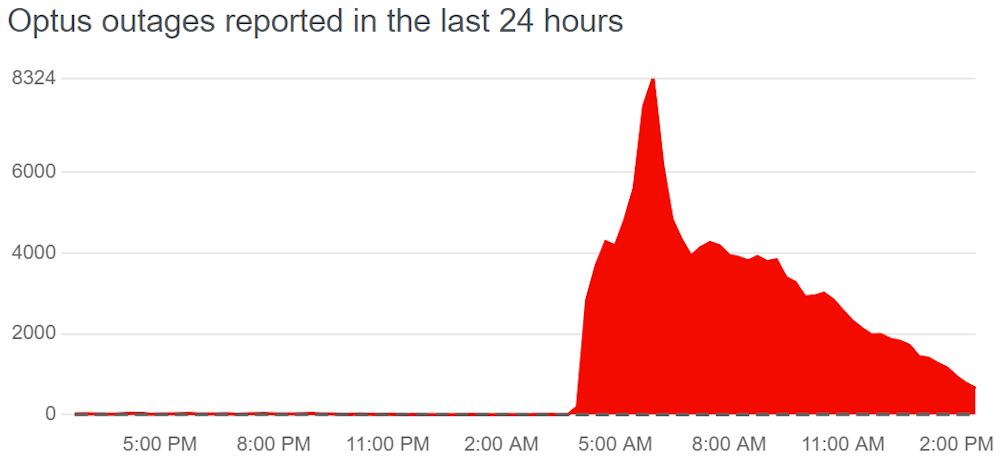
Millions of Optus customers are in the wilderness of a nationwide network outage that began at 4am.
The initial response from Optus delivered by an unnamed company spokesperson on Facebook and X at 6.47am AEDT told Australians little they didn’t already know, that the network was down, and that the company didn’t yet know what had happened.
Later, at 10.30am, the ABC got through to Optus Chief Executive Kelly Bayer Rosmarin via WhatsApp and asked
What do you know? What’s happened?
Bayer Rosmarin replied:
Well I mean we do know how important connectivity is to all of our customers, so we are really, really apologetic and sorry that our connections have gone down today. The teams are working with huge effort to try and restore services as a priority, and will keep working on that until everybody’s back in action.
For the second time in a little over a year, the country’s second-largest telecommunications provider lost control of its story.
In September last year when the data of up to 9.8 million of its present and former customers was compromised, it failed to contact those affected for days and communicated via media statements, believing that was the “quickest and most effective way to alert as many current and former customers as possible”.
Golden rules for crises
Every company should have a crisis communications plan – a “living document” that it regularly updates, so that when a crisis emerges there is a strategy ready to be implemented.
There are several golden rules to executing an effective crisis communications response. They are based on transparency, honesty and empathy, and are well documented by theorists such as Timothy Coombs and William Benoit.
 Un-updated Optus media page, 2.30pm AEDT Wednesday November 8.
3. Don’t let the story run away from you
The best advice is to get out in front of the story. By the time Bayer Rosmarin spoke up at 10.30 this morning, it was difficult to alter an established narrative.
Once a story becomes publicly established, it becomes difficult to influence.
And it is best to speak to more than one media outlet. This is particularly important for a company with a broad customer base like Optus.
4. Apologise and accept blame
Last year Optus painted itself as the victim of the hack (which it was) but then failed to also address its responsibility for keeping its customers’ data safe, and apologise for failing to do so.
Mortification (confessing and asking for forgiveness) is recommended by both Coombs and Benoit, and the sooner the better.
Companies that apologise late are seen as disingenuous.
5. Be empathetic
Companies that have let down their customers should put themselves in their customers’ place.
Part of doing this is to avoid corporate speak and connect at a human level.
Customers want to know the company accepts its actions have caused harm and is as concerned about it as they are, if not more so.
This means sharing information as soon as it is to hand so that customers can make decisions. These might involve leaving for a competitor, or sticking with the company that is sticking by them.
6. Be honest
If a company in crisis doesn’t know the answer to a question it should say so, but then promise to provide regular updates and be true to its word.
A company that leaves a communication vacuum (as Optus did this morning) will allow others to fill it, almost certainly to its detriment.
7. Bolster your company
Bolstering is reminding customers of the good things a company has done in the past, and can work when deployed alongside empathy, honesty and mortification.
It’s an approach that will prove difficult for Optus, given its performance the last time it was in this sort of crisis.
Read more:
Optus blackout explained: what is a ‘deep network’ outage and what may have caused it?
Authors: Alison Stieven-Taylor, Lecturer in Strategic Communications, Monash University
Un-updated Optus media page, 2.30pm AEDT Wednesday November 8.
3. Don’t let the story run away from you
The best advice is to get out in front of the story. By the time Bayer Rosmarin spoke up at 10.30 this morning, it was difficult to alter an established narrative.
Once a story becomes publicly established, it becomes difficult to influence.
And it is best to speak to more than one media outlet. This is particularly important for a company with a broad customer base like Optus.
4. Apologise and accept blame
Last year Optus painted itself as the victim of the hack (which it was) but then failed to also address its responsibility for keeping its customers’ data safe, and apologise for failing to do so.
Mortification (confessing and asking for forgiveness) is recommended by both Coombs and Benoit, and the sooner the better.
Companies that apologise late are seen as disingenuous.
5. Be empathetic
Companies that have let down their customers should put themselves in their customers’ place.
Part of doing this is to avoid corporate speak and connect at a human level.
Customers want to know the company accepts its actions have caused harm and is as concerned about it as they are, if not more so.
This means sharing information as soon as it is to hand so that customers can make decisions. These might involve leaving for a competitor, or sticking with the company that is sticking by them.
6. Be honest
If a company in crisis doesn’t know the answer to a question it should say so, but then promise to provide regular updates and be true to its word.
A company that leaves a communication vacuum (as Optus did this morning) will allow others to fill it, almost certainly to its detriment.
7. Bolster your company
Bolstering is reminding customers of the good things a company has done in the past, and can work when deployed alongside empathy, honesty and mortification.
It’s an approach that will prove difficult for Optus, given its performance the last time it was in this sort of crisis.
Read more:
Optus blackout explained: what is a ‘deep network’ outage and what may have caused it?
Authors: Alison Stieven-Taylor, Lecturer in Strategic Communications, Monash UniversityRead more https://theconversation.com/in-a-crisis-optus-appears-to-be-ignoring-communications-101-217265


 Daily Bulletin


