

Want to get into stargazing? A professional astronomer explains where to start
- Written by: Jonti Horner, Professor (Astrophysics), University of Southern Queensland
There are few things more peaceful and relaxing than a night under the stars. Through the holidays, many people head away from the bright city lights to go camping. They revel in the dark skies, spangled with myriad stars.
As a child, I loved such trips, and they helped cement my passion for the night sky, and for all things space.
One of my great joys as an astronomer is sharing the night sky with people. There is something wondrous about helping people stare at the cosmos through a telescope, getting their first glimpses of the universe’s many wonders. But we can also share and enjoy the night sky just with our own eyes – pointing out the constellations and the planets, or discovering the joys of watching meteor showers.
It is easy to be bitten by the astronomy bug, and a common question I get asked is “how can I get more into stargazing?”. Here are ways to get started in this fascinating and timeless hobby that won’t break the bank.
Learning the night sky
A good place to start if you’re a budding astronomer is to learn your way around the night sky. When I was young, this involved getting hold of a planisphere (a star map, you can make your own here), or a good reference book.
Today, there are countless good apps to help you find your way around the night sky.
A great example of such an app is Stellarium – a planetarium program allowing you to view the night sky from the comfort of your room or to plan an evening’s observing ahead of schedule.
To memorise the night sky, you can try star hopping. Pick out a bright, famous, easy to find constellation, and use it as a guide to help you identify the constellations around it.
Learn one constellation per week, and within a year, you’ll be familiar with most of the constellations visible from your location.
Let’s use Orion as an example. The slider below shows images from Stellarium, with Orion riding high in the sky on a summer’s evening. I’ve added arrows to show how you can use Orion (shown in the centre of the map below) to hop around the summer sky.
To learn the constellations around Orion, your task is relatively straightforward. Head out on a clear, dark summer’s night, and find Orion high to the north. The three stars of Orion’s belt are a fantastic signpost to Orion’s neighbours.
If you follow the line of the belt upwards and to the right, you come to Sirius – the brightest star in the night sky, and the brightest star in Canis Major, the big hunting dog. Carry the line on and curve to the left as you go, and you’ll find Canopus, the second brightest star in the sky.
Now come back to Orion’s belt, and follow its line down and to the left. You’ll come to a V-shaped group of stars, including the bright red Aldebaran. This is the Hyades star cluster (with Aldebaran a foreground interloper), which makes up the head of Taurus, the bull.
Take the line further, and you come to the Pleiades – often known as the Seven Sisters – a beautiful star cluster easily visible to the naked eye.
Back to Orion again. This time, you’re going to draw a line from Rigel (the bright star at the top-left of Orion’s boxy body) through Betelgeuse (the bright red star at the lower-right of the box) and continue it towards the horizon. This takes you to Gemini – the twins.
Just by using Orion as the signpost, you can find your way to a good number of constellations (the cyan line points to Lepus, the hare; the white line to Canis Minor, the little hunting dog).
By star hopping, you’ll slowly but surely learn your way around the night sky until the constellations become familiar friends.
Read more: Kindred skies: ancient Greeks and Aboriginal Australians saw constellations in common
Virtual observing
Looking at the sky with the naked eye is a wonderful thing, but it’s also great to zoom in and see more detail.
What if you don’t have access to binoculars or a telescope of your own? Thankfully, software like Stellarium can give you a fantastic virtual observing experience.
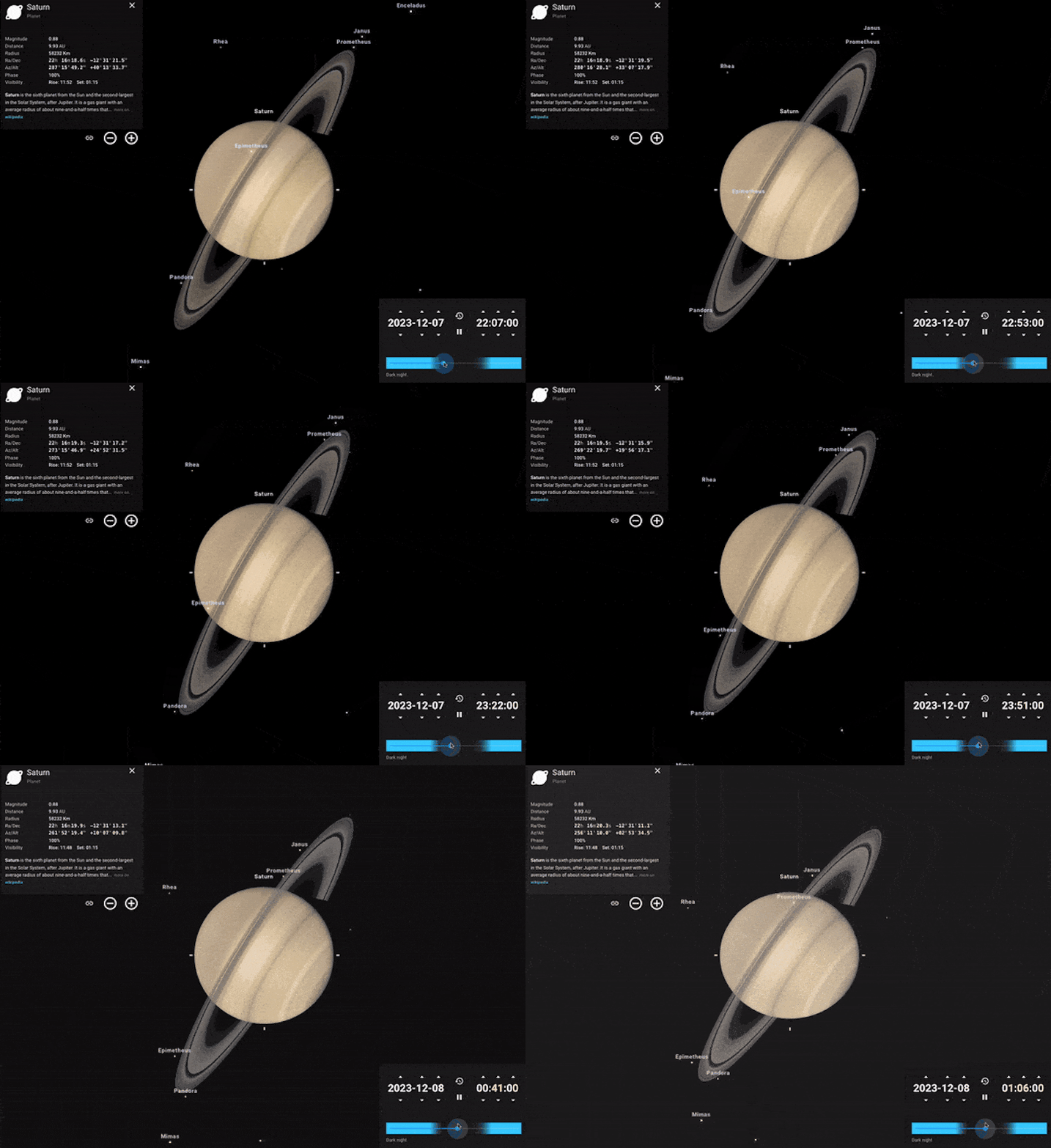
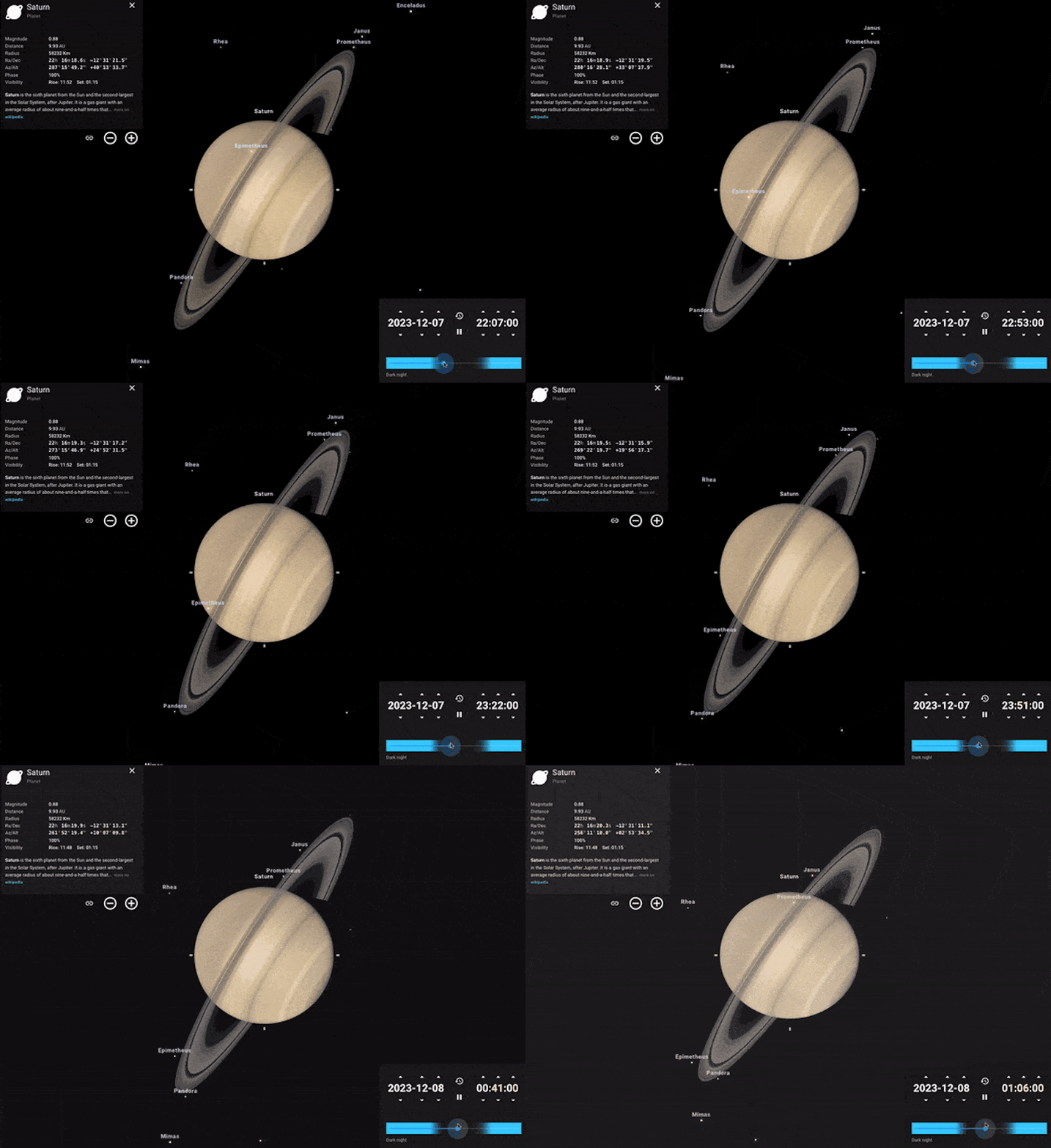
Imagine you want to see Saturn’s rings – a spectacular sight through even a small telescope. You can easily do this with Stellarium. Find Saturn by using the search bar and click on it to bring up the planet’s info.
Click on the cross-hair symbol to “lock on”, then zoom in. The further you zoom in, the more you’ll see. You can even run the clock forwards or backwards to see the planet’s moons move in their orbits, or the tilt of Saturn’s rings changing from our viewpoint over time.
A virtual observing session is as simple as that – just pan around the sky until you find something you want to see, and zoom in.
A hobby best shared
Now, a virtual observing session is great, but it pales compared to the real thing. I’d recommend using planetarium programs like Stellarium to figure out what you want to see, then heading out to look at it with your own eyes.
Astronomy is a wonderful hobby, and one that is best shared. Most towns and cities have their own astronomy clubs, and they’re usually more than happy to welcome guests who want to gaze at the night sky.
I joined my local astronomy society, the West Yorkshire Astronomical Society in the United Kingdom, when I was just eight years old. I owe them so much. The members were incredibly supportive of a young kid with so many questions, and I genuinely believe I would not be where I am today without their help. As a member, I saw firsthand just how fantastic the amateur astronomy community is.
 The author Jonti Horner at age 16, showing then Astronomer Royal of the UK, Arnold Wolfendale (right), the WYAS 18-inch telescope, hand-made by members. Also seen is the society’s then president, Ken Willoughby.
Alan Horner, author provided
The author Jonti Horner at age 16, showing then Astronomer Royal of the UK, Arnold Wolfendale (right), the WYAS 18-inch telescope, hand-made by members. Also seen is the society’s then president, Ken Willoughby.
Alan Horner, author provided
At the society, we had weekly talks on astronomy, given by the club members and visiting astronomers from local universities. We also had regular night sky viewing nights, using the society’s very own telescope – a behemoth the members had built themselves.
People who are passionate about their hobby love nothing more than sharing it with others. The members of astronomical societies are fantastic guides to the night sky, and they often have incredible equipment they’re more than happy to share with you.
Both astronomy clubs and universities often offer public night sky viewing nights, which are the perfect opportunity to peer at the sky through a telescope, with an experienced guide on hand to find the most impressive sights to share.
So, if you want to learn more about the night sky, reach out to your local astronomy society – it could be the start of something very special.
If you want to find a local astronomy group, check out this list. If you’re a member of a group that isn’t listed, please reach out to get them to update the list using the ‘Contact Us’ link.
Authors: Jonti Horner, Professor (Astrophysics), University of Southern Queensland


 Daily Bulletin


