

Waitangi Day 2024: 5 myths and misconceptions that confuse the Treaty debate
- Written by: Paul Moon, Professor of History, Auckland University of Technology
When it comes to grappling with the Treaty of Waitangi/Te Tiriti o Waitangi, one of the commonest responses is that it’s a matter of interpretation. It seems to be a perfectly fair reaction, except that historical interpretation generally requires adherence to rules of evidence.
It is not a licence to make any claims whatsoever about the Treaty, and then to assert their truth by appealing to the authority of personal interpretation.
Yet since the 1970s we’ve been faced with the paradoxical situation of a growing body of Treaty scholarship that has led to less consensus about its meaning and purpose.
It is therefore worthwhile to investigate some of the more common misconceptions about the Treaty that have accrued over recent decades. This will not lead to a definitive interpretation of the Treaty. But it might remove a few obstacles currently in the way of understanding it better.
Read more: History and myth: why the Treaty of Waitangi remains such a ‘bloody difficult subject’
1. The Treaty or Te Tiriti?
A common view persists that the English and Māori versions of the Treaty are fundamentally at odds with each other, especially over the central issue of sovereignty.
But research over the past two decades on British colonial policy prior to 1840 has revealed that Britain wanted a treaty to enable it to extend its jurisdiction to its subjects living in New Zealand.
It had no intention to govern Māori or usurp Māori sovereignty. On this critical point, the two versions are essentially in agreement.
2. The Treaty is not a contract
The principle of contra proferentem – appropriated from contract law – refers to ambiguous provisions that can be interpreted in a way that works against the drafter of the contract.
However, there are several problems in applying this principle to the Treaty. Firstly, treaties are different legal instruments from contracts. This explains why there are correspondingly few examples of this principle being used in international law for interpreting treaties.
Secondly, as there are no major material differences between the English and Māori versions of the Treaty when it comes to Māori retaining sovereignty, there is no need to apply such a principle.
And thirdly, under international law, treaties are not to be interpreted in an adversarial manner, but in good faith (the principle of pacta sunt servanda). Thus, rather than the parties fighting over the Treaty’s meaning, the requirement is for them to work with rather than against each other.
Read more: Learning to live with the 'messy, complicated history' of how Aotearoa New Zealand was colonised
3. Relationships evolve over time
No rangatira (chief) ceded sovereignty over their own people through the Treaty. Nor was that Britain’s intention – hence Britain’s recognition in August 1839 of hapū (kinship group) sovereignty and the guarantee in the Treaty that rangatiratanga (the powers of the chiefs) would be protected.
Britain simply wanted jurisdiction over its own subjects in the colony. This is what is known as an “originalist” interpretation – one that follows the Treaty’s meaning as it was understood in 1840.
This has several limitations: it precludes the emergence of Treaty principles; it wrongly presumes that all involved at the time of the Treaty’s signing had an identical view on its meaning; and, crucially, it ignores all subsequent historical developments.
Treaty relationships evolve over time in numerous ways. Originalist interpretations fail to take that into account.
Read more: Explainer: the significance of the Treaty of Waitangi
4. Questions of motive
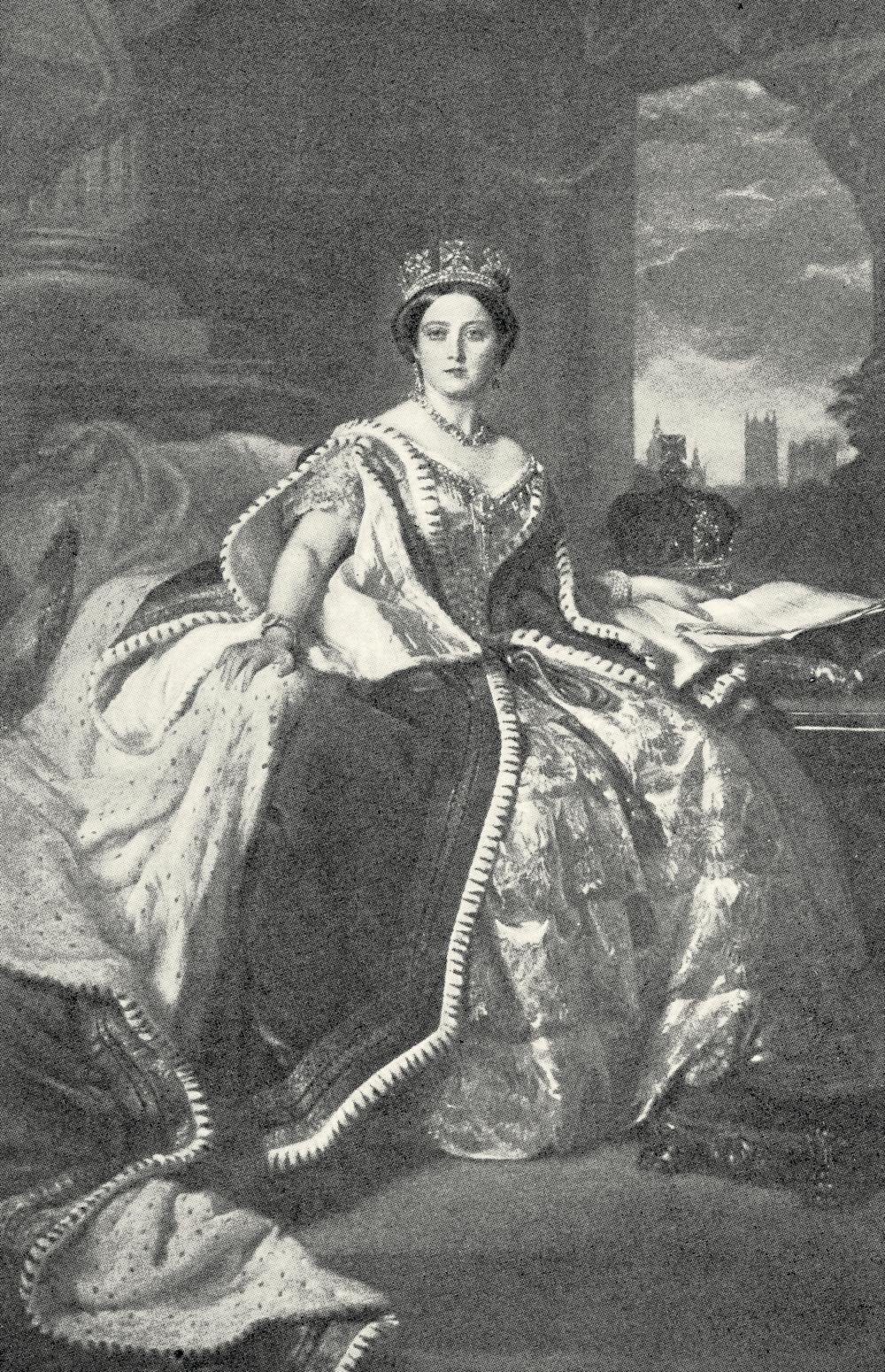
British motives for the Treaty were made explicit in 1839, yet in the following 185 years false motives have entered into the historical bloodstream, where they have continued circulating.
What Britain wanted was the right to apply its laws to its people living in New Zealand. It also intended to “civilise” Māori (through creating the short-lived Office of Protector of Aborigines) and protect Māori land from unethical purchases (the pre-emption provision in Article Two of the Treaty).
And Britain wanted to afford Māori the same rights as British subjects in cases where one group’s actions impinged on the other’s (as in the 1842 Maketū case, involving the conviction for murder and execution of a young Māori man).
The Treaty was not a response to a French threat to New Zealand. And it was not an attempt to conquer Māori, nor to deceive them through subterfuge.
Read more: From 'pebble in the shoe' to future power broker – the rise and rise of te Pāti Māori
5. Myths of a ‘real’ Treaty and 4th article
Over the past two decades, some have alleged there is a “real” Treaty – the so-called “Littlewood Treaty” – that has been concealed because it contains a different set of provisions. Such conspiratorial claims are easily dispelled.
The text of the Littlewood Treaty is known and it is merely a handwritten copy of the actual Treaty. And, most obviously, it cannot be regarded as a treaty on the basis that no one signed it.
Another popular myth is that there is a fourth article of the Treaty, which purportedly guarantees religious freedom. This article does not appear in either the Māori or English texts of the Treaty, and there is no evidence the signatories regarded it as a provision of the agreement. It is a suggestion that emerged in the 1990s, but lacks any evidential or legal basis.
Finally, there is the argument that the Treaty supports the democratic process. In fact, the Treaty ushered in a non-representative regime in the colony. It was the 1852 New Zealand Constitution Act that gave the country a democratic government – a statute that incidentally made no reference to the Treaty’s provisions.
This list is not exhaustive. But in dispensing with areas of poor interpretation, we can improve the chances of a more informed and productive discussion about the Treaty.
Read more: The idea of ‘sovereignty’ is central to the Treaty debate – why is it so hard to define?
Authors: Paul Moon, Professor of History, Auckland University of Technology


 Daily Bulletin


