

Shame, intimacy, and community: fangirls are mocked, but it is more complex than you might think
- Written by: Sascha Samlal, PhD Candidate, The University of Melbourne
With Taylor Swift pulling in over half-a-million audience members on her Australian tour, we’ve been thinking a lot about fans. In this series, our academics dive into fan cultures: how they developed, how they operate, and how they shape the world today.
With Taylor Swift’s highly anticipated The Eras Tour now playing Australia, the behaviours and practices of pop music fangirls are again the spotlight.
From the devastation of missing out on tickets to live performances, the dedicated effort of camping at arenas to see their stars up close, to the ways these fans interact online, fangirls are often shamed within the cultural zeitgeist.
However, this shame is an integral aspect of fandom spaces. Shame can be used in creating shared intimacy between fans and fostering a sense of community, as evidenced in interviews conducted as part of my research.
Drawing on ten interviews with “Directioners” (fans of One Direction) who participated in online fandom communities during their adolescence, the way shame is experienced, perpetuated and internalised by fangirls became clear.
Yet what also emerged in these interviews is how shame simultaneously provides the foundation for these close-knit communities and long-lasting connections.
Pop music, girls and shame
Pop music is often characterised by its popularity with young women, and is perceived to in opposition to rock music and other, more “serious” genres. Rock music represents the authentic, political, intelligent and masculine; pop music therefore is inauthentic, vacuous and feminine.
Fans of more “serious” genres of music might be referred to as “aficionados”, “tastemakers” or “connoisseurs”, permitted to spend thousands of dollars on their rare vinyl collections or engage in online debate about their favourite albums.

One person I spoke to highlighted her otherwise “good” taste by positioning acclaimed musicians – Queen and Elton John – in opposition to One Direction, and to pop music. “I wasn’t necessarily listening to pop music,” she said.
Yet fangirls of pop music are not allowed this same status. It is expected they only like the object of their devotion because they are immature, apolitical, or they desire the (male) pop star.
The condemnation of fangirls is a historically recurring and widespread phenomenon, from Beatlemania to Bieber Fever.
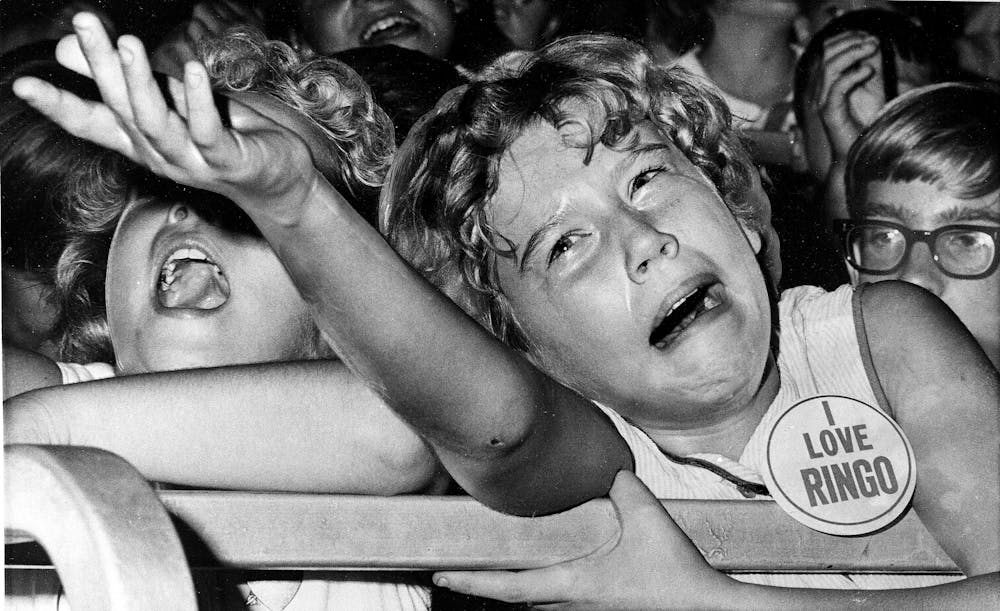 Beatlemania in fans in Indianapolis in 1964.
AP Photo/Bob Daugherty
Beatlemania in fans in Indianapolis in 1964.
AP Photo/Bob Daugherty
One participant recalled her time at school hiding her status as a One Direction fangirl:
all the boys would make fun of those girls, and I’d join in […] Me and my friends used to [say] ‘One Infection’!
The interests of girls are often demeaned as unserious or tasteless, pervasively understood as mass consumer products that hordes of crazy girls consume mindlessly.
The trope of the “hysterical fangirl” conjures up the image of a hormonally out of control teenage girl consistently duped by the mainstream music industry.
The good vs the hysterical
This cultural framing of fangirls seeps into fandom spaces.
Fangirls are extremely protective of how they are perceived by wider society, creating unspoken codes of conduct within these spaces. Practices that threaten the facade – such as “slash” shipping, the imagined romantic and sexual pairing of two same sex characters or celebrities – are further marginalised within communities as a means to regulate and maintain the limits of “good” fangirl behaviour.
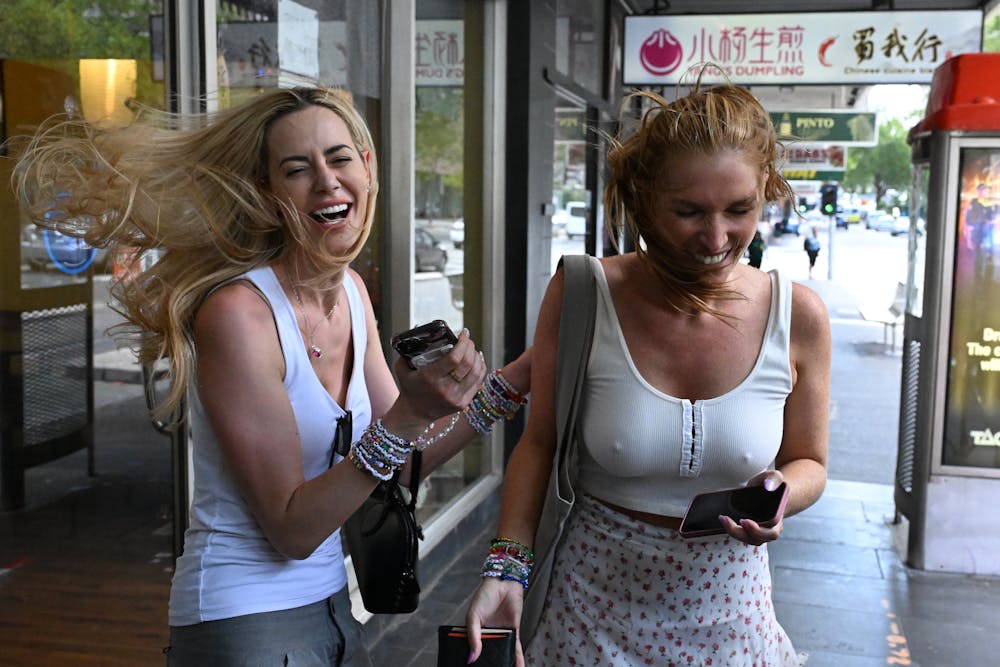 Taylor Swift fans after buying The Eras Tour tickets in Melbourne.
AAP Image/James Ross
Taylor Swift fans after buying The Eras Tour tickets in Melbourne.
AAP Image/James Ross
As one participant condemned when asked about slash fan fiction:
It’s about real people […] I just think that’s so weird. I think shame is needed there.
Fangirls strive to distance themselves from the hysterical fangirl trope. “Larries” – fans who support the imagined relationship between One Direction bandmates Harry Styles and Louis Tomlinson – are depicted as an obsessive and perverse faction within the fandom who are unable to distinguish their own fantasies from reality.
As one participant told me:
I would try and distance myself from that hyper-feminised sort of fangirl representation […] I didn’t want to be perceived as crazy and weird, even though I was!
Bonding through shame
Although shame is a regulatory tool fangirls deploy onto each other to maintain this good/bad fangirl binary, shame is also utilised in productive ways to foster relationships.
Shame is often thought of as a negative, isolating feeling. However, it is a dynamic emotion important in thinking about how these fandom spaces are formed in the first place, and how kinship is created among fans.
While it is common to think fandoms are simply organised around a shared object of devotion, it is the relationships between fans that generate and sustain these communities.
Many fangirls I interviewed praised the creativity of fan practices and the sense of belonging garnered through fandom as a point of pride of their fangirlishness.
One fangirl described sharing fan fiction within her online community felt like “having those giggly conversations with your sisters”.
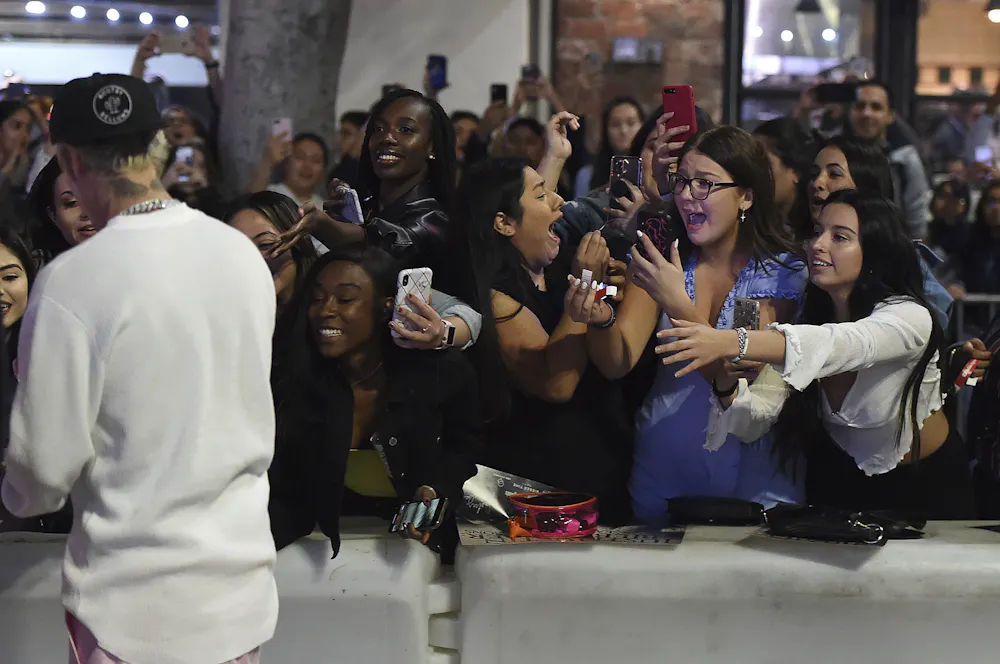 Justin Bieber fans watch him on the red carpet in Los Angeles.
Photo by Jordan Strauss/Invision/AP
Justin Bieber fans watch him on the red carpet in Los Angeles.
Photo by Jordan Strauss/Invision/AP
Through creative practices and continuous online discourse, fans construct their spaces in perceived privacy for an audience of their peers. Shame becomes a fangirl criterion for realising reciprocal, empathetic and fulfilling relationships between fans.
As one participant recalled discovering a new friend also read One Direction fan fiction, she mused:
it was a moment there, where we connected. I understand you; you understand me.
Ultimately, shame is a dynamic and important function within online fandom communities. The cultural condemnation of pop music fangirls speaks to the wider societal devaluation of femininity as infantile, weak or anti-intellectual. The pervasiveness of this systemic devaluation of femininity is evident as shame is also used within fandoms to maintain a good/bad fangirl binary.
Conversely, shame fosters shared intimacy and creates kinship between fangirls, nurturing a sense of community and belonging. These fandoms are ultimately networks of little families, who happen to all love the same catchy tunes.
Authors: Sascha Samlal, PhD Candidate, The University of Melbourne


 Daily Bulletin


