

Read The Times Australia

Daily Bulletin

E for equity? E-scooter and e-bike schemes can help people on low incomes and with disabilities

  • Written by: Alexa Delbosc, Associate Professor in Transport, Monash University
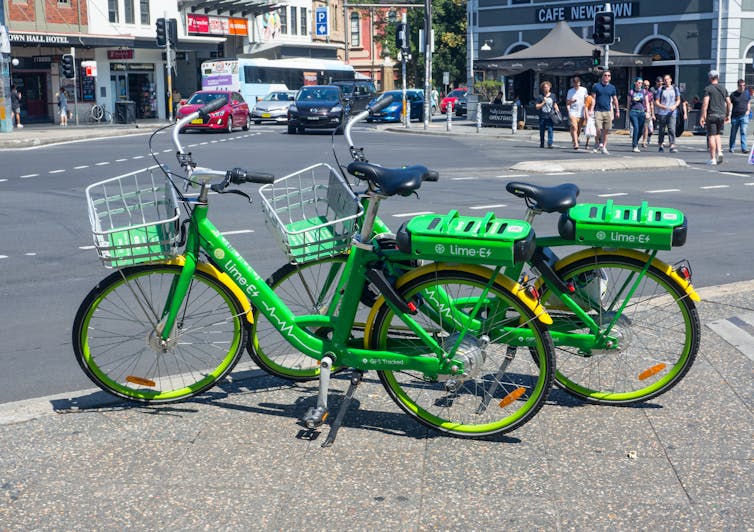
Two e-bikes parked at the edge of a city street

Interest in shared e-bikes and e-scooters, or “micromobility” devices, has skyrocketed in Australia. Every capital city and over 25 local councils have trialled shared e-scooter systems through private operators including Lime, Beam and Neuron.

Public perceptions of these programs are extremely mixed. Some people still think of these small electric personal vehicles as a passing fad. Or, worse, they see them as a source of transport system disruption, public space anarchy and traffic injury.

The truth is more nuanced. Shared scooters and bicycles are gradually being integrated into the transport system of our cities. Brisbane has led the way, followed by Melbourne.

Yet some are still wondering whether shared micromobility systems are simply a fun form of transport for young, mostly male and high-income tourists, or do they benefit a broader set of users?

Our new research across cities in three different countries paints a very different picture. Our findings suggest subsidised micromobility programs can provide significant benefits to vulnerable user groups.

Most shared operators provide discounted rides to low-income customers. In partnership with Lime, we were able to find out how “Lime Access” customers use shared e-scooters and e-bikes and how this compares to non-subsidised customers.

Read more: Five years on, Brisbane's e-scooters and e-bikes are winning over tourists and residents as they open up the city

These schemes can help ease disadvantage

We surveyed more than 1,000 respondents in Australia, New Zealand and the United States. We found Lime Access customers were five times as likely as non-subsidised riders (35% versus 7%) to use shared scooters and bicycles for daily travel. They were twice as likely to use them for essential trips (such as shopping or commuting) and to connect with public transport (44% versus 23%).

Half of Lime Access customers said one benefit of micromobility was that it allowed them to “get somewhere without a car”. This finding suggests these programs can help support a car-free or car-light lifestyle. This, in turn, makes transport systems more sustainable.

These benefits were highlighted by open-ended survey responses, such as:

As someone on a low income who does not own a car, it feels very liberating to be able to take a scooter to an area that is not serviced by public transport whenever I like. (Melbourne, Australia)

A woman on an e-scooter and a man on a bicyle ride through the city
For people who don’t own a car, e-scooters and e-bikes make transport accessible and affordable – especially if they qualify for discounted rides. James Ross/AAP

Read more: Thinking of swerving high fuel prices with an e-scooter or e-bike? 5 crucial questions answered

People with disabilities also benefit

In our study, we did not directly ask about disability. However, a number of Lime Access customers wrote about how the program allows them mobility despite medical conditions or physical disability.

Many of those disabilities are “invisible” – the casual observer is unlikely to notice them. Yet for the riders, the electric motor of the e-scooter or e-bike reduced the fatigue and strain they would experience walking or riding a standard bike.

I have kidney problems so the scooter saves me from fatigue of long walks. (Christchurch, New Zealand)

For some respondents, their physical disability prevented them from driving a car. Shared micromobility filled the gap, helping them get to essential destinations.

I’m ADA, which basically is handicapped, and I cannot walk all over like I used to be able to. Lime provides me independence I wouldn’t have without it! With the low-income program you offer, it literally saves me! I wouldn’t be able to get groceries or run errands or do most anything I do because of Lime. (San Francisco, California)

Two e-bikes parked at the edge of a city street
The assistance of an electric motor enables people with a wider range of abilities to use e-bikes and e-scooters. ArliftAtoz2205/Shutterstock

Read more: The old road rules no longer apply: how e-scooters challenge outdated assumptions

What can governments do to maximise the benefits?

Our study found shared e-scooters and bikes aren’t just for tourists to go joyriding. With the right frameworks and incentives in place, they can benefit vulnerable groups in society. In this way, they help create more equitable transport systems.

Yet these subsidised programs are relatively unknown and little-advertised. Only 24% of our respondents had ever heard of them.

The challenge remains: how to reach more travellers who could benefit from reduced-fare programs, without undermining the financial viability of operators? Unlike public transport services and even taxi services, there is no government support to encourage shared micromobility operators to expand their programs.

In the United States, city governments have been proactive in embedding equity requirements into service contracts with micromobility providers. For example, Washington DC reduces the fees it charges micromobility operators, with the reduction based on the proportion of travel by low-income customers.

Read more: E-bike incentives are a costly way to cut carbon emissions, but they also promote health, equity and cleaner air

In Australia, local and state governments should be moving beyond how to regulate these programs to also focus on how to better integrate them into our transport system. With the right incentives in place, we can maximise the benefits of micromobility for people who are most in need of affordable and accessible transport solutions.

Authors: Alexa Delbosc, Associate Professor in Transport, Monash University

Read more https://theconversation.com/e-for-equity-e-scooter-and-e-bike-schemes-can-help-people-on-low-incomes-and-with-disabilities-224844

Business News

The Business Case for Choosing Australian Fabricators Over Imported Alternatives

For a long time, you might have defaulted to overseas suppliers when sourcing fabricated metal components for a project. The unit price was lower on paper, and the maths seemed straightforward. That...

Daily Bulletin - avatar Daily Bulletin

Australian organisations are relying on business continuity plans built for a far more predictable world

Tariff escalations, supply chain fragility, geopolitical events, and the ongoing threat of cyber disruption have reshaped the risk environment facing Australian organisations. The problem is that ma...

Daily Bulletin - avatar Daily Bulletin

How to Rent a Car for Uber in Melbourne: What Every New Driver Needs to Know

Starting out as an Uber driver in Melbourne is not as complicated as it sounds but getting the vehicle right is where most new drivers get stuck. Uber has strict requirements around vehicle age, condi...

Daily Bulletin - avatar Daily Bulletin

When Should You Speak to a Lawyer About a Legal Issue?

Legal issues can begin with a simple question, then become harder to manage once formal steps are involved. Many people wait until a matter feels urgent before seeking guidance, even though earlier ...

Daily Bulletin - avatar Daily Bulletin

The strategic rise of Bali as Australia’s next essential healthcare support hub

As Australian healthcare providers grapple with unprecedented operational bottlenecks, a new nearshore model is quietly transforming patient care delivery. Forward-thinking organisations,  including...

Daily Bulletin - avatar Daily Bulletin

Cost Savings and Benefits of Using Used Pallets in Logistics

In today’s competitive logistics and supply chain industry, businesses are constantly looking for ways to reduce operational costs without compromising efficiency and reliability. One of the most prac...

Daily Bulletin - avatar Daily Bulletin

How Fulfilment Services in Australia Help Businesses Scale Efficiently

The growth of e-commerce and modern retail has transformed customer expectations. Consumers now expect fast shipping, accurate order processing, and seamless delivery experiences regardless of where...

Daily Bulletin - avatar Daily Bulletin

Practical Ways Australian Workplaces Can Reduce Operating Costs

Reducing business costs doesn’t always mean cutting staff, shrinking services or making the workplace feel bare-bones. In many cases, the smarter savings are hiding in everyday operations: the light...

Daily Bulletin - avatar Daily Bulletin

Executive Recruitment Solutions That Help Organisations Secure Exceptional Leaders

Leadership has a direct impact on organisational performance, employee engagement, strategic growth, and long-term success. Businesses operating in increasingly competitive environments require experi...

Daily Bulletin - avatar Daily Bulletin

The Daily Magazine

What Happens After You Lodge a BYDA Enquiry? The Step Most Excavation Projects Miss

Every excavation project in Australia — from a backyard deck footing to a multi-storey commercial bu...

How to Choose the Right Dentist on the Gold Coast

Finding a dentist you trust is one of those decisions that quietly affects your health for years, ...

The Hidden Engineering Problem Inside Australia's Older Housing Stock

A significant share of Australian homes were built for a way of living that no longer exists. Houses...

DIY Rodent Control Vs Professional Help: When Is It Time To Call The Experts?

Rodents are one of the most frustrating pest problems for Australian property owners. Rats and mic...

Lighting Shop in Perth: How The Right Lighting Can Transform Your Home And Business

The right lighting can completely change the look, feel, and functionality of any space. Whether it ...

Traffic Light System Solutions For Safer And More Efficient Traffic Management

Modern cities and growing communities rely heavily on effective traffic management to ensure safety...

Gold Migration Lawyers in Liquidation: How the Closure Affects Your ART Appeal

If your appeal was with Gold Migration Lawyers, a recent change to how the Tribunal decides cases ...

The pressure cooker: life in urban Australia in 2026

Australian cities have always been demanding. Long commutes, rising housing costs, busy schedules a...

What Actually Makes a Good Criminal Lawyer in Melbourne

Most people only think about this question once. That is usually too late. Most people charged wi...