

The government wants to fast-track approvals of large infrastructure projects – that’s bad news for NZ’s biodiversity
- Written by: Tim Curran, Associate Professor of Ecology, Lincoln University, New Zealand
In the latest move to reform environmental laws in New Zealand, the coalition government has introduced a bill to fast-track consenting processes for projects deemed to be of national or regional significance.
The Fast-track Approvals Bill, introduced under urgency on March 7, would take precedence over several current environmental laws and give ministers the power to skirt existing approval processes.
Leaders of ten scientific societies that conduct biodiversity research in Aotearoa New Zealand, representing thousands of members (ourselves included), have called on the government to slow down the pace of reform.
They warn that decision-making criteria are weighted towards development, not environmental protection or sustainable resource use, and undermine New Zealand’s obligations to protect the country’s unique and threatened biodiversity.
New Zealand’s economy relies on the environment in many ways. One study estimated New Zealand’s land-based ecosystem services contributed NZ$57 billion to human welfare in 2012 (27% of the country’s GDP). This includes services such as crop pollination by insects, erosion control by plants and flood regulation by wetlands.
The fast-track bill requires expert panels to provide recommendations to the relevant ministers within six months of a project being referred to them. This time frame is wholly unsuitable to making proper assessments of environmental impacts, including those on plants and animals, as surveys will likely be conducted at inappropriate times of the year.
No time for on-site ecological assessments
A key requirement of assessing impacts on biodiversity is to undertake new ecological surveys of the project site and surrounds. Such surveys identify the threatened species and ecosystems found on the site, catalogue where they are found and estimate their population numbers.
This information is then used to determine how those species and ecosystems could be affected, and whether the project could be modified to avoid or mitigate these impacts.
There are currently no directions in the bill for the expert panel to commission new ecological surveys. However, even if panels could do this, the six-month time frame precludes robust ecological surveys.
Read more: Without a better plan, New Zealand risks sleepwalking into a biodiversity extinction crisis
Thorough ecological assessments involve conducting surveys at multiple times throughout the year because certain species will only be present during particular seasons.
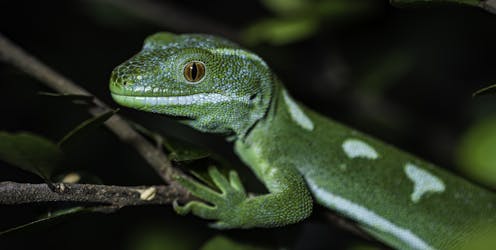
For instance, reptiles, frogs, invertebrates and migratory species of birds are usually only detectable during warmer times of the year. Surveys for them during winter are unlikely to find these species.
Even certain plants, such as orchids that can lie dormant underground as a tuber, have life cycles that make them difficult to detect. Many grasses are best identified when they are in flower.
In many cases, restricting consenting to just six months means expert panels would have to make their assessments based only on existing ecological information. This is known as a “desktop assessment”.
While a useful first step, these are not a replacement for on-the-ground surveys. This is particularly the case in New Zealand, where we have limited data on many species and for many parts of the country. For example, we don’t have sufficient data on most of New Zealand’s reptiles.
Evidence-based decisions are critical
Apart from the proposed fast-tracking of resource consents, the government has already repealed the Natural and Built Environment Act and the Spatial Planning Act. Both were enacted only last year as part of a new resource management regime.
The government also plans to replace the National Policy Statement for Freshwater Management, which provides direction to local authorities on how to manage activities that affect the health of lakes and rivers.
None of the recent and proposed changes to environmental legislation are responsive to the dual biodiversity and climate crises. They are also inconsistent with the government’s own stated goal of evidence-based decision making.
Read more: Restoring ecosystems to boost biodiversity is an urgent priority – our ‘Eco-index’ can guide the way
New Zealand’s plants, animals, fungi and ecosystems are globally unique. They underpin key economic sectors, especially primary production and tourism. But they are also threatened with extinction.
More than 75% of New Zealand’s native species of reptile, bird, bat and freshwater fish are either threatened with extinction or at risk of becoming threatened.
New Zealand has international obligations to conserve biodiversity under the Convention on Biological Diversity, which was signed in 1993. In 2022, New Zealand joined almost 200 member nations in adopting the Kunming-Montreal Global Biodiversity Framework, which commits countries to protect 30% of land and ocean globally by 2030.
Read more: Despite its green image, NZ has world's highest proportion of species at risk
Much of New Zealand’s most at-risk indigenous biodiversity is found on private land and may be subject to detrimental impacts from land use and development pressures.
The fast-tracking agenda threatens to undermine New Zealand’s progress on biodiversity protection and other key environmental issues. It erodes rather than sustains the natural capital on which the economy depends.
New Zealand’s scientific societies are urging the coalition government to allow adequate time for appropriate parliamentary select committee processes and thorough public consultation on the bill.
They call for a comprehensive legislative and policy framework, centred on the protection of environmental values and sustainable resource management, to ensure development occurs in ways that don’t further degrade natural capital.
The authors thank Dr Fleur Maseyk for her comments and discussions on this piece.
Authors: Tim Curran, Associate Professor of Ecology, Lincoln University, New Zealand


 Daily Bulletin


