

Read The Times Australia

Daily Bulletin

Our research shows higher carbon emissions increase costs for Australian businesses

  • Written by: Adam G. Arian, Lecturer (Accounting & Finance), Australian Catholic University
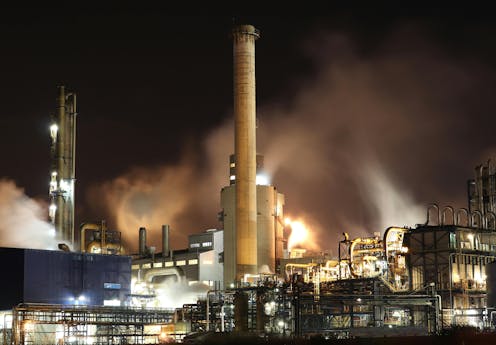
Our research shows higher carbon emissions increase costs for Australian businesses

Imagine every ton of carbon dioxide a company emits is slowly inflating its costs — not just in terms of potential fines or fees but in the capital it needs to grow and operate.

This isn’t just an environmental issue, it’s a stark reality many companies experience today.

Our new research, looking at more than a thousand Australian-listed companies from 2007 to 2020 reveals higher carbon emissions significantly increase the costs to business.

Similar analysis has been done in Europe and North America where environmental regulations are tough and longstanding. But ours is the first analysis of its type in Australia where regulations are less stringent.

Emissions linked to costs

Our research, using panel regression analysis - a statistical method often used in social science, demography and econometrics - shows companies with higher emissions are seen as riskier investments.

Due to confidentiality agreements about financial data, we are unable to disclose company names. But the trend was consistent across utilities, energy, industrial and other sectors.

This risk isn’t about stock market ups and downs; it’s about how individual companies stand out from others due to their environmental practices.

In finance, this type of risk is known as “idiosyncratic risk”. It refers to the dangers a company faces on its own, separate from the broader market, often driven by specific actions like how much carbon it emits.

Higher risk translates into higher costs when these companies try to raise money. Whether it’s taking out a loan or selling shares, the market demands greater returns to compensate for the higher risk, driving up costs.

Essentially, the more a company pollutes the more expensive it becomes for it to fund growth and operations.

The markets are watching

Today’s markets are increasingly vigilant about environmental impacts.

Investors and lenders make decisions based on how companies manage their carbon emissions. For every extra ton of emissions, a company’s expansion costs can jump by 18.5% due to higher operational and compliance risks.

Laptop and mobile phone screens showing stock market prices
Investors take notice of how companies manage their carbon emissions. Anna Nekrashevich/Pexels

Higher expansion costs can cut into profits and damage a company’s financial health. A big carbon footprint risks putting off environmentally conscious investors and consumers, reducing market value.

Reducing footprints isn’t just about corporate goodwill, it’s a critical financial strategy. It lowers the perceived risk and, subsequently, costs.

Energy efficient companies have a smaller environmental impact and greater investment appeal.

Managing risks and finances

The implications of our research extends beyond individual companies.

It provides evidence for more rigorous reporting of corporate carbon emissions. Clear and consistent disclosure of these figures is good for transparency and improves company valuations.

For regulators and policymakers, these findings boost the case for stronger environmental legislation demanding rigorous emission disclosures and reductions.

Our findings are in line with the government’s proposed environmental regulations, to enforce stricter emission disclosures and reduction targets.

These measures are also designed to promote more favorable financial conditions in the capital markets, making Australian companies more competitive globally.

Everyone benefits

As pressure for sustainable operations increases, managing emissions is emerging as not just an environmental responsibility but as a savvy business move.

Companies with low-carbon practices have a competitive edge in market perception and real financial terms.

This isn’t just about combating climate change. Understanding and managing carbon emissions is about securing a financially viable future in an increasingly green economy. It helps the planet and the wallet.

Our analysis provides a critical insight into why businesses need to design strategies aimed at sustainability and business success is inextricably linked to effective carbon management.

By making environmental responsibility a financial strategy, companies can ensure their future is greener and financially sound.

Authors: Adam G. Arian, Lecturer (Accounting & Finance), Australian Catholic University

Read more https://theconversation.com/our-research-shows-higher-carbon-emissions-increase-costs-for-australian-businesses-229133

Business News

The Rise of Digital Marketplaces in the Australian Trade Sector

For decades, the Australian trade and construction sector operated almost entirely on word-of-mouth recommendations and local community networks. Small business owners typically relied on local newspa...

Daily Bulletin - avatar Daily Bulletin

How Immigration Lawyers Can Help

Introduction Visa decisions can shape employment, family life, study plans, travel, and future residence. A small omission can lead to delay, added expense, or refusal. Immigration lawyers assess l...

Daily Bulletin - avatar Daily Bulletin

How Industrial Drying Equipment Supports Efficient Processing

Many industrial processes require moisture to be removed from compressed air, products or process materials before they move to the next stage. Excess moisture can affect equipment performance, produc...

Daily Bulletin - avatar Daily Bulletin

Practical Ways a Whiteboard Can Improve Workplace Communication

Effective communication helps teams stay organised, share ideas and keep track of important information. While digital tools are now common in many workplaces, a whiteboard continues to provide a simp...

Daily Bulletin - avatar Daily Bulletin

Designing Eco-Friendly Custom Water Bottles for Your Next Event

The Evolution of Sustainable Event Merchandise Event planning has undergone a massive transformation over the last decade. Gone are the days when organizers could hand out cheap, single use plastic...

Daily Bulletin - avatar Daily Bulletin

Why Choosing a Professional Florist Melbourne Makes Flower Delivery Impactful

Flowers have a great power to speak when humans cannot express their feelings with right words. Flowers are the best gifts when you are celebrating a birthday or welcoming a newborn child into your fa...

Daily Bulletin - avatar Daily Bulletin

The Business Case for Choosing Australian Fabricators Over Imported Alternatives

For a long time, you might have defaulted to overseas suppliers when sourcing fabricated metal components for a project. The unit price was lower on paper, and the maths seemed straightforward. That...

Daily Bulletin - avatar Daily Bulletin

Australian organisations are relying on business continuity plans built for a far more predictable world

Tariff escalations, supply chain fragility, geopolitical events, and the ongoing threat of cyber disruption have reshaped the risk environment facing Australian organisations. The problem is that ma...

Daily Bulletin - avatar Daily Bulletin

How to Rent a Car for Uber in Melbourne: What Every New Driver Needs to Know

Starting out as an Uber driver in Melbourne is not as complicated as it sounds but getting the vehicle right is where most new drivers get stuck. Uber has strict requirements around vehicle age, condi...

Daily Bulletin - avatar Daily Bulletin

The Daily Magazine

How Wide Should Running Shoes Be? Signs Your Shoes Are Too Narrow

Running shoes should be wide enough for the forefoot and toes to sit naturally under load, but not...

Trail Running Shoes vs Hiking Shoes: Which Is Better for Australian Trails?

Australia does not offer one neat definition of a “trail.” A weekend walk might mean a hard-packed...

Architectural Window Shading: Solutions for Triangle Blinds, Raked Glazing, and High Ceilings

Mastering Light and Privacy with Specialized Window Coverings Modern architectural de...

From Suburban Streets to Modern Events: Why Australians Still Love the Ice Cream Truck

Did you know Australia consistently ranks among the world's highest ice cream-consuming countries? ...

Will These Bloody Kids Ever Move Out? The Resurrection of the Duplex Says No

Whilst Baby Boomers and Gen Xer’s typically finished school, got a job and moved out of home relativ...

Critical Structural Checks to Prioritise Before Renovating an Older Property

The Australian home renovation market is experiencing unprecedented growth. The total value of thi...

Why Regular Gutter Cleaning Northern Beaches Is Important

Living in the Northern Beaches offers beautiful coastal scenery, fresh air, and leafy surroundings...

Double Glazed Sliding Doors vs Standard Sliding Doors: Key Differences

Sliding doors are a popular choice in modern homes due to their space-saving design and ability to...

How to Plan a Bathroom Renovation Timeline (Without Surprises)

A bathroom renovation rarely feels “small” once work begins. Even modest updates involve multiple ...