

Longer appointments are just the start of tackling the gender pain gap. Here are 4 more things we can do
- Written by: Michelle O'Shea, Senior Lecturer, School of Business, Western Sydney University
Ahead of today’s federal budget, health minister Mark Butler last week announced an investment of A$49.1 million to help women with endometriosis and complex gynaecological conditions such as chronic pelvic pain and polycystic ovary syndrome (PCOS).
From July 1 2025 two new items will be added to the Medicare Benefits Schedule providing extended consultation times and higher rebates for specialist gynaecological care.
The Medicare changes will subsidise $168.60 for a minimum of 45 minutes during a longer initial gynaecologist consultation, compared to the standard rate of $95.60. For follow-up consultations, Medicare will cover $84.35 for a minimum of 45 minutes, compared to the standard rate of $48.05.
Currently, there’s no specified time for these initial or subsequent consultations.
But while reductions to out-of-pocket medical expenses and extended specialist consultation times are welcome news, they’re only a first step in closing the gender pain gap.
Chronic pain affects more women
Globally, research has shown chronic pain (generally defined as pain that persists for more than three months) disproportionately affects women. Multiple biological and psychosocial processes likely contribute to this disparity, often called the gender pain gap.
For example, chronic pain is frequently associated with conditions influenced by hormones, among other factors, such as endometriosis and adenomyosis. Chronic pelvic pain in women, regardless of the cause, can be debilitating and negatively affect every facet of life from social activities, to work and finances, to mental health and relationships.
The gender pain gap is both rooted in and compounded by gender bias in medical research, treatment and social norms.
The science that informs medicine – including the prevention, diagnosis, and treatment of disease – has traditionally focused on men, thereby failing to consider the crucial impact of sex (biological) and gender (social) factors.
When medical research adopts a “male as default” approach, this limits our understanding of pain conditions that predominantly affect women or how certain conditions affect men and women differently. It also means intersex, trans and gender-diverse people are commonly excluded from medical research and health care.
Minimisation or dismissal of pain along with the normalisation of menstrual pain as just “part of being a woman” contribute to significant delays and misdiagnosis of women’s gynaecological and other health issues. Feeling dismissed, along with perceptions of stigma, can make women less likely to seek help in the future.
Inadequate medical care
Unfortunately, even when women with endometriosis do seek care, many aren’t satisfied. This is understandable when medical advice includes being told to become pregnant to treat their endometriosis, despite no evidence pregnancy reduces symptoms. Pregnancy should be an autonomous choice, not a treatment option.
It’s unsurprising people look for information from other, often uncredentialed, sources. While online platforms including patient-led groups have provided women with new avenues of support, these forums should complement, rather than replace, information from a doctor.
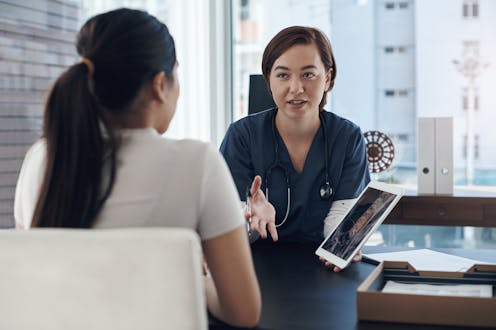
Longer Medicare-subsidised appointments are an important acknowledgement of women and their individual health needs. At present, many women feel their consultations with a gynaecologist are rushed. These conversations, which often include coming to terms with a diagnosis and management plan, take time.
A path toward less pain
While extended consultation time and reduced out-of-pocket costs are a step in the right direction, they are only one part of a complex pain puzzle.
If women are not listened to, their symptoms not recognised, and effective treatment options not adequately discussed and provided, longer gynaecological consultations may not help patients. So what else do we need to do?
1. Physician knowledge
Doctors’ knowledge of women’s pain requires development through both practitioner education and guidelines. This knowledge should also include dedicated efforts toward understanding the neuroscience of pain.
Diagnostic processes should be tailored to consider gender-specific symptoms and responses to pain.
2. Research and collaboration
Medical decisions should be based on the best and most inclusive evidence. Understanding the complexities of pain in women is essential for managing their pain. Collaboration between health-care experts from different disciplines can facilitate comprehensive and holistic pain research and management strategies.
3. Further care and service improvements
Women’s health requires multidisciplinary treatment and care which extends beyond their GP or specialist. For example, conditions like endometriosis often see people presenting to emergency departments in acute pain, so practitioners in these settings need to have the right knowledge and be able to provide support.
Meanwhile, pelvic ultrasounds, especially the kind that have the potential to visualise endometriosis, take longer to perform and require a specialist sonographer. Current rebates do not reflect the time and expertise needed for these imaging procedures.
4. Adjusting the parameters of ‘women’s pain’
Conditions like PCOS and endometriosis don’t just affect women – they also impact people who are gender-diverse. Improving how people in this group are treated is just as salient as addressing how we treat women.
Similarly, the gynaecological health-care needs of culturally and linguistically diverse and Aboriginal and Torres Strait islander women may be even less likely to be met than those of women in the general population.
Challenging gender norms
Research suggests one of the keys to reducing the gender pain gap is challenging deeply embedded gendered norms in clinical practice and research.
We are hearing women’s suffering. Let’s make sure we are also listening and responding in ways that close the gender pain gap.
Authors: Michelle O'Shea, Senior Lecturer, School of Business, Western Sydney University


 Daily Bulletin


